

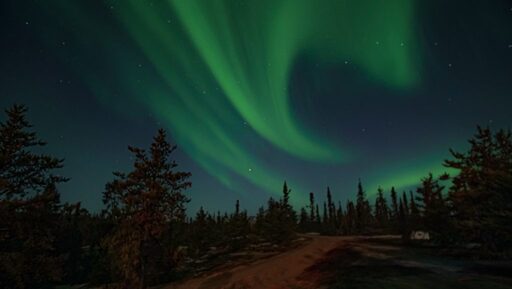
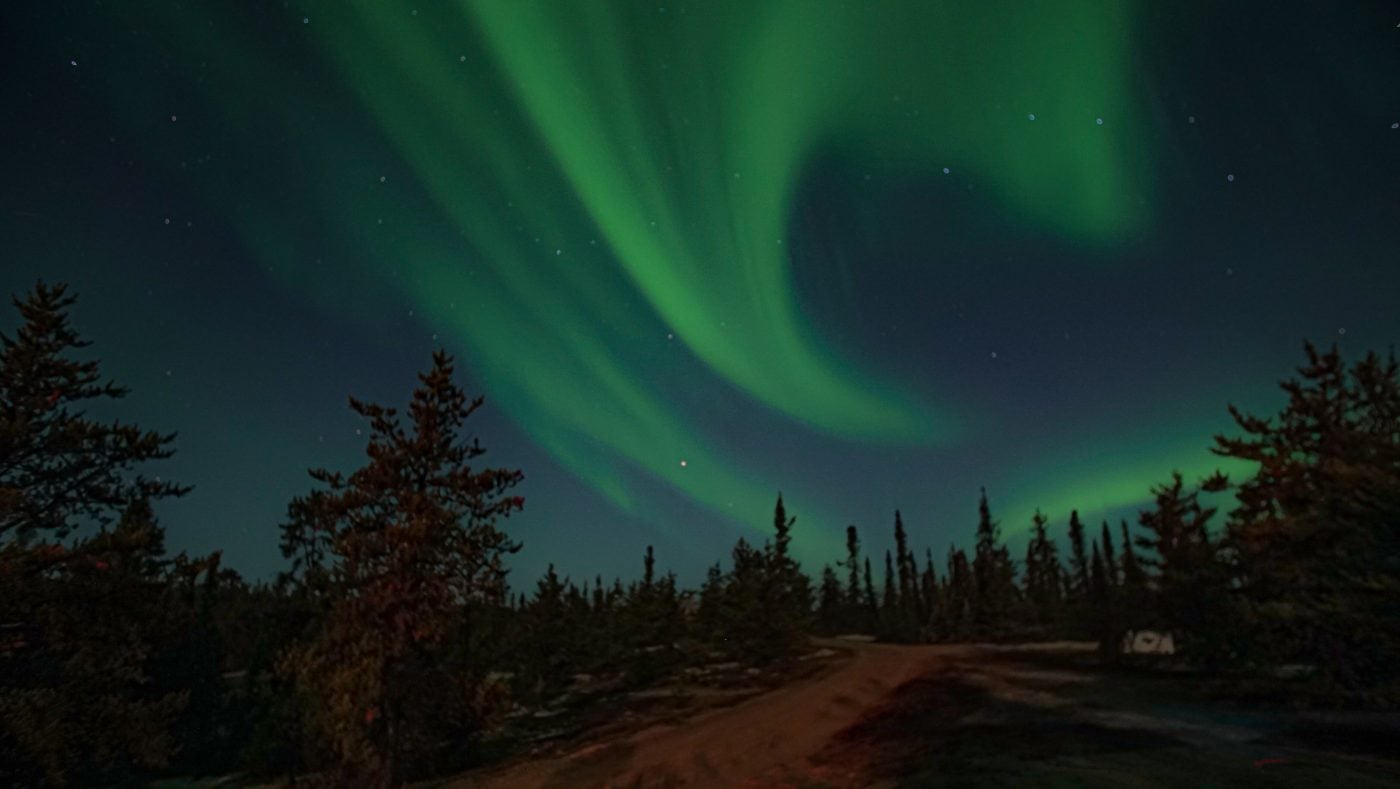
Photo: Chris Paetkau / Build Films
The Sayisi Dene First Nation has purchased one of the largest hunting and fishing lodges in Manitoba’s Seal River Watershed, marking a return to the community’s traditional lands and an economic development opportunity for the northern nation.
The Lodge at Little Duck sits nestled between Neganilini and Little Duck lakes, more than 1,000 kilometres north of Winnipeg. It is located in the Seal River Watershed, a 50,000-square-kilometre subarctic ecosystem relatively untouched by industrial development, and centred on the last major river in Manitoba without a hydroelectric dam. A network of provincial and federal parks has been proposed to protect the region.
“The Sayisi Dene people have a real connection to the lands, especially around where the lodge sits,” Chief Kelly-Ann Thom-Duck said in an interview. “We have plans to use the area and see where it goes.”
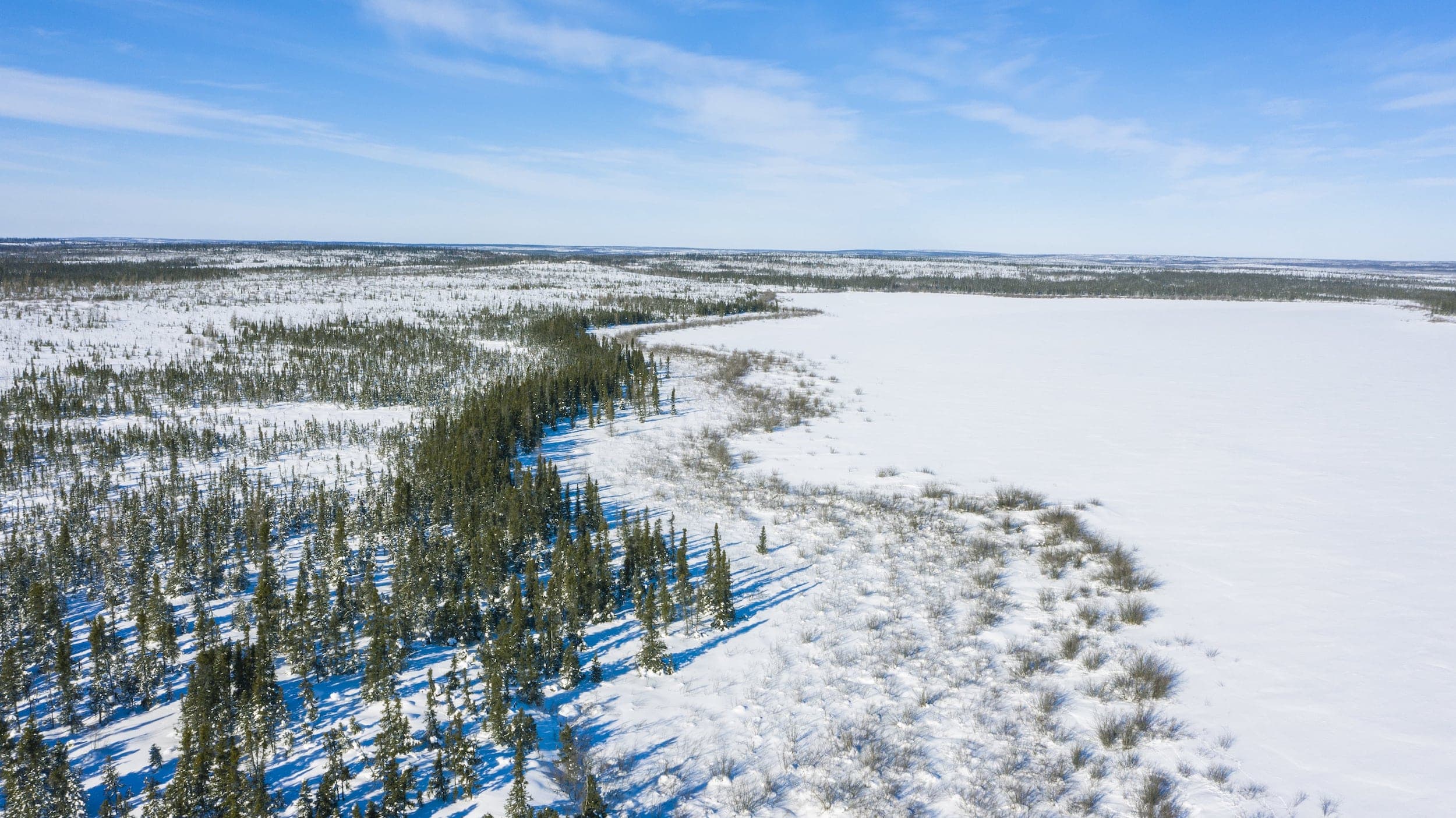
More than 1,000 kilometres north of Winnipeg, the Seal River Watershed is a 50,000-square-kilometre subarctic ecosystem that’s richly biodiverse and relatively untouched by industry. The Lodge at Little Duck will help the Sayisi Dene First Nation reconnect with this traditional territory. Photo: Supplied by Jordan Melograna / Seal River Watershed Alliance
The fly-in only hunting, fishing and eco-tourism destination has its own airstrip, lounge and cabins. According to manager Shawn Paul, it regularly sees more than 100 guests every summer and fall for its guided caribou hunts and fishing trips.
After more than 40 years of operation under several ownership groups — most recently a shareholder group that included Winnipeg-based business scion James Richardson — the lodge was sold to the Sayisi Dene First Nation this spring.
“It’s an amazing, full-circle event,” Paul said in an interview. “With the Sayisi Dene and their history at Little Duck Lake … and having the opportunity now to essentially own what was rightfully theirs — I think it’s spectacular.”
The Sayisi Dene community was forcibly relocated in the 1950s
Thom-Duck said hunting and fishing trips will continue under the nation’s ownership, along with paddling expeditions and other eco-tourism experiences. But the Sayisi Dene also see an opportunity to use the lodge — and 18 square kilometres of nearby reserve lands formally transferred in 2024 — to help members reconnect to their roots.
The Sayisi Dene were historically nomadic, she explained, and spent summers living along the lake as they followed the Qamanirjuaq caribou herd. In 1956, the community was forcibly relocated to Churchill, Man., more than 200 kilometres away.
The relocation was devastating; many of the impacts, Thom-Duck said, are still felt today.
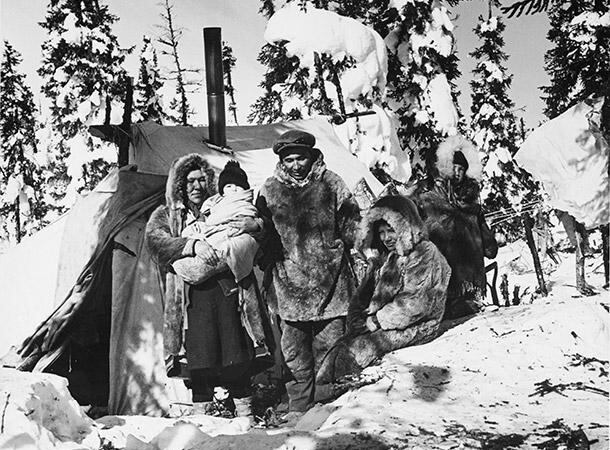
John and Mary Ann Thorassie and family in Duck Lake, Man., 1947. Before their forced relocation, the Sayisi Dene lived in their traditional territory along the caribou’s migratory path. Photo: Hudson’s Bay Company Archives
When news of the lodge acquisition was announced in early May to a crowd of members that included several Elders who had experienced the relocation, Thom-Duck said the reaction was powerful.
“There was just an outcry of joy, people were banging on tables and cheering, some people were crying,” she said.
Community voices will be key to deciding the future of the lodge and nearby reserve lands, Thom-Duck said. While nothing will be formalized until consultations have taken place, she acknowledged there has been “a real outcry for our people to find treatment centres or healing land-based activities that could help them reconnect to identity.”
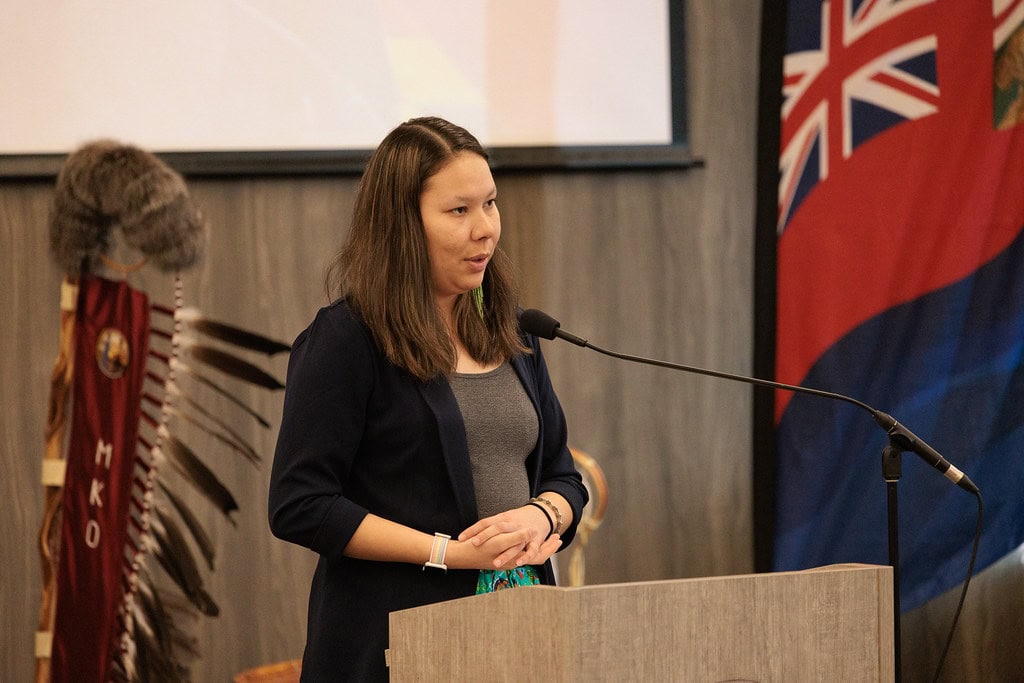
Sayisi Dene Chief Kelly-Ann Thom-Duck spoke at the announcement of the lodge acquisition in early May. She said the news was met by an outpouring of joy, with people in the crowd, which included several Sayisi Dene Elders, “banging on tables and cheering.” Photo: Supplied by Seal River Watershed Alliance
Her vision is to see the lodge and nearby lands used both for the hunting, fishing and eco-tourism trips, and as a healing space for members. She would also like to see the lodge incorporate Dene laws and traditions so visitors can learn about the community’s culture and values.
“That was a major driving point for the leadership here: going back to our homelands is a good opportunity for our local members to start that journey. At the same time, it operates as a hunting and fishing lodge, so there’s also opportunity for economic development,” Thom-Duck said.
The Seal River Watershed could be permanently protected under new proposal
The ownership transfer comes as the Sayisi Dene, Northlands Denesuline and Barren Lands First Nations, as well as the O-Pipon-Na-Piwin Cree Nation — united under the banner of the Seal River Watershed Alliance — are taking steps to establish the watershed as a protected area.
As of this spring, the Manitoba government, federal government and governments of the allied First Nations have proposed a mosaic of federal and provincial parks that would permanently protect the watershed from industrial development while creating opportunities for tourism, job creation and Indigenous-led stewardship.
For now, Paul said, it’s business as usual at The Lodge at Little Duck. He and his wife will be headed north to open the fishing lodge in the coming days.
“We’re excited about moving forward together with the new ownership, really looking forward to it,” he said.
Julia-Simone Rutgers is a reporter covering environmental issues in Manitoba. Her position is part of a partnership between The Narwhal and the Winnipeg Free Press.
The Narwhal’s reporters are telling environment stories you won’t read about anywhere else. Stay in the loop by signing up for our free weekly dose of independent journalism.
From The Narwhal | News on Climate Change, Environmental Issues in Canada via This RSS Feed.