

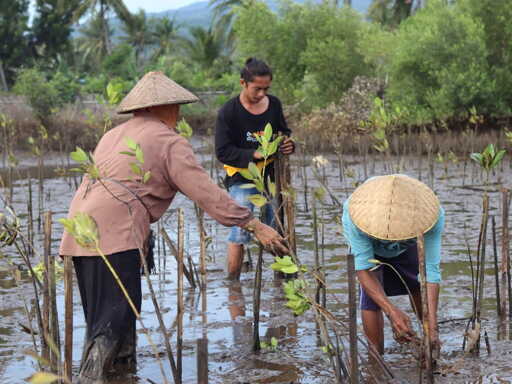
EAST LOMBOK, Indonesia — Jamil stood at the water’s edge holding a bucket of fish guts and chicken heads, waiting for signs of life as the late-afternoon sun cast a sheen over the pond. “At this time of day, they’ll start becoming active and feeding,” said Jamil, 63, as the onshore breeze settled and the light began to fade. “In the morning, they’re more likely to stay in their holes.” Until recently, the mud crabs (genus Scylla) were almost entirely a product of the wild here in Sugian village on the Indonesian island of Lombok. Fishers would set traps in the estuary and sell their catch to traders, with little incentive to spare juveniles or undersized animals. “If you sell them immediately when they’re small, they’re cheaper,” Jamil said. But when crab populations fell from overzealous fishing, so too did local earnings here in a region of Indonesia where many families struggle to remain together in the face of economic pressures. Mangrove roots provide shelter, stabilize temperatures, and support the microorganisms and nutrients on which mud crabs depend. Image by Nopri Ismi/Mongabay Indonesia. Few places in Indonesia endure more family separation than the district of East Lombok. Last year it topped the list of Indonesia’s more than 500 districts for the highest number of its residents who left for work overseas. The minimum wage set by the local government for this year is 2.7 million rupiah ($150), less than half that in the capital, Jakarta. Last year, around 14,000 people…This article was originally published on Mongabay
From Conservation news via This RSS Feed.