


Miles Morrisseau
ICT
With hate crimes exploding in Canada in the last couple of years, Canada’s Senate has passed a bill that would criminalize more Nazis symbols, the noose and make it illegal to block people from attending places of worship. An amendment for Indigenous hatred was rejected before the final bill was approved.
Sen. Nancy Karetak-Lindell is Inuk from Canada’s northern territory of Nunavut and she brought the amendment to the senate floor.
She included the amendment: “making it a criminal offence to wilfully promote hatred against Indigenous Peoples by condoning, denying or downplaying the Indian residential schools system.”
On June 3, she spoke to her colleagues one last time before the vote.
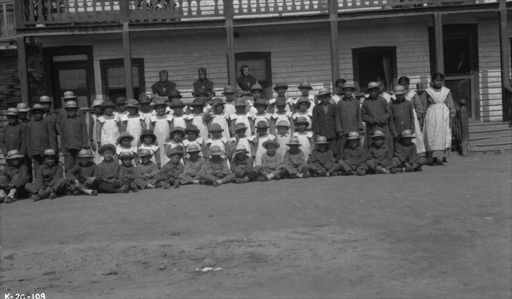
“Honorable senators and Canadians watching across the country, I rise today to speak to Bill C-9, the combatting hate act, at report stage,” she said. “I am speaking today not just as a senator for Nunavut but as a residential school survivor. Out of eight siblings, seven of us attended residential schools.”
Karetak-Lindell reminded the chamber that the amendment was adopted by the Standing Senate Committee on Human Rights by a vote of 7-1.
“The near-unanimous support reflects the committee’s recognition of a clear gap in the Criminal Code,” Karetak-Lindell said. “The Government of Canada has already formally acknowledged the harms and lasting impacts of the Indian residential school system through apologies, settlements, the Truth and Reconciliation Commission and ongoing reconciliation commitments. These harms are well documented and are not contested in Canadian public law or policy. This amendment does not create a new legal principle; it applies an existing one consistently.”
Karetak-Lindell asked why Indigenous peoples are being left out of the bill.
“We have recognized the very real harms caused by Islamophobia, anti-Black racism, anti-Semitism and other forms of hate. We have heard compelling testimony about the need for targeted responses where particular communities are disproportionately impacted by hatred and discrimination. I support those protections. The question before us is why Indigenous peoples should be treated differently.”
Sen. Pierre Moreau, Government Representative in the chamber, spoke against the amendment noting that it was not trending upward on his feed.
“Honourable senators may have already noticed that online backlash to the amendment has begun. There was no consultation on whether this amendment was the appropriate way for denialism to be addressed or to have it as stand-alone legislation,” Moreau said. “In opposing this amendment, the government is not rejecting the objective of addressing denialism. There are avenues in the bill that already cover the protection of hatred toward Indigenous peoples. Rather, what we are doing is affirming that it must be done in the right way, grounded in a comprehensive and respectful consultation process.”
On June 4, Bill C-9 was introduced for third and final reading by Sen. Kristopher Wells who noted an explosion of hate crime in Canada.
“According to Statistics Canada, police-reported hate crimes have now risen for six consecutive years. From 2018 to 2024, the number of hate crimes in Canada has more than doubled, an increase of 169 percent. In absolute terms, Canadian police services reported 4,882 hate crimes in 2024,” said Wells in the chamber. “The rate of hate crime per 100,000 population more than doubled from 2018 to 2024, even as the overall crime rate increased by only 3 percent over that same period. While overall crime has remained relatively stable, hate crime has exploded.”
Laura Arndt has seen a massive spike in online hatred directed at residential school survivors in recent days. Arndt, Mohawk, Six Nations of the Grand River is the Secretariat Lead at the Survivors Secretariat, a nonprofit organization that researches and documents the history of the Mohawk Institute, one of Canada’s largest and longest-running Indian residential schools.
Representatives from the Secretariat attended the Permanent Peoples Tribunal which is an international independent body that investigates human rights violations around the world. Its most recent tribunal was held in Montreal, Québec, at the end of May and charged Canada with genocide and crimes against humanity.
“The tribunal has no difficulty in accepting that this pattern of composite acts constitutes genocide,” the Permanent Peoples Tribunal stated. “In international law, genocide need not involve mass killings – it can be a slow and continual process, taking place over centuries.”
The tribunal’s indictment did not sway the Senate but it had an immediate impact on the Secretariat.
“For every 10 comments we get on our social media site, 90 percent of them since the tribunal have been denialist hatred,” Arndt told ICT. “We have had to shut down our social media platforms because the violent nature of what we’re reading is traumatic. Like when people wish you dead and when people wish nothing but, you know, maybe you all should have died.”
Arndt was shocked and saddened to see the denialism amendment rejected by the majority of senators.
“I don’t understand how it is that a Senate can look at everything that has happened and then not pass this legislation or condone it and move it forward,” she said. “So yes, deeply saddened.”
Grand Chief of the Assembly of Manitoba Chiefs Kyra Wilson stated in a release that the Senate’s decision is not going to be experienced as a procedural vote but as a rejection of truths that survivors have spent generations fighting to have acknowledged.
“The Senate’s decision is deeply disappointing and sends a painful message to Survivors and their families,” said Wilson. “Residential School denialism is not simply misinformation — it is a continuation of the harms inflicted upon our people. When the lived experiences of Survivors are questioned, minimized, or denied, the wounds of the past are reopened.”
It is the living legacy and intergenerational impacts of the residential school system and its goals that First Nations continue to experience.
“Manitoba First Nations know these truths because we carry them every day,” said Wilson. “The impacts of Residential Schools did not end when the schools closed. They continue to affect our families, our communities, our languages, and our Nations. To deny that reality is to deny the experiences of generations of First Nations people.”
The National Chief of the Assembly of First Nations Cindy Woodhouse Nepinak also expressed disappointment.
“The move by the Senate to reject this amendment is regressive and a setback for survivors and for reconciliation,” said Woodhouse Nepinak. “Indian Residential School denialism is a hate crime and must be treated as a hate crime. There has always been wilful, ignorant denialism, but we now face a growing, organized movement of denialists trying to rewrite Canada’s history. We need to push back on these offensive lies and stand up for the truth. We lift up Senator Karetak-Lindell for her amendment and all Senators who supported it, but we’re deeply disappointed in their colleagues who rejected truth and justice.”
Grand Wilson explicitly called on Prime Minister Carney and the federal government to reintroduce protections against residential school denialism and work directly with First Nations, survivors, and First Nations organizations to advance legislative measures that explicitly address residential school denialism and other forms of anti-Indigenous hate.
“Canada cannot claim to support truth and reconciliation while failing to protect the truth itself,” said Grand Chief Wilson. “If Holocaust denial is recognized as a form of hate because it seeks to erase documented atrocities and the suffering of victims, then Residential School denialism must be treated with the same seriousness. The children who never came home deserve nothing less. Survivors deserve nothing less. Future generations deserve nothing less.”
With the current version of the bill now moving on to the House of Commons, it is unknown when and if denialism will be deemed a crime.
“I’m not a lawyer, so I’m not going to speak to the nature of law. But as a citizen in this country and as an Indigenous woman,” said Arndt. “The next step is you make a public statement, you make a commitment of resources to the organizations that are doing this work, and you stand with them so that these denialists in this country begin to see that Canada knows the truth of history and it’s going to work with us to uncover it.”
The post Canada’s new hate crime law leaves out Indigenous appeared first on ICT.
From ICT via This RSS Feed.
The amendment requested would mirror 319.2.1
This is the amendment they voted down (not quoted directly in the article);
But it would be nullified by the subsequent 319.3.1c
Which would obviously be the defense most residential denialists would employ; and probably successfully.
So while I agree that residential denialism should not be condoned; this amendment should be voted down because it’s not good legislation.