

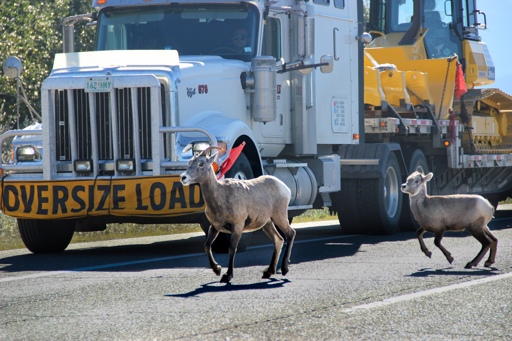
One of the busiest highways in the western U.S. is I-25, a concrete artery that runs north to south across the state of Colorado, funneling roughly 100,000 cars per day through the fast-growing exurbs south of the capital, Denver. While I-25 facilitates human journeys, it disastrously truncates the movements of another set of commuters. For decades, mule deer, elk, black bears and other species have wandered onto the highway — with fatal consequences. Over a two-year period, from 2018 to 2020, the Colorado Department of Transportation (CDOT) tallied collisions with 76 deer, 15 bears and 10 pumas along a 14-mile (22.5-kilometer) stretch of asphalt. Moreover, the interstate’s walls of traffic deter many animals from even attempting to cross, preventing them from roaming between alpine forests and Colorado’s eastern prairies. Lately, however, this once-dangerous barrier has become far more accommodating to four-legged travelers. In 2021, Colorado completed the construction of five capacious, dirt-floored underpasses, flanked by more than 25 mi (40 km) of roadside fencing, to allow wildlife to meander safely and freely beneath I-25. A black bear approaches a vehicle on the Alcan (Alaska-Canada) Highway, possibly indicating how habituating animals to human food can lead to road conflicts. Image by Ben Goldfarb. And in December 2025, CDOT finished construction of an overpass, 200 feet wide by 209 long (61 by 64 meters), that arcs over six lanes of traffic near the town of Greenland. That makes it one of the largest human-made wildlife crossings on Earth. All told, CDOT says…This article was originally published on Mongabay
From Conservation news via This RSS Feed.