

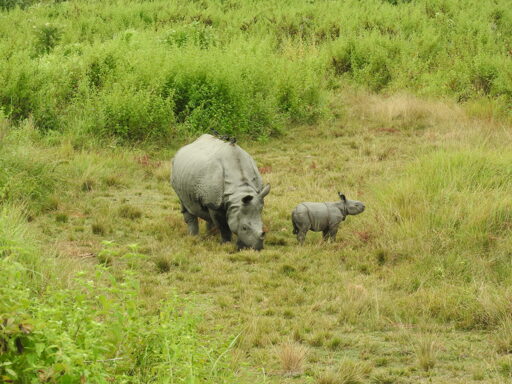
Manas National Park in India’s Himalayan foothills was once home to some 100 Indian rhinos, almost all of which were wiped out by poaching by the late 1990s. After a campaign to reintroduce them, the population is growing and several calves have been born. But their recovery still needs active support, reports contributor Sneha Mahale for Mongabay India. Researchers followed the fate of 42 greater one-horned rhinos (Rhinoceros unicornis) reintroduced to Manas in the state of Assam from 2006-2021. The rhinos arrived there in one of two ways: 22 wild rhinos were translocated from other protected areas in Assam, and 20 injured or orphaned rhinos were rescued and rehabilitated at a center, then released into Manas. The rhino reintroduction program is showing hopeful signs, the decade-long study found. Between 2012 and 2022, the researchers recorded 35 rhino births in Manas: 19 calves from translocated females, and nine from rehabilitated individuals. First-generation rhino females, born in Manas, also birthed five calves; the mothers of two more calves remained unidentified. “Breeding and calving are among the most important indicators that reintroduced rhinoceroses have adapted well to their new environment,” study lead author Deba Kumar Dutta, a wildlife biologist and member of the Asian Rhino Specialist Group at the IUCN, the global wildlife conservation authority, told Mongabay India. The study also found the two groups of rhinos settled in different parts of the national park. Translocated rhinos spread out over a larger area, often using remote or less-disturbed parts of the park, while…This article was originally published on Mongabay
From Conservation news via This RSS Feed.