

A new phase of escalation has begun in the Middle East. Following brutal Israeli strikes on the southern suburbs of Beirut on June 7, Iran launched a restrained response, firing about ten ballistic missiles at Israel in the early evening. Sunday night, Israel retaliated, prompting further Iranian reprisals.
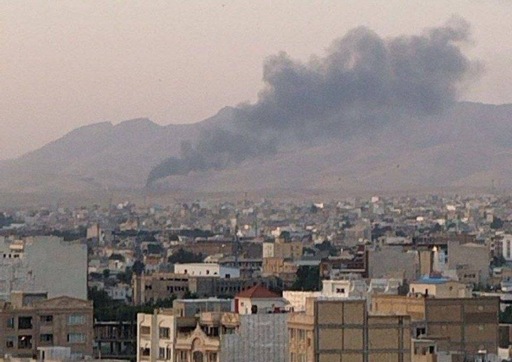
The Israeli attack targeted Tehran, Isfahan and Tabriz, as well as the Mahcharh petrochemical plant, prompting the evacuation of tens of thousands of workers. Iran responded with several missile barrages, targeting, according to Iranian media, radar stations in Israel and other military targets.
At the same time, the Houthis fired a missile from Yemen while indicating in a statement that they will “respond to escalation with escalation” and that “military operations will intensify depending on the evolution of the situation on the ground.” In other words, the Houthis are threatening to put pressure on the Bab-el-Mandeb Strait — a strategic bottleneck for global trade.
By striking Beirut, Israel has opened a new cycle of escalation, unprecedented since the start of the ceasefire on April 8. Trump tried to pressure Israel to limit its operations in Lebanon in order to continue negotiations with Tehran, and this Israeli attack constitutes a snub against Washington. It testifies to the growing strategic differences between U.S. imperialism and its ally, as already shown by the explosive phone call between Trump and Netanyahu last week and the decision of the U.S. intelligence services to raise their alert level, faced with the risk of Israeli espionage.
Since the resumption of hostilities, Trump has been trying to downplay the situation while also calling for a ceasefire. After the first Iranian missile strikes, Trump indicated that he would “I am going to call Bibi right now and tell him not to retaliate. Each of them had their fun. Israel had its strike and Iran had its strike. We don’t need another one.” He then added: “We are very close to a final deal with Iran. It is going to be a good deal. I don’t want it to blow up because of what is happening now.”
These statements reflect the profound crisis of U.S. imperialism, which is desperately seeking a way out of the strategic impasse it finds itself in with Iran. Tehran has restored its deterrent capabilities by asserting its control over the Strait of Hormuz and demonstrating its ability to disrupt the region’s energy flows, and Trump fears that a new cycle of escalation could further compound the consequences of the war, which has already dealt a severe blow to the global economy, weakening not only Washington but also its allies in Europe and Latin America, such as José Antonio Kast in Chile and Rodrigo Paz in Bolivia.
Israel sees things differently. In fact, the Iranian response represents a new stage in the transformation of regional power dynamics. As Trita Parsi writes in an article summarizing the events, “This is the first time in decades that a regional power has the means, capacity, and willingness to put hard power against Israeli military maneuvers or aggression against a third party.” Israel was able to annex territories, commit genocide, and carry out war crimes with impunity because Western powers refused to act, and no regional power possessed the military capacity to impose consequences on Israel. If this equation changes, the future of the Israeli-Palestinian conflict will likely take a major turn. It is precisely for this reason that Israel will do everything in its power to prevent such a change.
While the weakening of the United States and the erosion of its ties with Israel limit the colonial state’s room for maneuver, Israel is attempting to restore its deterrent capacity to continue the genocide in Palestine and the ethnic cleansing in Lebanon. In this situation, the risk of escalation is extremely high. As the Israeli anti-Zionist activist Moshe Machover noted in an article written in 1968,
A colonisers’ State, which is an integral part of the imperialist power structure because of the way in which it came into existence […] It must reckon with the possibility that, because of their own imperialist interests, these powers will be ready to sacrifice it or, at least, to make concessions on its behalf for their own benefit […] Since they are small, they feel no responsibility for the rest of the world […] Even a threat to, or blackmail of, a big world power is not impossible.
The situation therefore remains open, and negotiations are on hold. If Trump does not seek to reignite the war, he could be forced to do so by the Israeli response, as the war cabinet is already preparing for several days of fighting. At the same time, Israel could be forced to back down in the face of the pressure Iran exerts on the global economy, a strategic fiasco for Netanyahu that could threaten him as the next elections approach, while the opposition denounces Trump’s “interference” in Israeli politics.
The situation must therefore be closely monitored. There is an urgent need to build a broad anti-imperialist movement that advocates for the defeat of the United States and Israel in their imperialist war against Iran and throughout the region, completely independent of the reactionary Iranian regime, while Trump and Netanyahu, weakened by the first phase of the conflict, are once again posing a mortal danger to all the peoples of the region.
This article was originally published in French on June 8 in Révolution Permanente.
The post Tensions Between Trump and Netanyahu Deepen as Israel Launches New Attacks on Lebanon and Iran appeared first on Left Voice.
From Left Voice via This RSS Feed.