

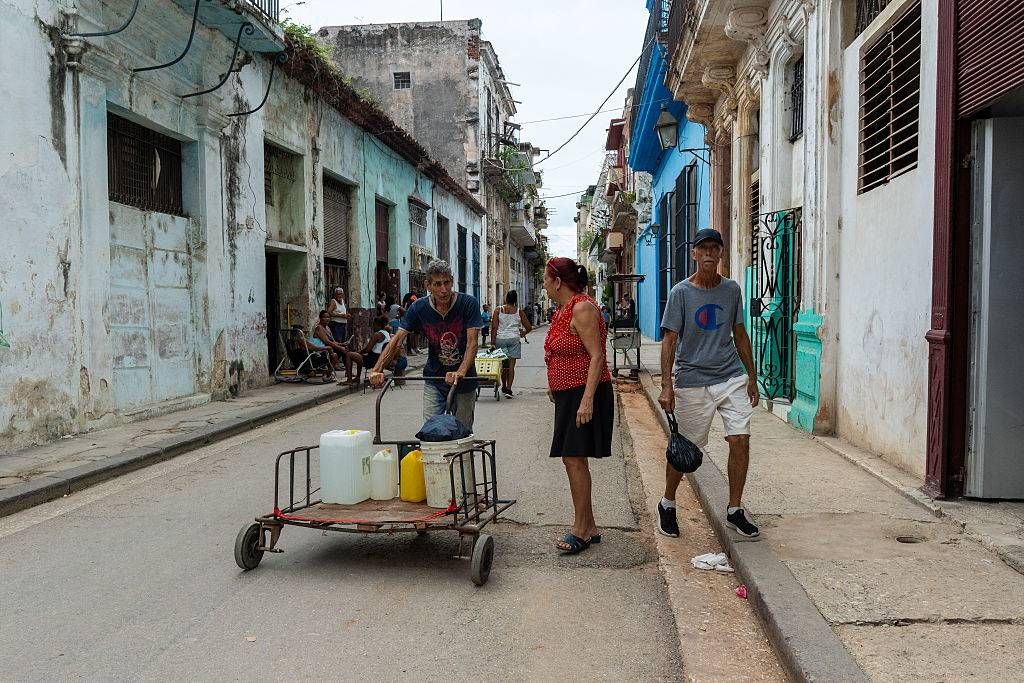
The US military for the last four months has been blockading oil shipments from entering Cuba, and residents living on the island are saying the situation is growing increasingly dire.
In a Monday report from The Guardian, several Cubans described how their lives have been thrown into turmoil by the Trump administration’s oil blockade, which began shortly after the US military invaded Venezuela and abducted President Nicolás Maduro earlier this year.
As noted by The Guardian, Cuba’s gas stations have now been empty for months because of the blockade, and the state’s power company struggles to keep electricity on for even a few hours every day.
One unnamed doctor in Havana who spoke to The Guardian said that “we’ve been four days without light” in his apartment building, and warned that the fuel shortages would cause even more severe crises on the island the longer they persist.
“Without electricity, water is also a problem,” the doctor said. “And there are mosquitoes everywhere.”
Havana resident Martha Pérez told The Guardian that she has had to buy gas from “an online supermarket,” but added that “the price is US$29 a bottle when it used to be just a few cents when I bought it from the state.”
As reported by The Associated Press on Monday, Cubans have been buying fuel on the black market at exorbitant prices that most people cannot afford.
Rather than pay such high sums for gas, many Cubans have simply given up driving all together.
Auto body shop owner Diriel Valdez told the AP that his business has been severely hurt by the oil embargo because Cubans aren’t bothering to have their cars maintained or repaired amidst the fuel shortages.
“People don’t want to do major repairs anymore,” Valdez said. “A lot of them have their cars parked. They don’t have much hope that they’ll be circulating the way they used to."
Adding to the economic misery, The Wall Street Journal reported on Saturday that many international businesses that have operated in Cuba for years are now pulling out due to the cost of maintaining operations.
The oil embargo has been particularly harsh on Cuba’s tourism industry, and the Journal reported that “Spanish hotel giants Iberostar and Meliá have said they are giving up management of at least a dozen Cuban hotels each,” while “Royalton Hotels & Resorts, a Canadian operator, ceased operations after grappling with a collapse in tourism.”
From Common Dreams via This RSS Feed.