

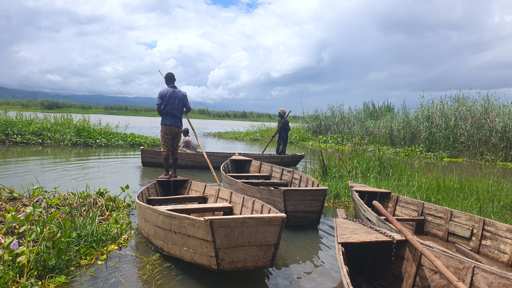
ELEPHANT MARSH, Malawi — At 5:30 am, trader Flora Kumilai is squatting before a heap of smoked catfish at Sorjin Market in southern Malawi’s Elephant Marsh, haggling with sellers over the price. “I found gold in fish,” she chuckles as she fills a third cardboard box. “And Elephant Marsh is the mine.” Kumilai, who has traveled here from Malawi’s commercial capital, Blantyre, will spend a week in the area, visiting other fish markets around the marsh until she has 12 of these boxes, around 900 kilograms (1,990 pounds) of smoked fish. Then she will band together with other traders to hire a truck to transport their goods back to Blantyre, 140 kilometers (87 miles) to the north. But for Kumilai, the final destination for her goods is more than 1,500 km (930 mi) away, at a market in Kasumbalesa on the border between Zambia and the Democratic Republic of Congo. She’s been in business for more than a decade now, mostly trading in produce within Malawi and sometimes importing clothes from Tanzania and South Africa for customers in the city. In October 2024, she changed course, when fellow traders introduced her to the cross-border trade in fish. In Kasumbalesa, most of Kumilai’s customers are from the DRC, she tells Mongabay in Chichewa. “They pay in [U.S.] dollars. When we change it on the black market to Malawi kwacha, it gives us a lot of money. That’s how I’m able to pay for my son’s education [at Chandigarh University in India].”…This article was originally published on Mongabay
From Conservation news via This RSS Feed.