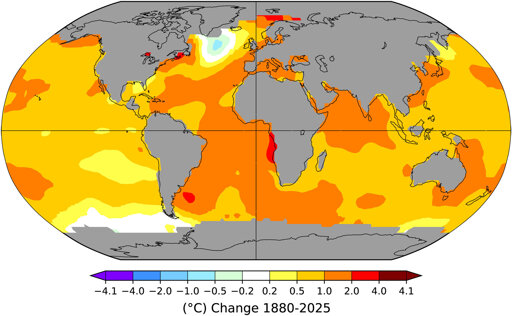
A part of the Atlantic Ocean, just south of Greenland and Iceland, has been cooling off while the rest of the world gets hotter. This enigmatic patch is often referred to as the “cold blob” and scientists have been trying to figure out the mechanisms behind its cooling. While some studies have blamed increased heat loss at the sea surface, others suggest weaker currents are bringing less heat to the area. Now, a new study, published in Geophysical Research Letters, provides additional support for the latter—now using reanalysis data based on direct weather observations instead of just modeling.
From Earth News - Earth Science News, Earth Science, Climate Change via This RSS Feed.
From a layman’s perspective, the obvious answer seems the most likely; the polar and Greenland ice is melting, all dumping into that one spot. And the Atlantic current is weakening, reducing how much that added cold water gets mixed in.
Cool we’ll finally find out how important the gulf stream was