

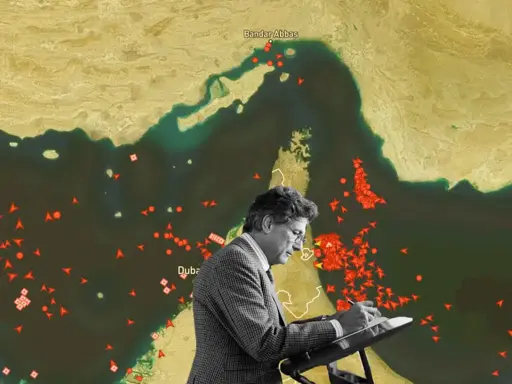
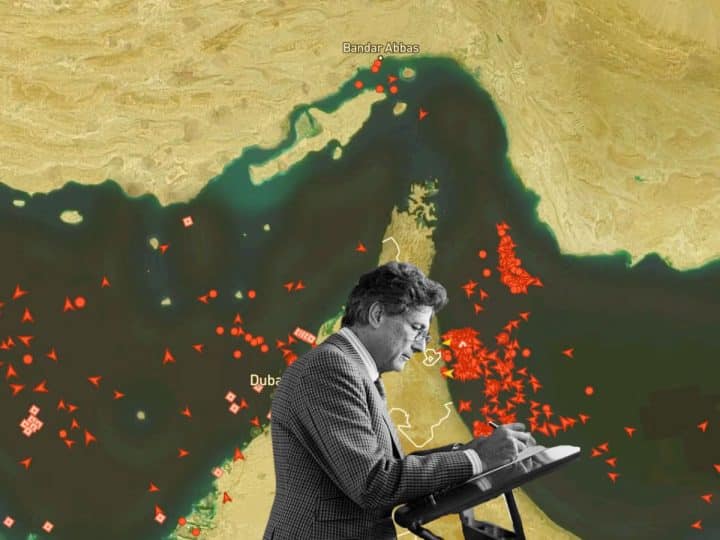
The illegal US-Israeli war on Iran can, of course, be discussed in terms of imperialism, colonialism, and capitalism. But there is a more specific and often overlooked dimension to the conflict. It connects to the ideas of the prominent Palestinian thinker Edward Said and his theory of Orientalism
Since the war began on February 28, US President Donald Trump has repeatedly claimed victory and insisted that Washington has reached its goals. In reality, the war for Trump has become a quagmire, shaped by a series of miscalculations by him and his advisors.
Large-scale military attacks, heavy sanctions, and political threats did not cause the collapse that Trump imagined. Instead, these actions brought new problems for the US and Israel in West Asia. The closure of the Strait of Hormuz and the use of small, fibre-optic-controlled drones in Lebanon are just two examples.
So what lies at the heart of these miscalculations by Trump and other Western leaders? Edward Said’s idea of Orientalism, as a way of seeing ‘the East’ as passive, weak, and easy to control, offers part of the answer.
Through this lens, ‘the East’ is not treated as a complex political actor, but as something simple and predictable. At the same time, US totalitarian foreign policy, shaped by these stereotypes, sets up unrealistic expectations among its decision-makers.
The idea of an inability to defend and resist
In Trump’s view — and the line of thinking he represents — there was an assumption that Iran’s defence system would quickly collapse under military attack or strong pressure.
This reflects an Orientalist mindset, in which Eastern societies are seen as weak and unable to resist for long. In this view, Iran’s military strength, regional ties, and experience during war and sanctions are often ignored or treated as exceptions.
The result is the belief that strong pressure or a shock-and-awe style military attack can quickly change Iran’s behaviour or political system. However, this war shows that this idea is not based on a realistic understanding of Iran’s defence and society. Instead, it is rooted in the old stereotype of a “vulnerable East,” which Said criticises.
A key mistake here is overlooking Iran’s political and social history. The eight-year war (1980-88) with Iraq, which had strong support from the West, and Iran’s ability to adapt to long-term sanctions, are often downplayed or ignored.
The same Orientalist again.
This Orientalist view in the West often presents ‘Eastern history’ as simple and unchanging. As a result, some US policymakers believe Iran will always respond to pressure in the way they imagine. But Iran’s history shows that political and social responses are usually complex and shaped by many different factors.
Orientalism — the inability to negotiate
Now that the two sides are in a fragile ceasefire, this same Orientalist view remains in the West. At the diplomatic level, there is still a belief that Iran cannot take part in real negotiations with the US. This view rests on the idea that only the West has rational thinking and negotiation skills.
This is another Orientalist logic that Said explained: the West is seen as rational and ‘the East’ as irrational. In this view, negotiation is not seen as equal, but as a way for one side to get what it wants. This causes many to underestimate Iran’s ability to plan negotiations, handle crises, and use its influence in the region.
For more than 20 years, Iran has participated in complex negotiations with Western powers and used different tools to shape results. Yet the gap between this reality and Orientalist beliefs shows that little to no lessons were retained.
A deeper problem is that this view simplifies Iran’s political and social system. Iran is not seen as a complex country with many different groups and influences, but as a single, simple unit that never changes. This kind of thinking is central to Orientalism, where complex societies are turned into fixed ‘postcard-like’ images.
In this view, disagreements inside the country, state institutions, and the ties between society and government are often ignored or seen as unimportant. A complex society and political system becomes a monolith — flat, static and lacking substance. This leads to policies based on the idea that Iran will quickly collapse or suddenly change. But in reality, Iran’s political system shows a strong ability to adapt, survive, and manage crises, challenging these Orientalist assumptions.
Featured image via the Canary
From Canary via This RSS Feed.