

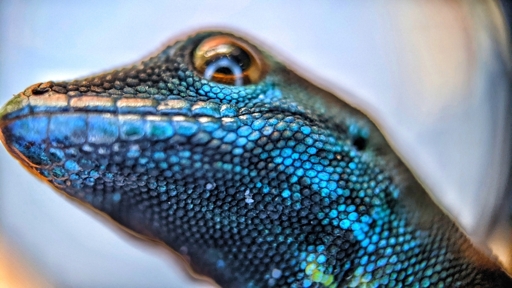
Beauty is a curse — at least for the turquoise dwarf gecko of central Tanzania. Between December 2004 and July 2009, demand for this gecko from collectors in Europe boomed, leading to the capture and export of an estimated 40,000 of these striking reptiles from Tanzania. “I remember when I saw them for the first time [at] a fair, it was about 600 euros per specimen,” or about $700, Dennis Rödder, a herpetologist at the Leibniz Institute for the Analysis of Biodiversity Change in Germany, told Mongabay in a video call. “I think within three or four years, the species appeared everywhere across Europe. You could buy them in every pet shop.” Turquoise dwarf geckos (Lygodactylus williamsi) grow to a length of 6-9 centimeters (about 2.5-3.5 inches) and are known from only two small patches of forest in Tanzania: The Kimboza and Ruvu forest reserves. These protected areas cover a combined 34 square kilometers (13 square miles). Adult females have a green-brownish color that mimics the leaves of the trees they live in, but the males’ skins are a vivid contrasting blue, one of the rarest colors in nature, meant to stand out and attract females. Turquoise dwarf gecko (Lygodactylus williamsi). Image © Simon via iNaturalist (CC BY-NC 4.0). Active during the day, and so fiercely territorial they evict their young hatchlings from their home trees soon after birth, this species lives exclusively on screwpines (Pandanus rabaiensis), a tree found in Kenya and Tanzania. Standing anywhere from 3-20 meters tall…This article was originally published on Mongabay
From Conservation news via This RSS Feed.