

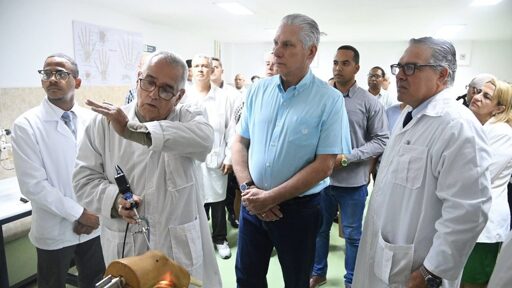
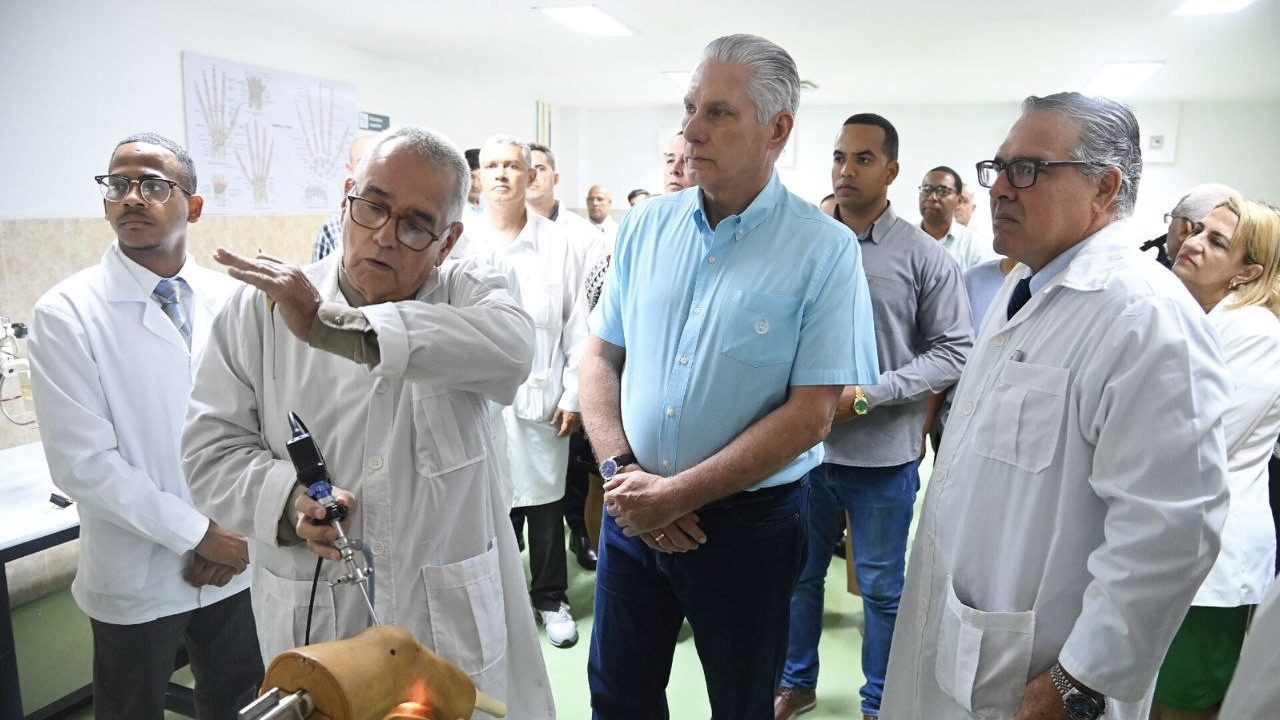
Washington has decided to increase sanctions and threats against Cuba amid a severe humanitarian crisis caused by a fuel shortage on the island. This time, the sanctions target Cuban President Miguel Díaz-Canel and his wife, Lis Cuesta. Also included on the list published by the Office of Foreign Assets Control (OFAC) are his stepson, Manuel Cuesta, Alejandro Castro Espín (son of Raúl Castro), and Raúl Castro Calis (grandson of the former president). These sanctions come on top of the alleged initiation of a lawsuit against Raúl Castro in US courts.
But the sanctions are not only aimed at individuals, but also at state institutions and companies that are trying to keep afloat a society and economy that has been blockaded by Washington for nearly 60 years. Specifically, sanctions have been imposed on the Ministry of the Armed Forces, the Committees of the Revolution, the Cuban Institute of Friendship with the Peoples, Amistur Cuba, and Minera La Victoria.
Economic sanctions driven by ideological motives
The sanctions against political institutions are particularly striking, as they clearly aim to further isolate the revolutionary process that began in 1959 against the bloody dictatorship of Fulgencio Batista. The solidarity of various political groups and social movements with Cuba has been one of the principles upheld by the revolution, in accordance with the internationalism it preaches.
In this regard, Díaz-Canel rejected Washington’s decision to add the Cuban leaders, organizations, and companies to the “illegitimate” sanctions list. He asserted that it is a new way of tightening the blockade against Cuba and “reinforcing the conflict between Cuba and the United States.”
The president added: “This political blindness comes on top of the coercive measures imposed on our country in recent weeks, designed to harm the Cuban people. The aggressiveness and perversion of the U.S. government will clash with our determination to face the worst-case scenarios and resist the imperial onslaught.”
With these measures, Washington aims to punish the country it considers the main bastion of various revolutionary movements in the Third World. This was confirmed by US Secretary of State Marco Rubio: “For decades, Cuba has been the world capital for radical left-wing terrorism. The regime in Havana has recruited, trained, and backed violent Marxist and Third Worldist movements across our hemisphere and beyond. Today, we are targeting the network that enables and funds Cuba’s subversive and radical operations.”
In his eagerness to isolate Cuba, not only economically but also politically, Rubio also threatened sanctions against all “foreign banks and other companies that provide services” to Cuba. “The Trump Administration will no longer tolerate radical Marxist regimes in our hemisphere seeking to threaten U.S. national security and engage in influence operations to export their poisonous and evil ‘revolution’ to our country and around the world.”
In response to the measure, Cuban Foreign Minister Buno Rodríguez condemned the inclusion of President Díaz-Canel and Cuban institutions on the “illegitimate” sanctions list. The move is “the latest example of the U.S. interventionist plan to portray Cuba as a threat to U.S. national security. Every U.S. action aimed at creating conflict between the two countries is doomed to fail. Every threat against Cuba’s independence and sovereignty will be met with greater unity and determination from our people.”
US oil blockade
Following the January 3 attack on Venezuela, the United States banned the shipment of crude oil to the island. Washington also threatened third countries that if they send the fuel Cubans need to generate electricity, and operate their productive, transportation, and commercial sectors, as well as their hospitals and schools, they will face sanctions from Washington.
In all of 2026, only one oil tanker has entered Cuba, and it was flying a Russian flag. However, that fuel has run out, and the island is facing a “man-made humanitarian crisis,” according to United Nations officials who assessed the situation.According to Marco Rubio, however, the United States does not block the flow of oil to the Caribbean island. Cuban Foreign Minister Rodríguez responded: “[Rubio] seems to be deliberately forgetting Executive Order 14380 of January 29, 2026, drafted by himself and signed by his President, which authorized the imposition of punitive tariffs on imports from countries that, directly or indirectly, supply oil to Cuba. Any nation that sovereignly trades oil with our country faces the threat of trade reprisals in the U.S. market. Is that not blocking the entry of oil into Cuba? What else can we call the economic coercion of a third party to stop trading with us?”
elevation , June 5, 2026
From BT News via This RSS Feed.