

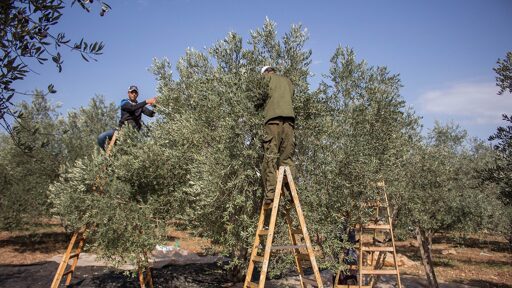
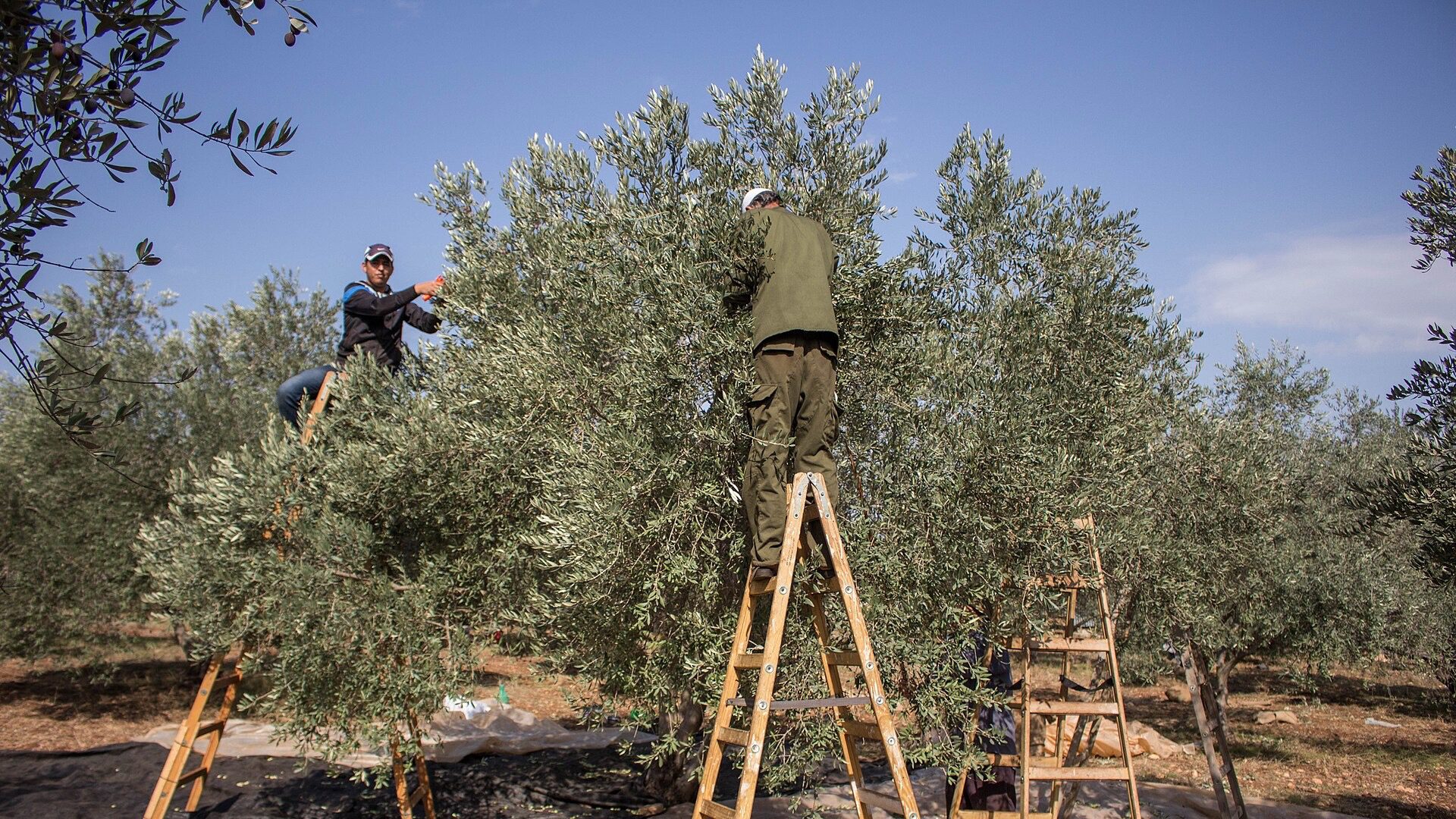
Seasonal laborers, horticulturalists, foresters, and other workers in the land trades sector in Britain have launched a boycott, divestment and sanctions (BDS) campaign in support of the struggle of the Palestinian people.
Announced by grassroots trade union Solidarity Across Land Trades (SALT), the campaign aims to diminish the flow of financing and goods to Israel and reduce the profits made by Israeli companies in Britain and the other way round. It also works to expose financial exchanges between Israeli companies and British land trades that contribute to the greenwashing of crimes against humanity.
“As a trade union of workers in the land trades, we’re firmly anti-capitalist,” SALT stated at the launch in May. “We’re fighting for an anti-capitalist future for our industry that’s in the hands of the workers. But to dismantle capitalism you also need to dismantle Zionism, which helps to prop up the entire capitalist-imperialist system.”
Read more: BDS movement makes significant strides across Europe
In a conversation with BreakThrough News, SALT’s Rohan Rice described how the spark that inaugurated BDS activities took shape in summer 2025. At the time, Rice says, members discussed how to escalate solidarity with Palestine, including through joint actions with other workers’ organizations, including chapters of the Bakers, Food and Allied Workers Union (BFAWU).
“We were simultaneously in conversation with comrades in Italy, where the trade unions have successfully organized strikes and other industrial actions for Palestine, and we knew that was the level of solidarity we wanted to achieve. As the year progressed, the UK hunger strikes among pro-Palestine prisoners began. One of them is Amu Gib, who was part of the Brize Norton group as well as a fellow land worker and comrade. Conversing with them we began to strategize around militant industrial action and came to understand that a BDS campaign in our sector would be the first step in this project.”
In addition to responding to the Palestinian call to cut complicity embodied in the BDS movement, SALT’s campaign also reflects its members’ deep connection to questions related to the land. These motives are evident in the union’s reactions to the genocide in Gaza: on multiple occasions, SALT denounced the occupation’s starving of Gaza’s population and settlers’ targeting of agricultural land in the West Bank, and expressed support for the Palestine solidarity hunger strike through the lens of food sovereignty.
Read more: Food sovereignty as resistance in Palestine
“As people who work the land, our members have a particular affinity for those who do the same around the world,” SALT emphasized. “Connection to the land embodies the Palestinian experience, the Palestinian struggle is a struggle for land, and that is something that completely resonates with our workers too.”
“Land is at the heart of all anti-colonial struggle,” Rice adds. “If one considers themselves anti-colonial they need to be putting the land question at the front of their politics. No where is the land question more nakedly obvious than in Palestine.”
“Palestine might seem strange and far away from the question of land reform in Britain. But no, when Palestinians return to their land, when they defeat the settler state of Israel, then Anglo-US imperialism will start to crumble. When imperialism suffers this essential defeat, we as workers in Britain will have a historic opening for revolutionary change – a chance to charge at imperialism from within. So it all starts with Palestine. Palestine is at the center of the world revolution.”
Land workers have a direct stake in supporting Palestinian liberation
Understanding the struggle for Palestinian liberation as a central part of the global anti-imperialist and anti-capitalist struggle means that land workers have a direct stake in supporting this fight, Rice details. “If we want land reform in Britain, to build some kind of socialist agroecological future (which can only come after radical land reform, not before),” adds Rice, “we must organize as workers to disrupt capitalist-imperialist economic structures. But imperialism will only ever end when Palestine is free.”
As part of the campaign, SALT shared a list of target companies linked to the settler-colonial project in Palestine. These include companies in the agrichemical sector, as well as farms, producers of agricultural drones and machinery, irrigation systems, and more. Rice points out that while some of these companies – like Caterpillar and JCB – represent well-known boycott targets, the list also includes many novel findings. “Their levels of complicity in the Zionist project vary, but we see that the small companies are often the ones that are easier to pressure,” Rice says, adding that in the face of genocide and occupation it cannot be enough to respond to BDS calls only for transnational companies.
Read more: Italy on strike again for Palestine
The ability to pressure different kinds of companies is an added strength of a worker-led BDS campaign, Rice emphasizes, pointing out that such a campaign “is effective precisely because it can apply specific pressure not just to transnational companies (who persist despite the global BDS movement) but to the small-to-medium companies in our sector who depend on our compliance for their profits.”
Going forward, SALT continues to talk with other trade unions in order to expand the campaign. “We’re trying to build support for the BDS campaign from across the sector and trade unions in other industries, ultimately with the goal of inspiring similar campaigns across the workers movement,” Rice says. “As has been achieved by radical left unions in Italy and other countries, general strikes and shutdowns of key areas of the economy are part of the ambitious roadmap. But honesty is important here: support from unions in Britain has been low, such is the imperialist mindset and deep vested interests of industries across this country.”
“We are, however, still in regular contact with the pro-Palestine prisoners movement in Britain, who showed us all another beautiful way of directly targeting the imperialist war machine, and we hope that through their knowledge and experiences we can build towards fearless industrial action that unites radical workers and our incarcerated comrades.”
Ana Vračar , June 5, 2026
From BT News via This RSS Feed.