

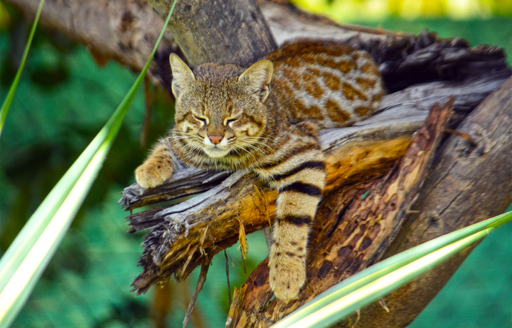
More than a decade ago, conservationists began working to preserve a unique population of desert pampas cats that has adapted to the mangroves of Peru’s northern coast. This small, isolated population roams the San Pedro de Vice dry mangroves, a Ramsar Site and South America’s southernmost mangrove ecosystem. “This is a very unique population, because as far as we know, [it] is the only Pampas cat population that lives in a mangrove [habitat],” Alvaro Garcia, co-coordinator of the Pampas Cat Working Group and the Peruvian Desert Cat Project, told Mongabay in an email. The desert pampas cat (Leopardus garleppi), distinctive for its broad face, ranges along a relatively thin band snaking southward from Colombia through Peru and Bolivia, to northern Chile and Argentina. The species is acclimated to dry conditions, so inhabits deserts, grasslands and dry forests, and isn’t found living in mangroves anywhere else aside from this region of Peru. Dry mangrove forests, also called scrub or dwarf mangrove forests, grow in highly saline soils in upper intertidal zones, so lack regular daily flushing by ocean tides. At first, it was thought the dry mangrove-acclimated cats were faring well: “[I]n the mangrove [habitat], we put cameras out for a week, and we got tons of photos,” whereas in other parts of the felid’s range, conservationists barely capture one desert pampas cat image per month, said Cindy Hurtado, co-coordinator of the Pampas Cat Working Group and the Peruvian Desert Cat Project. Based on the photos, the research team assumed the…This article was originally published on Mongabay
From Conservation news via This RSS Feed.