

Robbie Keane’s path back to Celtic has hit a massive wall, is due to him not condemning Israel’songoing genocide in Palestine.
A club where he once dazzled on loan is no longer warmly remembering him for his footballing achievements. What began as murmurs of discomfort has now hardened into robust opposition.
Dozens of Celtic supporter groups have signed a joint letter opposing Keane’s potential appointment, citing his decision to manage Maccabi Tel Aviv during Israel’s genocide of the Palestinians in Gaza.
The message is blunt. The mood is serious and the pressure on the Celtic board is unmistakable.
Celtic fans aren’t having it
Keane, the Republic of Ireland’s record goalscorer, is among the frontrunners to replace Brendan Rodgers after reports of ongoing talks with principal shareholder Dermot Desmond.
In a statement, the coalition of groups said:
For us, Robbie Keane’s decision to manage Maccabi Tel Aviv during the genocide in Gaza is impossible to ignore.
Celtic was founded by a community shaped by the legacy of genocide, displacement and famine.
Our club’s roots lie in solidarity with those who suffered injustice and oppression. We cannot forget where we came from, nor turn our backs on those facing genocide today.
Celtic fans clearly do not care about his ability as a manager; they see a man who has not spoken to oppose Israel’s genocide. And, in managing Maccabi Tel Aviv, Keane took a position with a club whose fans regularly chant “death to Arabs.”
If Keane had not realised, he will know now that the world and the club have changed and that being silent is being complicit.
Keane’s decision to remain in Israel after the outbreak of the Gaza genocide has become the defining issue for a significant section of the Celtic support. What might once have been a footnote in his managerial journey has become, for many, a line that cannot be crossed.
A growing movement
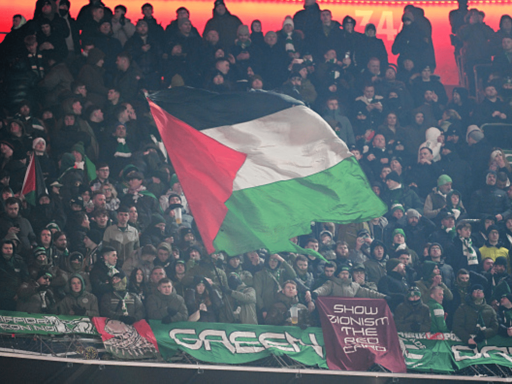
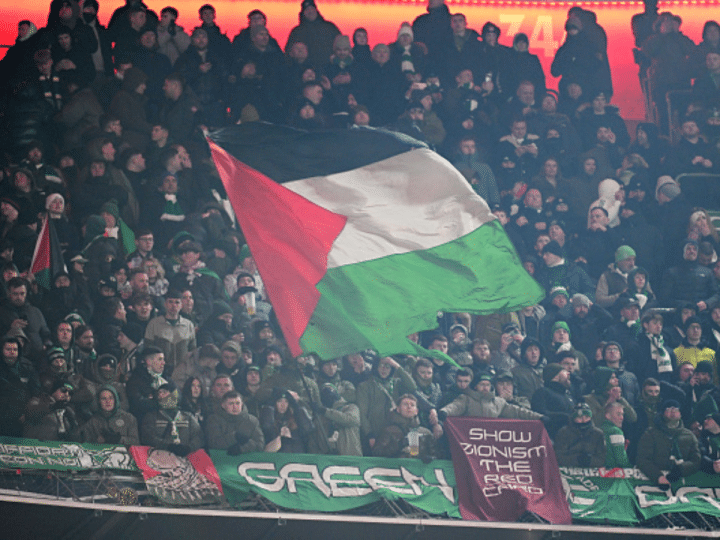
In recent days, the opposition has spilled from online forums into the physical space around Celtic Park. Graffiti and banners rejecting the idea of Keane as manager have appeared outside the stadium, signalling that this is not a fringe sentiment but a movement with momentum.
The catalyst was a statement published by a group calling itself Celtic Fans for the Liberation of Palestine. It set out a clear, uncompromising stance:
Keane’s association with Maccabi Tel Aviv during the Gaza war is incompatible with Celtic’s identity and history.
That statement has now been endorsed by 67 supporter groups, according to the North Curve Celtic account on X. The list includes some of the club’s most influential and recognisable fan collectives, the Green Brigade, the Bhoys Celtic ultras, and long‑established supporters’ clubs such as Glasgow University CSC and Craigneuk Tommy Gemmell CSC.
This is not a handful of dissenting voices. It is a coalition.
A fanbase that won’t stay quiet
Celtic’s board now faces a delicate, high‑stakes decision. Keane is a recognisable name, a former fan favourite, and a manager with an average resume. However, the backlash is real, organised and rooted in the club’s cultural DNA.
The letter from supporters warns that appointing Keane would be predictable and uninspiring at a time when Celtic should be showing ambition. More importantly, it argues that the move would fracture the unity required for the club’s next chapter.
This is not simply a debate about a manager. It is a debate about what Celtic stands for.
Keane’s situation is the latest example of how global politics increasingly intersects with football. Managers and players are no longer judged solely on results or style; their choices, associations and moral positions are scrutinised with unprecedented intensity.
For Celtic, a club with a uniquely political fan culture, that scrutiny is amplified.
Supporters have long embraced causes beyond football, from anti‑racism to workers’ rights to Palestinian solidarity. The club’s identity is inseparable from its community roots, and its fanbase has never been shy about challenging decisions that clash with those values.
In that context, the opposition to Keane is not surprising.
What happens next?
The Celtic board has not publicly commented on the letter or the growing backlash. Keane remains one of the leading candidates, but the political temperature around his candidacy has risen sharply.
If Celtic proceed with the appointment, they risk a rift with a vocal and influential section of their support. If they back away, they will be seen as a moral and fair ownership that listens to their fanbase.
This is a dynamic that could shape future managerial decisions if he is morally fit for the job.
The coming days will reveal whether the board believes the weight of fan opposition makes his appointment untenable.
What is certain is that this is no longer just a managerial rumour. It is a test of what Celtic stands for and who gets to define it.
Featured Image via Matthias Hangst/Getty Images
By Faz Ali
From Canary via This RSS Feed.