

British legacy media insist on platforming ex-military ‘experts’ without mentioning their war industry side-hustles — an issue the Canary has pointed out repeatedly. A deep-dive investigation has now revealed just how widespread the issue really is.
In April 2026, the Canary reported that former Labour MP and ex-NATO chief Lord Robertson was platformed to talk about war spending without his long-standing links to the military industry being disclosed. You can read about here and here.
NGO Action on Armed Violence (AOAV) on 3 June that an analysis of media reports between 2015 and May 2026:
NGO Action on Armed Violence (AOAV) reported on 3 June that an analysis of British media coverage between 2015 and May 2026 reveals:
a repeated pattern where almost 60% of former key military personnel with links to the defence industry were found to have been – at least once – cited in the British media primarily by a reference to their rank and previous service, without audiences being informed of their current post-service defence advisory roles, consultancies, directorships, or financial interests.
Action on Armed Violence added:
So, while post-service commercial work is common, we documented a systemic failure of the UK media to disclose such employment and to highlight potential conflicts of interest.
The NGO examined media coverage of 33 former senior military figures who had subsequently taken up roles with defence, security, technology, and intelligence companies.
Of these, we found that 19 or 58% of these had been given a media platform to debate defence matters – at least on one occasion – without the media outlets involved identified noting their commercial or financial interests in the defence industry.
Instead of informing the public about the individual’s links to war firms:
commentators were identified solely by their former military rank or previous command positions. This, we contend, creates the impression of impartial and independent expertise.
Misleading the public
Simply put, legacy media outlets are misleading the public knowingly or otherwise. Any guest booker or producer worth their salt routinely checks for and disclose potential conflicts of interest.
AOAV said:
In the UK, the public’s understanding of matters of war, national security, and defence policy is almost entirely shaped by media commentary from figures presented as authoritative military experts.
The go-to for most reporters is retired senior officers and former commanders, who are routinely quoted in print, broadcast, and digital media to explain unfolding conflicts, defence budgets, military power and, of course, to offer their opinion.
Senior ex-military officer’s views, AOAV said, “carry substantial weight:”
largely because of their professional reputation, long service, and the perceived impartiality of military expertise which – especially in the UK – is largely seen to be apolitical.
This is the assumed position of most public servants and such assumption of impartiality implicitly reaches across into their post-service opinion.
A 2024 Parliamentary report also found:
A 2024 quantitative investigation of the robustness of international trends concluded that trust in ‘representative institutions,’ such as governments, parliaments and political parties has been declining.
trust in ‘implementing institutions’ such as courts, police and militaries has remained stable.
The reasons for this can be debated, but AOAV’s study suggests that the public may be being taken for a ride on the basis of lingering trust in the military institution. Military and intelligence officials are rarely neutral or apolitical actors. Retired officers-turned-media talking heads with well-paid war industry jobs never are. And no media outlet should deprive audiences of such a critical detail.
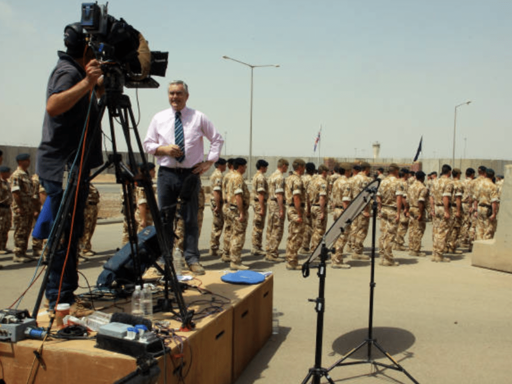
Featured image via Matt Cardy / Getty Images
By Joe Glenton
From Canary via This RSS Feed.