

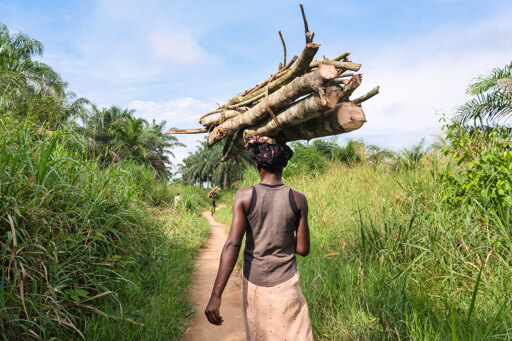
Tshopo province in the Democratic Republic of the Congo granted 31 community forest land titles to farmers in May, bringing a total of more than a million hectares of forest in Tshopo under the legal stewardship of local Indigenous peoples. Bantu and Indigenous Mbuti communities have lived in the province for generations, but without official title or control of their own lands and under the ever-present threat of extractive and development projects without their consent. Community Forestry Lands (CFLCs) include community environmental management plans. They also offer legal tenure that’s meant to ensure any development on those forest lands requires the free and informed consent of the communities holding the tenure rights. According to the deforestation-tracking platform Global Forest Watch, Tshopo province lost roughly 46% of its total tree cover between 2002 and 2025, largely driven by timber harvesting, charcoal production and mining. These activities degrade the ecosystem and destabilize the livelihoods and food systems of indigenous peoples. “[E]xtreme poverty is gaining ground among indigenous peoples and local communities, for whom the forest is more of a habitat than a source of vital goods and services,” Alphonse Maindo, director of the environmental NGO Tropenbos DRC that helped the communities obtain CFLCs, told Mongabay’s Didier Makal. The recently granted community forest concessions in Tshopo, when added to other such community management areas, means nearly 6.3 million hectares (15.5 million acres) of secured land in the DRC. That’s an area roughly the size of Togo. Some local residents are planning to start beekeeping and cocoa…This article was originally published on Mongabay
From Conservation news via This RSS Feed.