

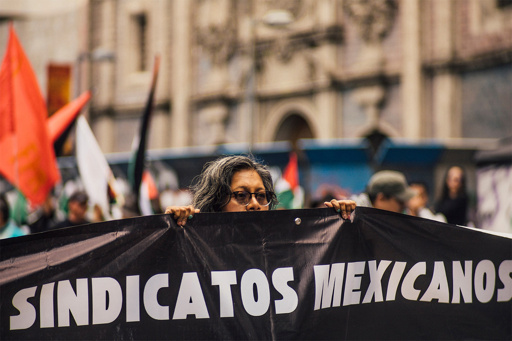
This year, hope alternated with loathing as renegotiation of the USMCA grew closer. Due to neoliberal “free” trade agreements, workers in the US, Mexico and Canada have lost purchasing power and bargaining power as companies roamed the world like beasts of prey, looking for low-wage and low worker-protection environments where the juiciest profits could be made.
While unions and labor advocates have thoroughly researched the effects of the USMCA and sent them to the authorities, none of the three governments paid attention. Many of us dropped hope from our emotional menu and were left with just fear and loathing.
Luckily, I tuned in to a webinar hosted by the UCLA Center for Mexican Studies and heard Sandra Polaski talk about how raising Mexican wages could actually be a point of unity for the US and Mexico. She’s been a union negotiator, has looked at labor from a global perspective as the Deputy Director-General of the 85-nation International Labour Organization (ILO), and has also been a US government trade negotiator. So, she’s hardly one to suggest the impossible!
The case that raising wages is a strategic issue for international negotiations — not just giving workers a much-deserved bigger piece of the pie — was an eye-opening perspective. Maybe there is hope for some improvement for workers and not just for corporations in a revised USMCA.
But even more hopeful — Polaski outlines how Mexico can pass its own internal policies to raise wages, including stronger support for independent union organizing. This can be an important piece of their economic development strategy as they wean themselves off of neoliberal dependence on export dollars. Mexico itself can and has raised wages — and the hopes — of Mexican workers.

Sandra Polaski is a Non-resident Senior Fellow with the Global Economic Governance Initiative at Boston University’s Global Development Policy Center and a member of the Independent Mexico Labor Expert Board, appointed by Congress to assess how well Mexico’s labor reforms comply with the USMCA’s labor chapter. During the Clinton and Obama administrations, she helped to negotiate the labor provisions in trade agreements. She was Deputy Director-General for Policy of the International Labor Organization (ILO).
Should Mexican wages be an issue in the July USMCA review?
Yes. Before and especially after NAFTA was implemented in 1994, low wages in Mexico provided US companies the incentive to move production there. US workers lost jobs, their wages declined and a “rust belt” replaced vibrant industrial communities. That gave rise to worker discontent — and Trump used that discontent to win the presidency in 2016. He then renegotiated NAFTA in 2018, resulting in the USMCA.
But since the USMCA, the wage gap keeps widening, with Mexican wages staying flat and US and Canadian wages rising. Not surprisingly, US companies continue to move to Mexico. Low wages in Mexico suppress local household demand for domestic goods, forcing the economy to rely heavily on exports to the US. This dependence is now being weaponized to extract various concessions from the Mexican government.
Average Annual Wages in North America at Constant Prices, 1994-2024
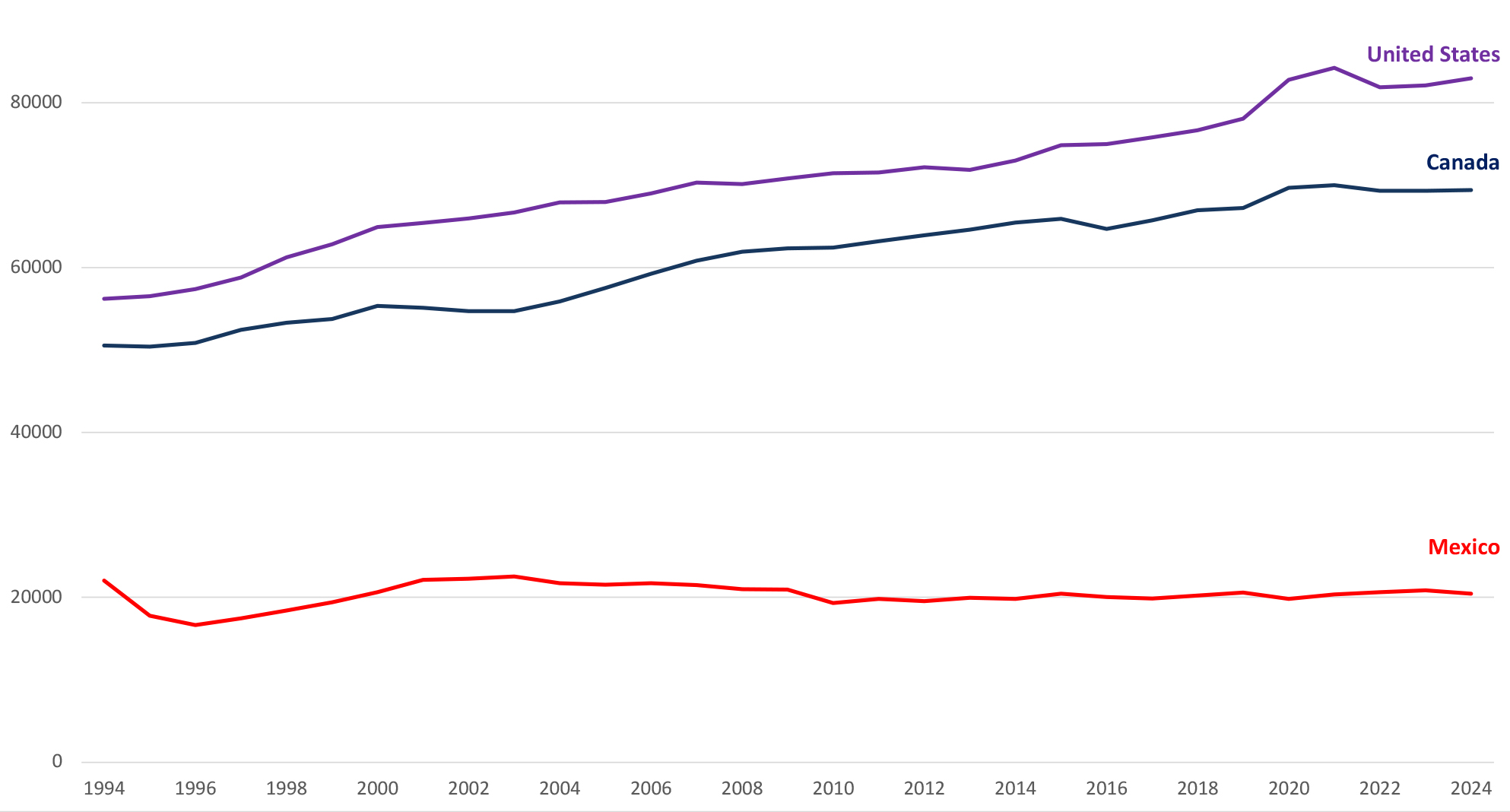
Polaski’s elaboration based on CONASAMI 2026a. Extracted from her article USMCA and the Need for a “Second Story” of Mexican Wages and Household Incomes
This wage inequality is a political irritant for both countries, and each will benefit if Mexican wages rise. Strategically, renegotiation of the USMCA will be an opportunity to benefit workers on both sides of the border.
Didn’t wages rise under presidents Lopez Obrador and Sheinbaum?
Let’s go back. Between 1980, when the neoliberal era began, and 2018, Mexico’s strategy was to grow the economy through exports. GDP did grow, and some individuals got very rich. But it severely hurt workers — between 1980 and 1995, Mexican workers lost 66% of their purchasing power, and wages stagnated for twenty years.
When President Lopez Obrador came in, he reversed course by instituting dramatic increases in the minimum wage. From 2019 on, continuing under President Sheinbaum, the minimum wage has gone up annually by double-digit percentages. In the northern border region, where export-oriented maquilas are the major employers and the cost of living is higher than in the rest of the country, the government mandated an even greater percentage. Since more than one-third of Mexican workers earn only a minimum wage, these raises made a huge difference to working-class households. AMLO’s presidency lifted 13.4 million people out of poverty; the increased minimum wage alone lifted 6.6 million of those.
So, what’s the problem? About 34.3% still work in poverty. President Sheinbaum has promised that by 2030, the minimum wage will cover 2.5 “basic consumption baskets” — one “basket” ensures subsistence for one person. For that, the minimum wage must continue rising by 12% a year.
Average wages haven’t grown nearly as quickly as the minimum wage. Why? First, instead of competing, a few corporations dominate the market in various sectors and collude in setting wages at a common low rate, so workers have no alternatives. Second, the government enforces labor laws inconsistently, particularly in the huge informal sector, and generally workers in smaller enterprises lack bargaining power. Third, because corrupt charro unions are so dominant, it’s difficult for workers to bargain for higher wages.

Selling fruit in Mexico City. Photo: Jay Watts
How have low average wages impacted Mexico’s overall economic health?
Mexican average wages lag behind all other G20 developing countries. Workers’ income as a share of the overall Mexican GDP is one of the lowest in the world — Mexico is among the top countries where owners take home the largest percentage of business revenue as profit. This is why domestic demand is low.
Labor Income Share as a Percent of GDP, Mexico and Selected Countries
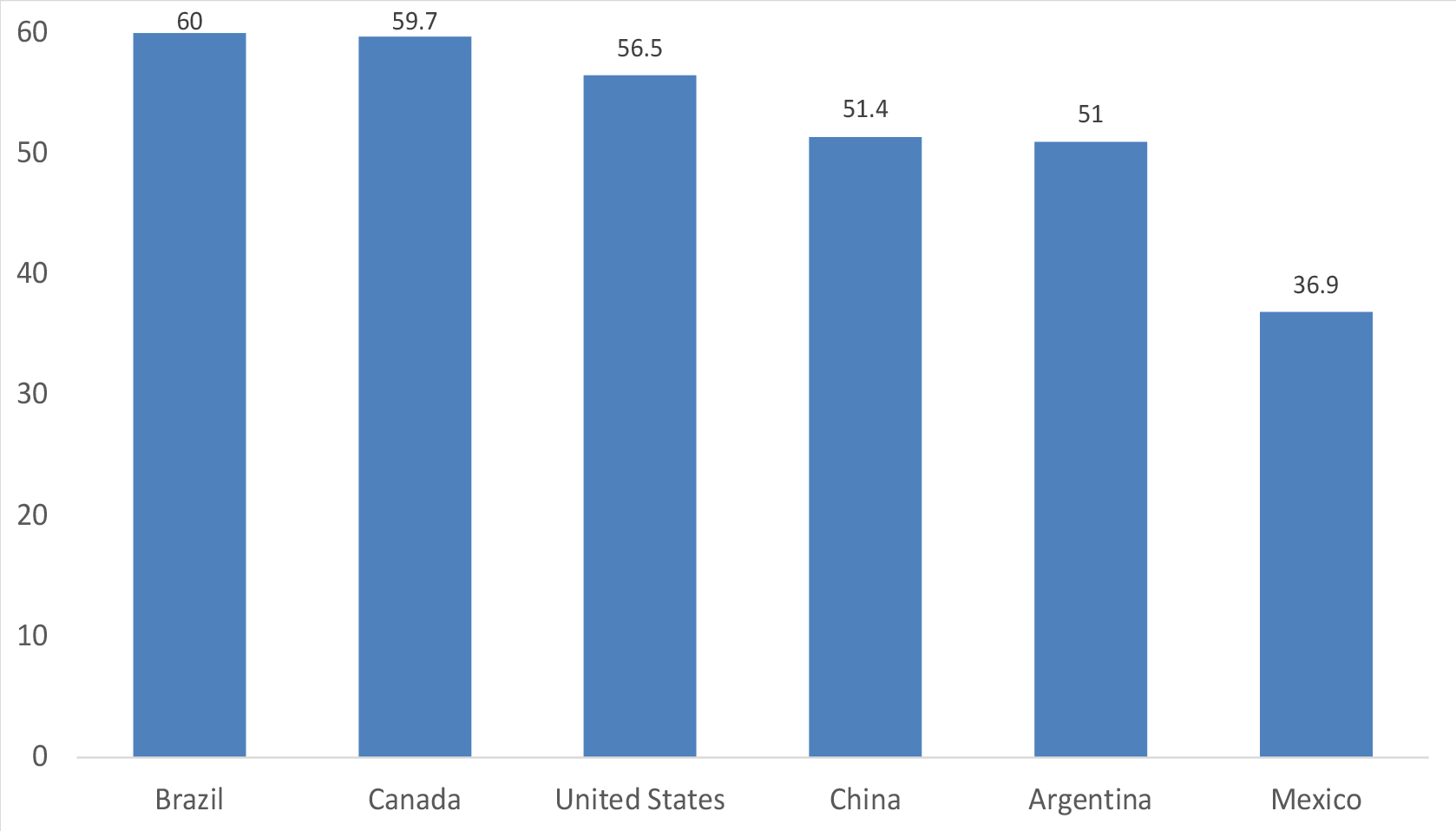
A low demand for goods leads to a low investment in Mexico’s domestic market. To make progress, Mexico has to increase domestic demand, and to do that, it must increase wages.
What can Mexico do to meet those challenges?
I see several policy steps Mexico could take.
First, the government should continue to grow the minimum wage, the key element of the “first story” in Mexico’s economic transformation. To build the “second story” — President Sheinbaum’s promise to build on the pro-worker foundation set by AMLO — they must step up the pace to approach equality with US wages. We can’t wait until 2030 to end working poverty! Export sector workers need their minimum wage raised to 2.5 baskets right now and to reach at least 3 baskets by 2030. In northern Mexico, with its higher cost of living, the minimum wage for exporting firms should be 3.5 baskets now and 4 by 2030.
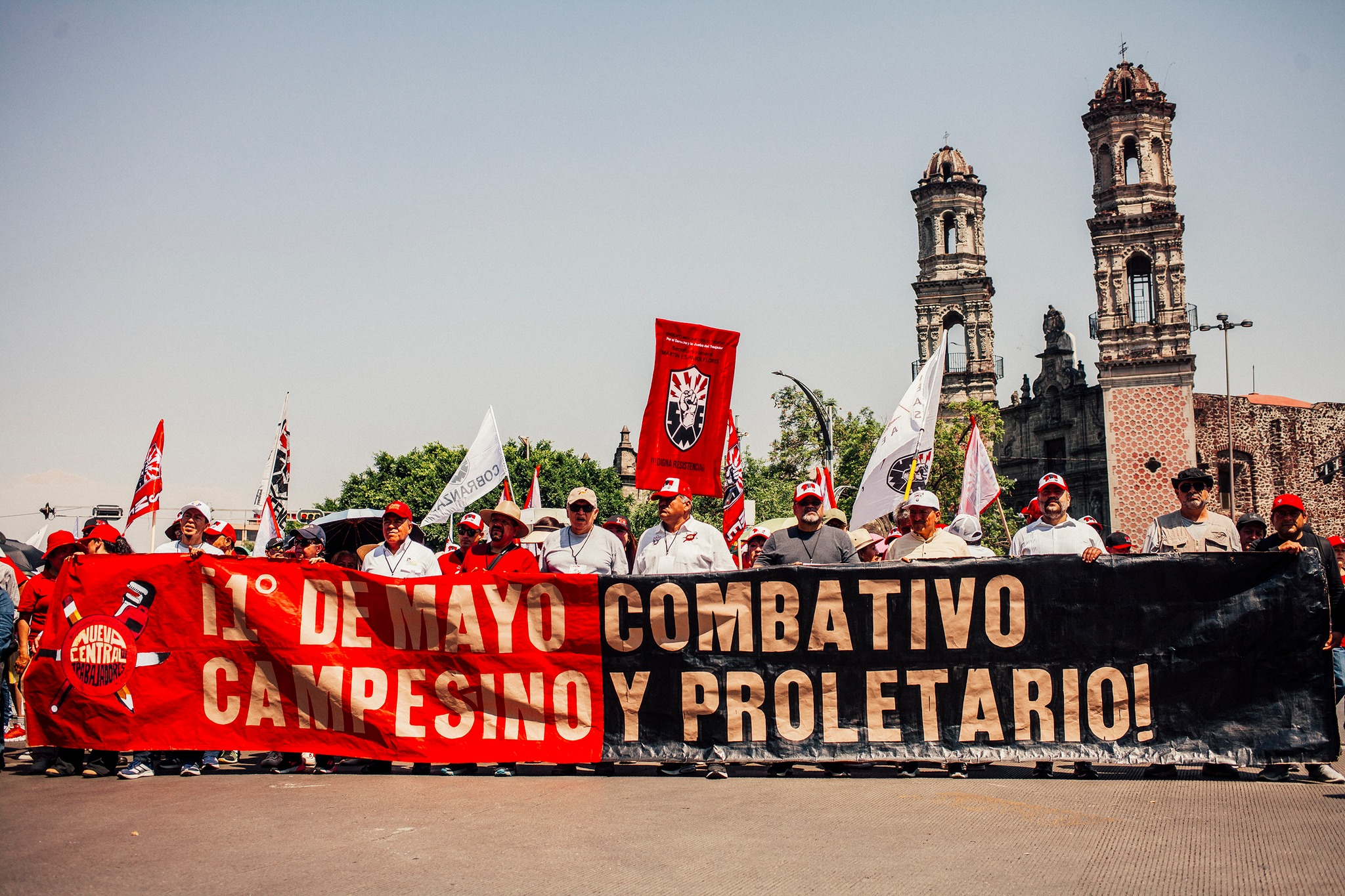
International Workers Day, May 1st, 2026 Mexico City Photo: Jay Watts
The government can also provide meaningful protection to workers organizing independent unions so they can bargain themselves for higher wages. This requires further reform of Mexico’s labor law.
For example, the government currently fails to sanction companies violating the right of workers to organize, claiming it doesn’t have the legal authority. With no penalty, companies continue to violate workers’ rights. Also, because many companies refuse to bargain once workers win an independent union, the government must enforce their obligation to bargain in good faith and to prohibit blacklisting of worker activists.
The Mexican labor department has only 1.1 inspectors for every 100,000 workers, a fraction of the ratio of 4.1 per 100,000 workers that is typical in other middle-income developing countries.
Labor agencies lack the institutional capacity to inspect, investigate, and enforce the law. Now, the Mexican labor department has only 1.1 inspectors for every 100,000 workers, a fraction of the ratio of 4.1 per 100,000 workers that is typical in other middle-income developing countries. The Federal Center (CFCRL) responsible for overseeing organizing and bargaining rights is badly understaffed and poorly paid, resulting in corruption and staff turnover. The Mexican government has chosen to underfund the labor agencies. This must change.
A policy tool that aims to attract foreign and domestic investments in key sectors could be added to President Sheinbaum’s Plan Mexico. Mexico should require that those employers comply with all wage and labor rights protections or lose the tax breaks and other incentives that are part of the Plan.
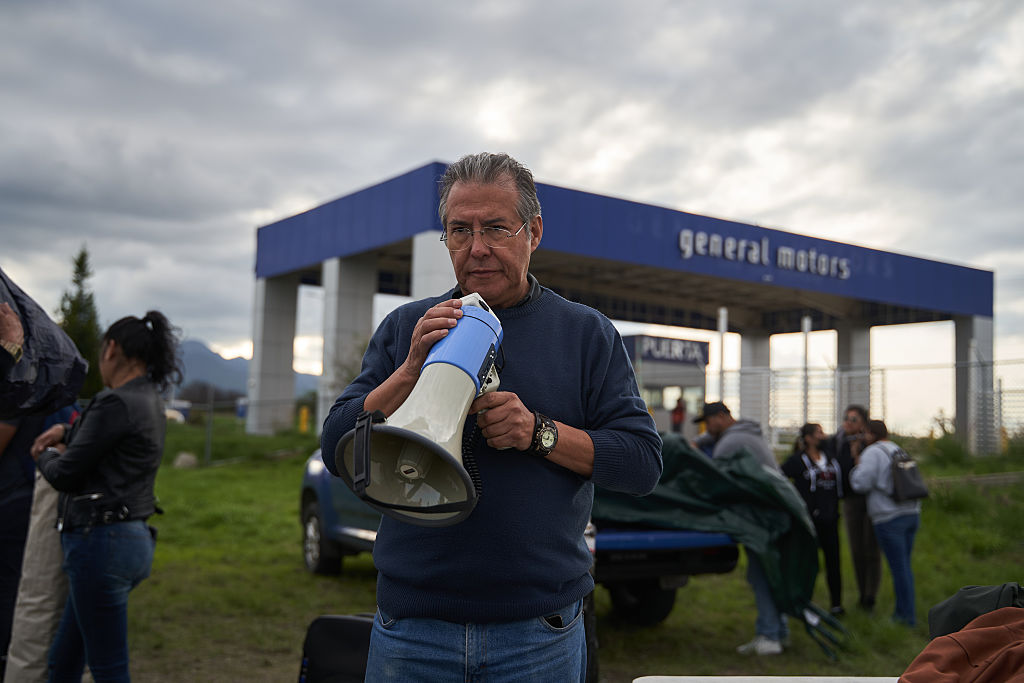
Hector de la Cueva, advisor to SINTTIA, at a rally outside the General Motors assembly plant in San Luis Potosi, Mexico, on June 26, 2025. Mauricio Palos / Bloomberg via Getty Images: courtesy Jacobin
Finally, the Rapid Response Labor Mechanism in the USMCA should be leveraged as a backstop and complement to Mexico’s own internal efforts. It should be looked at as a means to reinforce national efforts, rather than as foreign intervention that challenges its sovereignty as it currently claims.
Do you have hope that the USMCA renegotiations can help build Mexico’s “second story”?
Mexico must shift from the low-wage, export-led growth model of the last half century that has impoverished workers. It will take time and new policies to grow a domestic market based on higher wages for labor and greater household purchasing power. The US wants to see Mexican wages rise to relieve pressure on its own labor markets and trade deficit. The USMCA review could provide a strategic opportunity for Mexico to make progress on its interwoven problems of low wages, poverty, slow economic growth and over-reliance on the US market for its exports.
As a long-time negotiator, I see an opportunity for mutual agreement: the US’s own self-interest in seeing Mexican wages rise provides a common ground. Together, both countries could agree on a bargain that improves Mexican workers’ incomes and their ability to organize and bargain for their own well-being. Success depends on both countries recognizing that workers’ rights and wages are fundamental to building a more stable, resilient and fair North America.
Meizhu Lui’s experiences as the daughter of Chinese immigrants and as a single mom led her to focus on addressing inequalities based on race, gender, and immigration status. A hospital kitchen worker, she was elected president of her AFSCME local. She coordinated the national Closing the Racial Wealth Gap Initiative, and co-authored The Color of Wealth: The Story Behind the U.S. Racial Wealth Divide. Liberation Road, a socialist organization, has been her political home.
-
Sheinbaum to US Ambassador: Mind Your Own Business – Soberanía 109
June 4, 2026
A week of dramatic escalation in U.S.-Mexico tensions and President Sheinbaum’s forceful response.
-
Analysis | Interviews | Labor
Raising Wages: a Tool for Economic Development
June 4, 2026June 4, 2026
Mexico can’t wait until 2030 to end working poverty, says Sandra Polaski, a member of the Independent Mexico Labor Expert Board.
-
CNTE: A Media Manual for Inciting Hatred
June 4, 2026
We have returned to the stage of prioritizing lies over a minimum exercise of truthfulness, wrote Jenaro Villamil in 2013. Plus ça change, plus c’est la même chose.
The post Raising Wages: a Tool for Economic Development appeared first on Mexico Solidarity Media.
From Mexico Solidarity Media via This RSS Feed.