

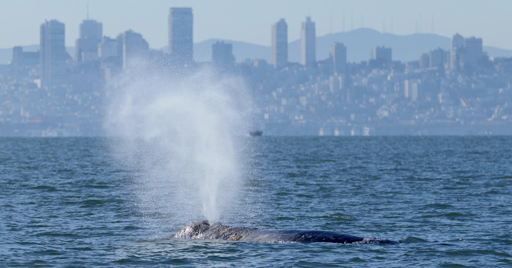
Starting in 2018, gray whales began regularly stopping in California’s San Francisco Bay, where they are vulnerable to ship strikes in one of the busiest ports in the United States. In response, researchers have deployed a monitoring network of thermal cameras and AI software to alert ships when whales are present in the bay to help them avoid whale collisions. Gray whales (Eschrichtius robustus) have one of the longest migrations of any mammal species, roughly 19,000 kilometers (12,000 miles) from their feeding grounds in Alaska to their breeding grounds in Mexico, and back again. Climate change is making their feeding grounds in Alaska less productive, leaving the whales hungry as they head south to breed. Scientists believe that’s why gray whales have started stopping in San Francisco Bay to eat along their migration route. But the new pit stop brings whales into busy shipping zones, where more than 20 were killed by ship collisions in 2025, according to a news release. Whale biologists at the Benioff Ocean Science Lab, WhaleSpotter, and the Marine Mammal Center have developed thermal cameras that can detect the heat signature of whale spouts and bodies when the whales surface. “Next a trained human confirms the detection and will help classify the species when possible,” Rachel Rhodes, a project scientist with the Benioff Ocean Science Lab told Mongabay in an email. Then the information is, “posted publicly on [the] Whale Safe website, which is accessed by mariners in the Bay Area including Vessel Traffic Service and…This article was originally published on Mongabay
From Conservation news via This RSS Feed.