

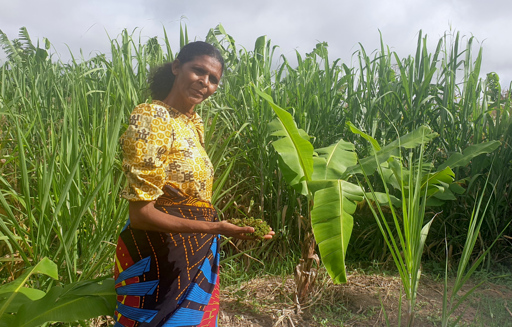
CHIRADZULU, Malawi — Diana Sitima’s farm on the outskirts of Malawi’s commercial capital, Blantyre, is both example and an exception. Where neighboring farmers have planted mostly maize for food and for sale in nearby markets, people drive out to buy sweet potato, pigeon peas and vegetables, bananas and avocado, and eggs produced on Sitima’s 3.5-hectare (8.6-acre) property. Sitima started farming in 1993. Unlike her neighbors, farming was a side hustle to begin with: she worked as an office assistant in Blantyre and her husband had a good job with a bank. Over the next seven years, she and her husband took out a series of micro-loans, renting small parcels of land and hiring people from the village to grow tomatoes for sale in the city. Sitima’s efforts went well, and because her family did not have to rely on their harvest for food or an income at that time, she was able to save the money she earned to take a next step. She quit her office job and acquired a farm of her own in Chiradzulu district, 15 kilometers (9 miles) east of the city. “That’s how I made money to be able to buy this land when it was put up for sale in 2006,” she says. While she was still a part-time farmer, Sitima attended several workshops, where she picked up ideas about agroecological farming — an approach combining crops, agroforestry, fish ponds, poultry and livestock, in a self-reinforcing system that protects soil health and reduces the…This article was originally published on Mongabay
From Conservation news via This RSS Feed.