

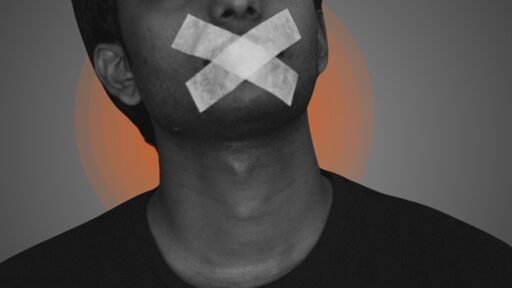
CAGAYAN DE ORO — Networks of alternative news outfits and development workers expressed alarm over the swift development of a proposed measure seeking to penalize the spreading of false information.
This came after House Bill (HB) No. 9465, or the Digital Media Anti-False Information Act, a substitute bill consolidating 16 similar measures, was passed by the House of Representatives on second reading during its plenary session on May 26, the same day that the committee report of this bill was submitted to the Committee on Rules and included in the official business.
On Wednesday, June 3, the lower chamber approved the bill on third and final reading in a vote of 286-3 with seven abstentions.
Gabriela Women’s Party Representative Sarah Jane Elago, who voted against the passage of the measure, acknowledged the need to combat disinformation amid the rampant use of artificial intelligence (AI). However, she said HB 9465 won’t address the problem.
“Strong reliance on specific intent to cause verifiable public harm opens the bill to the possibility of abuse in its implementation,” Elago said, explaining her vote during the plenary session.
The People’s Alternative Media Network (Altermidya), on the other hand, pointed out that it could enable state censorship and attacks against critical voices, which is a violation of press freedom and the people’s freedom of expression and right to dissent.
Read:Why we don’t need a law against ‘fake news’
In February, the proposed Anti-Fake News and Disinformation Act filed by presidential son Ilocos Norte 1st District Rep. Ferdinand Alexander “Sandro” Marcos, one of the consolidated bills, was included in the priority measures identified by the Legislative-Executive Development Advisory Council (LEDAC).
What does HB 9465 say?
Disregarding the truth, the bill prohibits knowingly and willfully publishing and disseminating false information, including synthetic or materially manipulated media without adequate disclosure, that is a threat to national security or with the intent to cause public harm.
This includes financing and operating troll networks—including whether in coordination or controlled by a foreign entity—to disseminate such information.
It also prohibits the impersonation of government agencies, health and educational institutions, emergency-response authorities, media organizations, or a real person to disseminate false information.
False information, under the bill, refers to any information that is fabricated, manipulated, or presented as fact with the intent to mislead the public. Disinformation, meanwhile, refers to false or misleading factual information created, materially altered, or disseminated with knowledge of falsity.
Merely liking, sharing, forwarding, or reposting false information shall not be deemed dissemination, unless a person has knowingly and willfully participated in the prohibited acts.
Section 5 provides that the measure upholds the protection of free speech, legitimate expression, and other related rights. Section 6, on the other hand, enumerates the obligations of digital platforms to ensure compliance.
Once enacted, a violator shall face 6-12 years of imprisonment and a fine from P500,000 to P2 million, or both.
For second and subsequent offenses, a penalty from P1 million to P10 million, depending on the offense, shall be imposed on digital platforms that fail or refuse to comply with their obligations.
The Department of Information and Communications Technology (DICT) may also impose a penalty of up to six percent of Philippine annual gross revenue for grave and repeated violations of large digital platforms.
‘State-directed censorship’
The Council for People’s Development and Governance (CPDG), a network of non-government organizations working for development effectiveness and democratic governance, opposed HB 9465, seeing it as “a mechanism for state-directed, platform-enforced censorship.”
In its position paper released on June 2, the group viewed the measure as a threat to further shrink civic space due to the proposed penalties.
“The severity of a 12-year prison threat creates an immediate chilling effect that effectively stifles public dissent long before a court reaches a final verdict,” a part of the position paper posted online reads.
It also questioned the proposed establishment of an Out-of-Court Dispute Settlement (ODS) body under Section 3©, which shall be a DICT-accredited independent institution that would provide dispute resolution services to users’ appeals of decisions handed down by digital platforms, as well as the proposed “vetted researchers” under Section 3(bb) that shall be accredited by DICT or the National Privacy Commission (NPC) to study systemic risk.
For the group, these introduce conflict of interest and may only accredit “state-aligned entities.”
Read:Why journalists, media literacy advocates oppose anti-fake news bills
CPDG urged legislators to reject HB 9465, focus on integrating deep media and information literacy programs, and prioritize bills that protect civic space, such as the proposed Human Rights Defenders Protection Act and Freedom of Information Bill—which both the Senate and the House passed their respective versions.
“[T]he solution to disinformation is not the restriction of expression, but the expansion of democratic transparency and media empowerment,” the group stressed. (RVO)
Disclosure: Bulatlat is a member of the Altermidya network.
The post Swift dev’t of anti-disinformation bill alarms groups appeared first on Bulatlat.
From Bulatlat via This RSS Feed.