

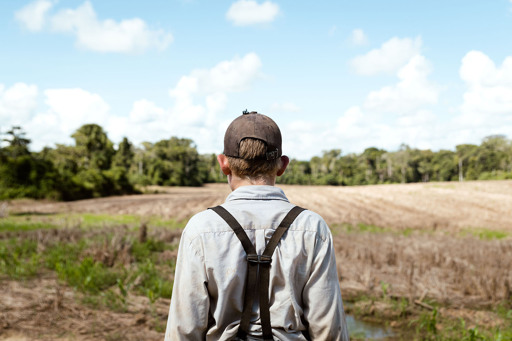
In the global debate over tropical deforestation, the usual cast of villains is well established: agribusiness, global supply chains, cattle ranchers, and governments granting land concessions for political support. One actor rarely appears in this narrative yet has played a consequential role in transforming the South American lowland frontier: The Mennonite agricultural colonist. For more than five decades, Mennonite communities have functioned as systematic agents of agricultural frontier expansion in the Gran Chaco and Andean Amazon, methodically clearing forests, draining wetlands, and catalyzing waves of deforestation that extend far beyond any individual colony. Mennonite communities operate within the law. They purchase land through formal channels, build permanent communities, and transfer agronomic knowledge to surrounding populations. Their values emphasize hard work, communal solidarity, and a theological relationship to land as stewardship. None of this changes the ecological outcome: Wherever a Mennonite colony is established, forests fall. Faith, mobility and colony formation Mennonites are an Anabaptist denomination rooted in the 16-century Reformation, distinguished by pacifism, communal life, and cultural separation from mainstream society. Conservative congregations — whose ancestors moved from Russia to Canada, then to Mexico, Belize and South America — are organized around a local congregation that functions simultaneously as a religious community, governance structure, credit cooperative and social welfare system. When a colony is established, it is an orderly community with collective decision-making, shared infrastructure, and a coherent plan for the future. Forest being cut, burned, and prepared by a Mennonite colony before planting crops. Image courtesy of Mario Silvero.…This article was originally published on Mongabay
From Conservation news via This RSS Feed.