

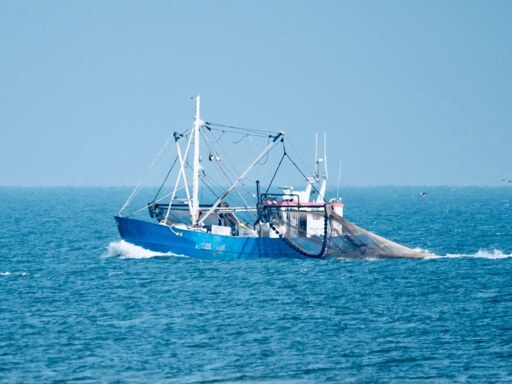

Less than a quarter of the UK’s largest commercial fishing vessels may have clear ownership transparency. And this is creating a systemic blind spot in UK fisheries governance.
Environmental law organisation ClientEarth has laid out these findings in a new analysis: Whose Boat Is This?
The current regulatory gap on commercial fishing vessel ownership risks enabling vessel owners to operate through complex corporate structures and hide behind shell companies. This can mask the Ultimate Beneficial Ownership (UBO) of these vessels.
ClientEarth’s Kyle Lischak said:
The core problem is simple: the government does not publicly identify who really owns many of the vessels commercially fishing UK waters to a clear and satisfactory extent.
This lack of transparency around vessel ownership, which limits accountability, allows for unlawful fishing practices to potentially occur.
The UK is a leading maritime nation and a global ocean governance actor. It has consistently supported international efforts to tackle illegal fishing and improve fisheries transparency through initiatives such as the Illegal, Unreported, and Unregulated Fishing Action Alliance and its wider engagement in multilateral ocean governance forums.
However, it falls short of implementing the highest standards domestically because the UK current regulation does not require disclosure of ultimate beneficial owners for all commercial fishing vessels operating under its jurisdiction.
In particular, key systems such as vessel registration and fishing licences do not effectively capture who ultimately owns or controls vessels.
When ownership cannot be identified, the UK cannot rule out links to organised crime, sanctioned entities, or hostile actors. In cases where ownership is untraceable, the trail leads to opaque offshore jurisdictions.
Illegal fishing practices
The lack of regulation weakens national oversight in UK waters, making this a matter of economic control and national security, as well as public safety.
Without clear ownership and accountability, the UK public cannot be completely confident that the seafood harvested by UK vessels, and other commercial vessels that fish in UK waters, is legally and sustainably sourced. Lischak said:
At a time of focus on domestic security, the UK cannot fully account for who is exploiting its marine resources.
The UK, and the devolved governments, now have clear evidence of a major transparency gap in their fisheries governance. This regulatory gap exposes the country to risks linked to organised crime, illicit financial flows, sanctions evasion and other illegal activities associated with global fishing networks.
Most UK fishers make real and concerted efforts to follow the rules but they may be left competing with opaque commercial operators whose ownership can remain hidden behind complex structures.
When ownership is unclear, enforcement is weaker and any bad actors are not held accountable, this can create unfair competition for honest UK fishers and lead to market distortions. Lischak commented:
Law-abiding UK fishers may be left competing with operators who do not play by the same rules.
This opacity also has direct environmental consequences. Illegal and unaccountable fishing accelerates overexploitation, damages marine ecosystems, and undermines efforts to manage ocean resources sustainably and ensure food security. Lischak continued:
The ocean is one of the UK’s greatest allies on future food and job security, and in the fight against climate change. Weakening its health through poor oversight puts us all at risk.
Calls for reform
The UK already has established frameworks that could improve fisheries transparency, including company ownership rules and new verification powers.
To live up to its reputation as a global ocean governance leader, the UK must close the gaps by requiring UBO disclosure at commercial fishing vessel registration and licensing stages, lowering ownership thresholds to make it harder to hide, and publishing UBO data in a publicly accessible register.
It needs to strengthen the enforcement of company disclosure requirements and restrict access to UK waters for commercial vessels with opaque ownership, closing loopholes that currently allow anonymity to persist.
Countries around the world are endorsing the Global Charter for Fisheries Transparency and implementing its 10 principles, including UBO disclosure. The UK also supports the Charter, but now it needs to act on it or risk undermining its leadership on this issue more broadly.
Lischak added:
These reforms would strengthen enforcement, protect UK fishers, and build public trust. The solution is practical and achievable with existing tools. It is now up to the UK to act.
You can read the full report here.
Featured image via Getty Images
By The Canary
From Canary via This RSS Feed.