

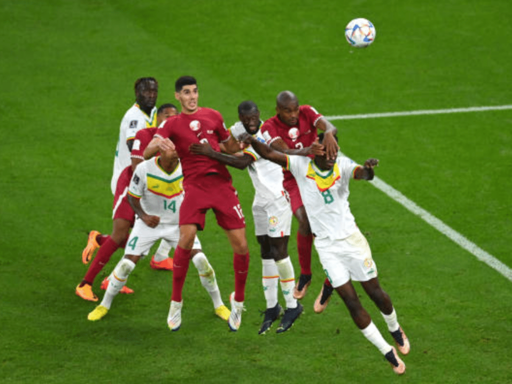

Four years after Qatar became the first Arab country to host the World Cup, they return to football’s biggest stage with unfinished business.
As hosts in 2022, Qatar’s national team — Al Annabi — struggled under the spotlight, losing all three group matches and finishing without a point. The campaign contrasted sharply with Qatar’s recent dominance in Asia, making the early exit harder to swallow. Questions quickly followed — did Qatar buckle under the pressure, or was it simply not ready to face the world’s top teams?
The 2026 World Cup could finally settle the question.
Qatar: A team in flux
Many of the players who shaped Qatar’s rise remain at the heart of the squad.
Akram Afif continues to drive the team, capable of moments that can swing a game. Almoez Ali and Hassan Al-Haydos bring hard-won experience that few Asian sides can rival.
More intriguing is the rise of a new generation. Young players bring pace, energy, and versatility—especially in midfield and on the flanks—giving Qatar a sharper edge than four years ago.
The challenge, however, remains the same. Against top-level opposition, Qatar must cope with a faster game, quicker decision-making, and a level of physical intensity rarely seen in Asian competition.
Quick feet
One of Qatar’s biggest strengths is its tactical flexibility. The team used to rely mainly on keeping the ball and building patiently from the back, but now it can adapt depending on the game. Qatar can sit deep and defend in numbers, break quickly on the counterattack, or press higher up the pitch when needed.
Akram Afif remains the creative spark, finding space to make things happen and driving the attack. Around him, the team can adjust its formation or approach depending on the opponent, giving the coach more options. In a World Cup, where a single moment can change everything, that flexibility could prove crucial.
Where is counts
Qatar’s group presents an opportunity rather than an impossible task. Switzerland will offer an immediate measure of where the team stands, while the clash with Canada could prove decisive in the race to reach the knockout rounds.
Reaching the last 16 would mark real progress and a clear step forward from 2022. Anything beyond that would be a significant achievement.
But this tournament is about more than results. Qatar has already shown it can host the biggest event in world football. Now it must prove that the team has a place at this level.
For Al Annabi, 2026 is a chance not just to compete, but to redeem itself after 2022
Featured image via Dan Mullan / Getty Images
By Alaa Shamali
From Canary via This RSS Feed.