

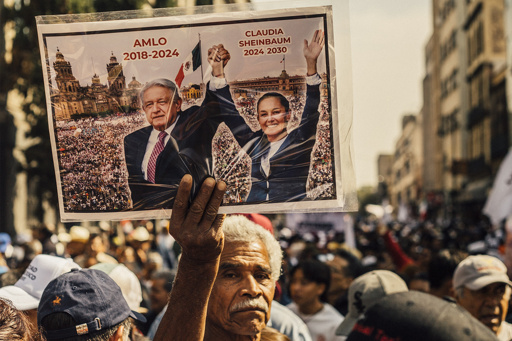
This editorial by José Romero originally appeared here on June 2, 2026. The views expressed in this article are the authors’ own and do not necessarily reflect those ofMexico Solidarity Mediaor theMexico Solidarity Project*.*
For years I’ve had the impression that Mexican public discourse revolves around the wrong question. The debate centers on whether the Fourth Transformation was too radical or too moderate. In my view, the problem was something else entirely: it concentrated its political energy on modifying income distribution, but not on transforming the economic structure that produces the country’s low growth, informality, financial dependence, and industrial weakness.
The government confronted the opposition, the media, autonomous agencies, judges, technocrats, intellectuals, political parties, and entrenched bureaucracies. But it did not confront with the same force the hard core of the Mexican economy: foreign banks, large business groups, technological dependence, widespread informality, productive subordination to the United States, and the absence of a state capable of guiding private capital toward national objectives.
That is its historical limit.
The Fourth Transformation (4T) altered income distribution, but it did not change the underlying structure that produces underdevelopment. It distributed more wealth, but it did not produce more. It raised wages, but it did not sustainably increase productivity. It expanded social programs, but it did not build a sufficient tax base to support them indefinitely. It spoke of sovereignty, but it did not touch foreign banks, it did not build a professional civil service, it did not create strong national companies, and it did not challenge the United States on truly strategic issues.
The transformation changed the frame, but it didn’t change the engine.
Sovereignty isn’t sustained by rhetoric. It’s sustained by banks, businesses, technology, bureaucracies, credit, infrastructure, productivity, and state capacity. Without these instruments, sovereignty becomes a slogan: it might help win elections, but it won’t help industrialize a country.

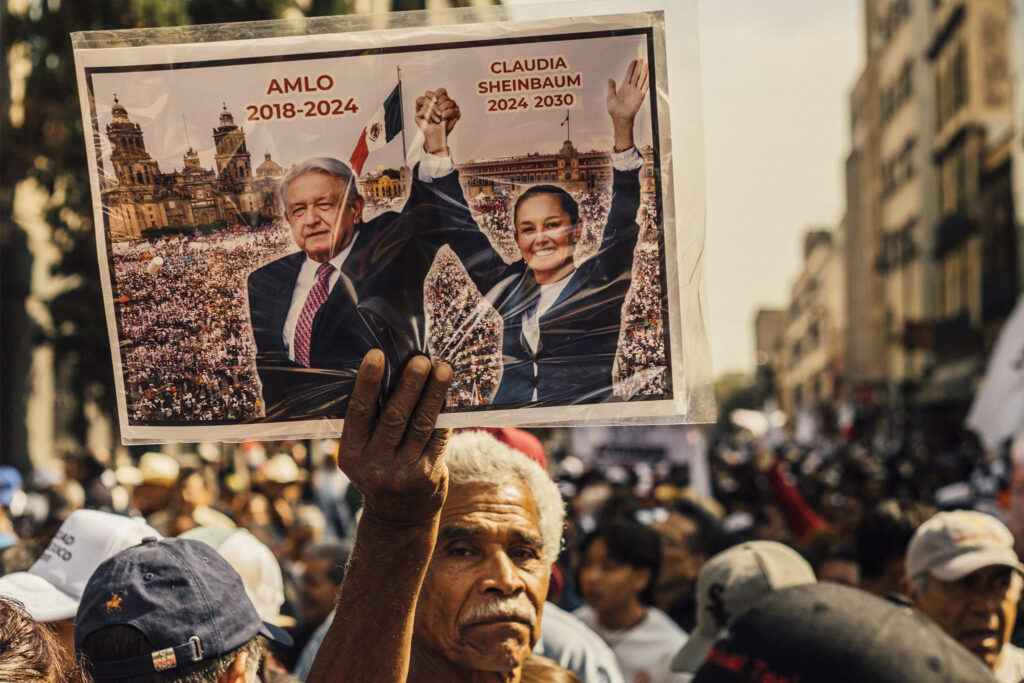
Photo: Jay Watts
Redistribution is not Development
The 4T did redistribute wealth. That’s a fact. What it failed to do was build the economic capacity to make that redistribution sustainable.
Social spending isn’t the problem. The problem is believing that social spending can replace a development strategy. For decades, the right wing argued that growth should come first, then distribution. The current administration responded by prioritizing distribution. This adjustment was necessary given the country’s profound inequality, but redistribution alone doesn’t create an advanced economy. It can improve the present; it doesn’t guarantee the future.
Social programs alleviate poverty; they don’t replace productivity. Pensions provide dignity to millions of senior citizens; they don’t create industries. Scholarships help young people; they don’t build technological ecosystems. The minimum wage improves income; it doesn’t, in itself, guarantee productive transformation. The Mexican left learned to distribute, but it didn’t learn to produce. And without production, distribution has its limits.
The social results exist and must be acknowledged. Between 2022 and 2024, the population living in multidimensional poverty fell from 46.8 million to 38.5 million people: a reduction of 8.3 million. In 2024, poverty affected 29.6% of the population. Denying this progress would be wrong. But using it as proof of structural transformation would also be a mistake. Poverty can decrease due to wages, social transfers, and the labor market without the country having changed its productive base.
A welfare state needs a functioning economy to fund it. Mexico, however, collects little in taxes relative to its social ambitions. In 2024, tax revenue was 18.3% of GDP, the lowest level among OECD countries. The organization’s average was 34.1%.
The contradiction is clear: Mexico wants the social rights of a developed country but has the fiscal structure of a weak one. It wants universal pensions, healthcare, education, infrastructure, security, science, technology, industrial policy, and social transfers, but it still lacks the necessary productive and fiscal base to sustainably finance them.
By 2026, the Economic Package proposed strengthening Welfare Programs with 987.16 billion pesos, more than 2.5% of GDP. The Pension for Older Adults accounts for 526.508 billion pesos. Furthermore, the CIEP estimated that contributory and non-contributory pensions represented 5.8% of GDP in 2024 and could reach 7.1% in 2030, or even 7.8% under certain scenarios.
Social programs must exist. The problem is that they cannot be sustained without a profound productive transformation. A country can distribute resources more equitably for a few years, but it can only maintain lasting well-being if it produces more, formalizes more employment, innovates more, and collects more taxes. The risk is building a welfare state without a development state: a government that distributes more but doesn’t create the conditions to sustain what it distributes.

Photo: Jay Watts
Informality, Low Growth & Weak Investment
Informality is not an accident. It is a direct expression of the failure of the Mexican economic model.
When more than half of the workforce lives in the informal sector, the problem isn’t just one of legal compliance. It’s a sign that the economy isn’t generating enough productive jobs. The informal sector is where Mexico sends those who don’t fit into its formal economy.
In March 2026, the number of people employed in the informal sector was 33 million. The informal employment rate stood at 54.8% of the employed population. More than half of those working do so outside of a fully formal employment relationship, without full access to social security and with limited job protection.
Informality acts as unemployment insurance for an economy that cannot formally employ its population. It won’t disappear through reprimands, operations, or administrative simplification. It will decrease when there are better formal jobs than informal ones. That requires investment, credit, industry, technology, national companies, and productive policies.
The underlying weakness lies in growth and investment. In the first quarter of 2026, GDP decreased by 0.6% quarter-on-quarter. Secondary activities fell by 1.0% quarter-on-quarter and 1.1% year-on-year. Gross fixed investment—which measures construction, machinery, and equipment—fell by 3.6% year-on-year in February 2026, marking 18 consecutive months of contraction.
Foreign direct investment is often touted as a sign of international confidence, and there are certainly some significant figures to support this. Mexico registered $23.591 billion in FDI in the first quarter of 2026, a record high for that period. However, this data requires careful interpretation: reinvested profits accounted for 94.2% of the total, while new investments represented only 7.2%. A large portion of the inflow came from foreign companies already established in the country, not necessarily from new domestic production capacity.
Foreign investment can help, but it doesn’t replace a national development strategy. Industrialization isn’t just about attracting foreign companies. It’s about building national capabilities: Mexican companies, national banks, local suppliers, domestic engineering, applied research, productive financing, and a government capable of coordinating all of that.
Mexico can become a relocation platform without becoming an industrial powerhouse. It can receive factories without controlling technology. It can export more without innovating more. It can integrate more with North America without becoming more sovereign. That is the danger of nearshoring: believing that geography replaces strategy.

Photo: Jay Watts
A State That Distributes, But Does Not Control the Banking System
No country can industrialize without a development-oriented financial system. Industrialization requires long-term credit, patient financing, guarantee instruments, development banking, capital markets, and coordination among the government, businesses, and the financial system.
Mexico has profitable banks, but not a banking system aligned with a national industrialization strategy. In 2025, banks operating in Mexico achieved record profits of approximately 304 billion pesos, while their total assets exceeded 15.5 trillion pesos.
The problem isn’t just that banks are making a lot of money. The problem is that a substantial portion of the Mexican banking sector is foreign-owned. Many important decisions regarding credit, risk, profits, expansion, and business priorities are made according to the logic of global financial parent companies, not according to a national development strategy. These banks may be efficient, profitable, and stable, but they are not obligated to embrace Mexico’s national interests as their own.
A foreign bank cannot be expected to spontaneously industrialize Mexico. It wasn’t designed for that. Its purpose is not to develop domestic suppliers, finance advanced manufacturing, create globally competitive Mexican companies, or build domestic production capacity. Its purpose is to generate profits, manage risk, and transfer value to its parent companies.
An economy doesn’t industrialize with credit cards, consumer credit, and expensive financing for small businesses. It industrializes with productive, long-term credit with guarantees, development banks, patient capital, and risk-sharing mechanisms. After years of transformative rhetoric, foreign banks continue to operate with enormous profits, but without becoming a central driver of industrialization.
No industrialized country has left strategic credit entirely to conventional banking logic, much less to the logic of foreign banks. Development is not financed by waiting for foreign commercial banks to discover the national interest on their own. Mexico wants industrialization without financial sovereignty. That doesn’t exist.
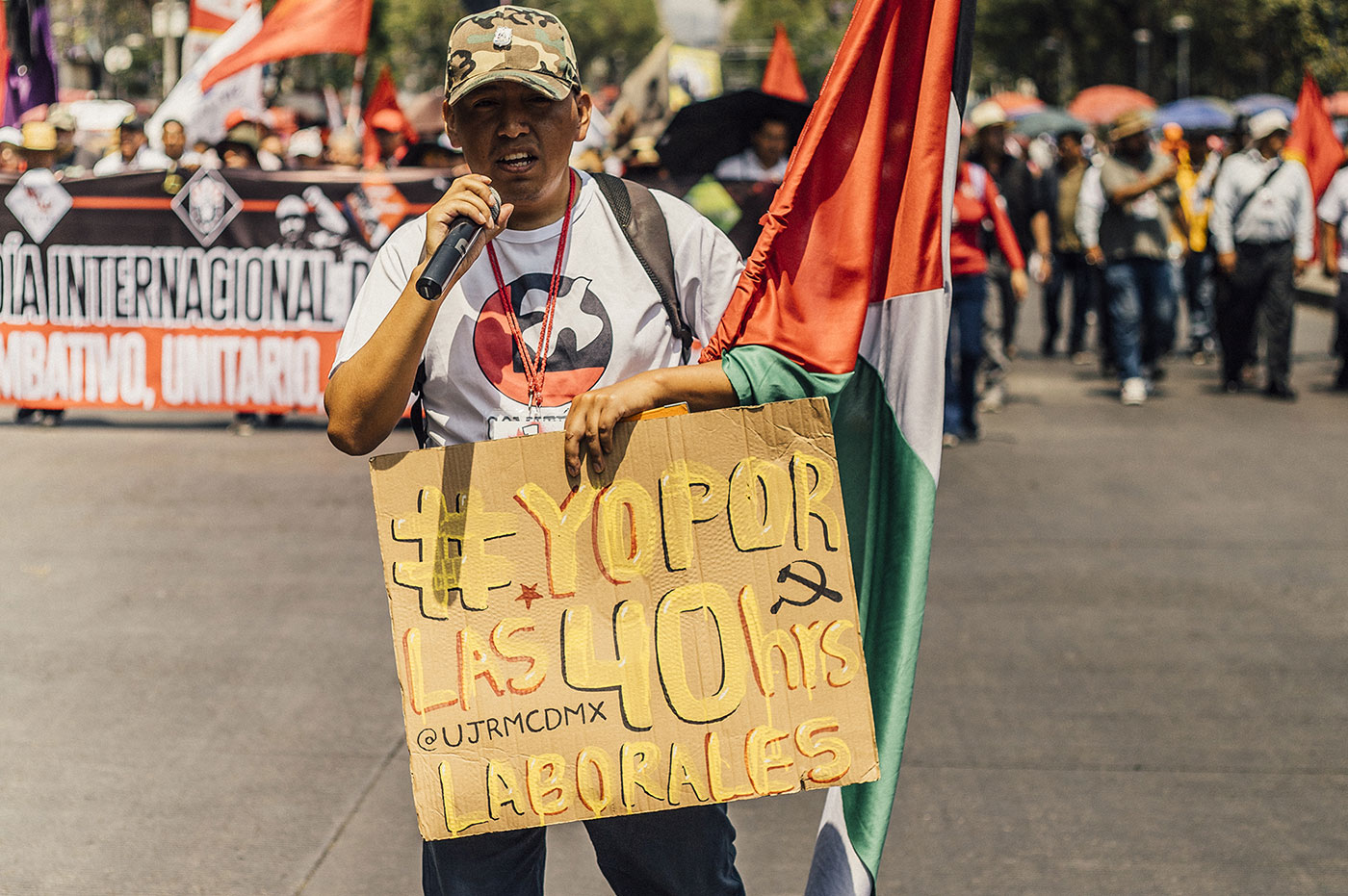
Photo: Jay Watts
The Mexican businessman is not the origin of the problem: he is its result.
Mexico does not have a strong industrial business sector because it has not built the conditions to have one.
For years, the left has treated Mexican businessmen as morally suspect. The right, on the other hand, presents them as misunderstood heroes. Both perspectives are flawed. The problem isn’t moral. It’s institutional.
Businesses invest where there are profits, certainty, credit, markets, and protection from risk. If a country offers better returns in real estate, trade, imports, protected services, public contracts, or financial activities, capital will flow there. Not because it’s unpatriotic, but because it responds to incentives.
No country industrialized by asking entrepreneurs to be patriotic. Developing states modified incentives: they provided credit, protected sectors, required exports, penalized non-compliance, financed apprenticeships, and compelled private capital to move toward strategic activities.
Mexico hasn’t done that. It wants industrial entrepreneurs without an industrial policy. It wants innovation without an ecosystem. It wants productive investment without sufficient development banking. It wants advanced manufacturing without leading national companies. It wants private capital to assume enormous risks while the State barely shares those risks. Then it’s surprised that entrepreneurs prefer the easy way out.
A developmental state is not one that insults business owners. It’s one that transforms them. It provides them with credit, infrastructure, protection, and access to markets, but it also demands performance. If they export, they receive support. If they innovate, they receive financing. If they invest in strategic sectors, they receive backing. If they fail to meet these demands, they lose privileges.
Mexico has many wealthy businesspeople, but few domestic industrial entrepreneurs capable of driving complex production chains. It has powerful groups in telecommunications, commerce, construction, finance, beverages, food, mining, real estate, and services. But it lacks sufficient domestic manufacturing conglomerates with proprietary technology, sophisticated export capacity, and a global presence.
The right question isn’t why Mexican businesspeople don’t behave like Koreans or Japanese. The right question is what institutions South Korea created to enable its businesspeople to behave like industrial entrepreneurs. And what institutions did Mexico fail to build?

Photo: Jay Watts
Innovation Without an Ecosystem, Industrial Policy Without Bureaucracy
Mexico also wants to innovate without building a technological ecosystem. There’s talk of startups, entrepreneurship, incubators, technology transfer, and professors becoming business owners. All of that can be useful, but it doesn’t replace a national development strategy.
Silicon Valley wasn’t born from entrepreneurship courses. It was born from elite universities, military spending, government procurement, venture capital, large tech companies, deep financial markets, and decades of state investment. China didn’t become a tech powerhouse by multiplying isolated startups. First, it built industry, infrastructure, financing, domestic companies, and internal markets.
Mexico wants to skip history. It wants startups without an ecosystem. It wants innovation without sufficient research and development. It wants entrepreneurial professors without venture capital. It wants technology without leading companies. It wants patents without industry. It wants entrepreneurship without sophisticated demand.
Mexico’s spending on research and development was a mere 0.268% of GDP in 2023. Furthermore, the Global Innovation Index 2025 ranked Mexico 58th out of 139 economies, but only 81st in innovation inputs. Mexico is not sufficiently building the basic elements of a technological ecosystem: funding, research, human capital, university-business partnerships, public procurement, and large companies capable of absorbing innovation.
Innovation doesn’t come from exhortations. It comes from systems.
This system also requires a state capable of implementing it. Herein lies another gap: the civil service. Without a professional bureaucracy, there is no serious industrial policy. Industrialization requires officials capable of evaluating projects, regulating companies, coordinating financing, negotiating technology, measuring results, and correcting errors.
A developmental state is not built through six-year improvisations. It requires institutional memory, technical expertise, continuity, information, authority, and relative autonomy from economic groups. Mexico has governments that are strong enough to win elections, but weak enough to build lasting capacity.
This is not how a country industrializes. This is how underdevelopment is managed. Industrial policy is not a decree. It is a capability.

The American Restraint: The Power No One Wants to Name
The Mexican government talks about sovereignty, but avoids upsetting the United States. That is one of the central constraints on national development.
This is not about adopting an anti-American stance. The United States is our main trading partner, our unavoidable neighbour, and the center of the American economy. But precisely for that reason, its power over Mexico is not abstract. It is everyday, structural, and aggressive. It manifests itself in trade, migration, energy, security, investment, rules of origin, sanctions, tariff threats, diplomatic pressure, certifications, panels, reviews of the USMCA, and warnings from US companies and agencies.
The United States knows very well what it wants from Mexico: border stability, immigration control, subservient security, energy compatible with its interests, manufacturing integrated into its supply chains, privileged access to our market, geopolitical containment of China, and a regulatory framework that doesn’t harm its companies. What’s unclear is whether Mexico knows what it wants from itself.
The US restraint doesn’t operate solely through direct imposition. It also operates through anticipation. Mexico often holds back before acting. It avoids decisions because it knows they could provoke trade retaliation, financial pressure, disputes under the USMCA, or campaigns of corporate distrust. This is a very effective form of power: it doesn’t need to always give orders; it’s enough for the subordinate country to calculate in advance how far it can go.
That is why Mexican sovereignty is exercised within a carefully monitored margin. One can speak of sovereignty as long as the fundamental rules of integration are not significantly altered. Income can be distributed, wages increased, social programs expanded, and infrastructure built. But when it comes to modifying the productive structure, directing credit, strengthening national companies, reviewing technological dependence, renegotiating strategic sectors, or challenging U.S. interests, the margin narrows.
The USMCA is not just a trade agreement. It is also an architecture of economic discipline. It limits classic instruments of industrial policy, conditions investment rules, restricts regulatory margins, protects corporate interests, and places Mexico’s economic relationship within a legal framework designed primarily by the region’s dominant power.
Plan México speaks of relocation, domestic content, import substitution, regional strengthening, higher-value local suppliers, and the creation of well-paying jobs. On paper, these objectives are sound. But the problem lies in the instruments. Without a national banking system, a civil service, strong Mexican companies, productive credit, a technological ecosystem, and the capacity to negotiate with the United States based on its own strategy, Plan México risks becoming a toothless industrial policy.
Integration with the United States is not inherently bad. What is bad is integrating without independent power. What is bad is accepting the role of a subordinate production platform. What is bad is celebrating exports without questioning who controls the technology, who finances it, who designs it, who captures the profits, and who decides what gets produced.
Mexico doesn’t need an anti-American policy. It needs a Mexican policy. But a truly Mexican policy would have to recognize that the United States is not only a partner: it is also a constraint.
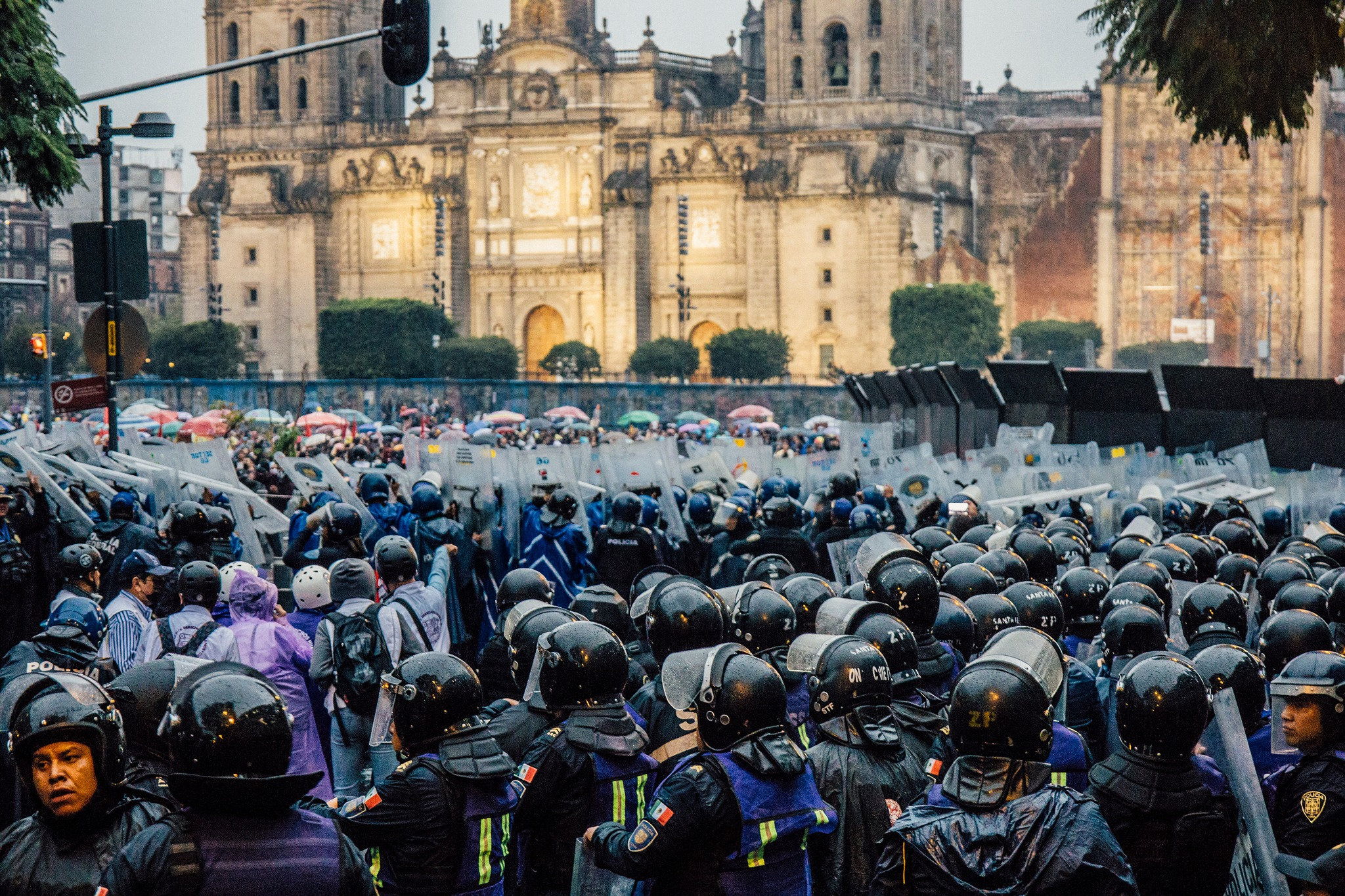
Photo: Jay Watts
The Mexican State is Not Strong Where it Matters
The Mexican state is not weak in all areas. It can be strong in concentrating political power, disciplining bureaucracies, distributing resources, winning elections, and reforming institutions. But it is not strong where it matters most for development: in the face of financial capital, large economic groups, technological dependence, structural informality, and the asymmetrical relationship with the United States.
A developmental state is not simply a large state. It is a state capable of directing resources toward strategic objectives. It is a state capable of telling private capital: I support you, but you deliver results. It is a state capable of using credit, regulation, protection, public procurement, infrastructure, and talent development to transform the productive structure.
Mexico has a state that distributes, but not one that develops. It has a state that administers programs, but not one that transforms sectors. It has a state that talks about sovereignty, but not one that builds its own economic power.
The Fourth Transformation (4T) didn’t fail because it distributed too much. It will fail if it believes that distribution is enough. Its limit isn’t in having increased salaries, pensions, or social programs. Its limit is in not yet having built the productive, financial, technological, and administrative apparatus that can sustain a long-term transformation.
Mexico doesn’t need less social justice. It needs more development. It doesn’t need less government. It needs a different kind of government: more professional, more strategic, stronger in the face of capital, better able to direct credit, more willing to build national companies, more serious about technology, and less afraid of exercising sovereignty in the face of the United States.
True transformation is not just about distributing what already exists more equitably. It’s about changing how the country produces, finances, innovates, works, and integrates itself into the world.
That step has not been taken.
Mexico faces a historical contradiction: it has a government that speaks as if it has broken with neoliberalism, yet it retains too many of the economic structures that neoliberalism left untouched. It has rhetoric of sovereignty, but financial dependence. It has social programs, but massive informality. It has nearshoring, but few national companies. It has universities, but no technological ecosystem. It has entrepreneurs, but no industrial incentives. It has a state, but not a developmental state.
The great paradox of our time is that Mexico has a government that speaks of sovereignty, but an economy that remains organized around dependency. The left has learned to distribute. The unfinished task remains learning to produce.
There is no sovereignty without one’s own economic power.
And Mexico has not yet built it.
-
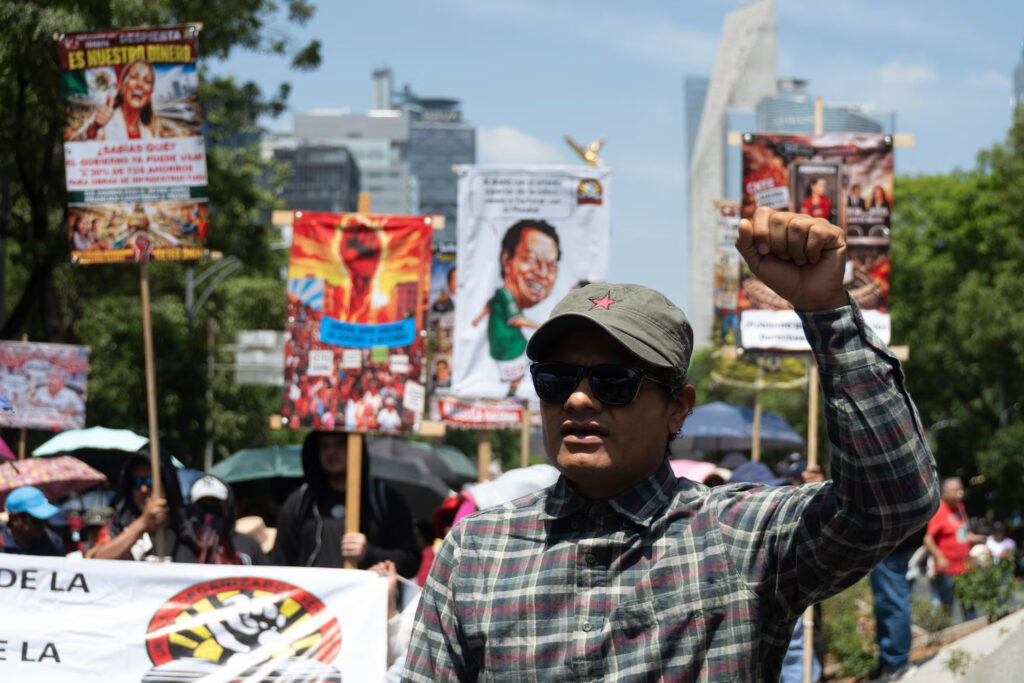
Marches & Blockades by Thousands of Teachers in at Least 10 Mexican States
June 2, 2026June 2, 2026
Teachers are demanding the repeal of the 2007 ISSSTE and 1997 IMSS laws; as well as the repeal of Peña Nieto’s 2012 education reform and salary increases.
-
The Left That Learned to Distribute, But Not Produce
June 2, 2026June 2, 2026
Mexico faces a historical contradiction: it has a government that speaks as if it has broken with neoliberalism, yet it retains too many of the economic structures that neoliberalism left untouched. It has rhetoric of sovereignty, but financial dependence.
-

The Return of Fox & Calderón Exposes Mexican Far Right’s Misguided Path
June 2, 2026June 2, 2026
The Mexican right is going through a crisis, increasingly closer to international far-right sectors and further from a political proposal capable of competing.
The post The Left That Learned to Distribute, But Not Produce appeared first on Mexico Solidarity Media.
From Mexico Solidarity Media via This RSS Feed.