

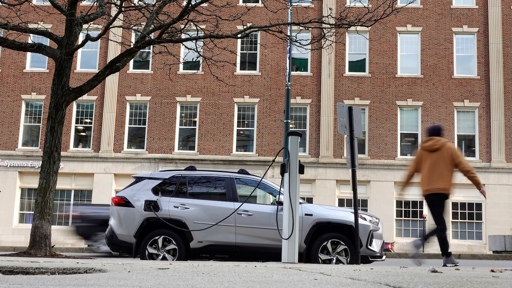
Electric vehicles offer many opportunities to save money: on gas, on oil changes, on engine maintenance. But, it turns out, insurance isn’t one of them. In fact, the latest data shows that EVs typically cost $3,159 per year to insure — nearly $1,000 more than gas-powered cars. It’s an added burden that could make the payback period on EVs significantly longer.
On average, the insurance gap between electric and internal combustion engine, or ICE, vehicles was 42 percent, according to a report released today by the insurance-comparison marketplace Insurify. But it varies drastically by state and model. The most expensive locale was Washington, D.C., where coverage cost $6,394 versus $4,124 for ICE cars. Maine was the cheapest at $1,476, just $184 more than a conventional car. The difference was most pronounced in Rhode Island, which has a 73 percent spread.
Generally speaking, luxury brands like Tesla, Mercedes-Benz, and Audi are particularly expensive to insure, with premiums on many models topping $4,000.Volvo, Chevrolet, Ford, and Hyundai offer cars at the lower end of the spectrum. Insurify wouldn’t disclose which insurers had the most expensive rates, but did say Lemonade, Root, and GEICO offered the most affordable EV coverage.
“Insurers were charging those higher premiums to balance their risks,” said Julia Taliesin, an economic analyst and insurance agent at Insurify, who wrote the report. It is based on more than 235 million quotes in Insurify’s proprietary database. Seven states — Alaska, Hawai‘i, North Dakota, New Hampshire, South Dakota, Vermont, and Wyoming — are excluded due to lower quoting volume. But high insurance expenses means it can take more driving before an EV pays for itself through lower fuel and operating costs. Even if electricity were free and gas stays at $4 per gallon it translates to at least 5,800 more miles a year compared to a car that gets 25 mpg.
A primary reason for the disparity is that EVs cost more to fix.
“We do see that there is a delta in the cost of repair for electric vehicles compared to ICE,” said Ryan Mandell, a vice president of strategy and market intelligence at Mitchell, a company which provides data and software related to car repairs. He pegs the difference at about 15 percent, noting that batteries are relatively expensive to fix and for mechanics to work around and that EVs have complicated electronics. But there are more fundamental factors as well, like the lack of an engine.
Mandell gave the Ford F-150 as an example. From 2022 to 2025 an electric version of the pickup truck, called the Lightning, was available alongside gas-only and hybrid versions. When Mitchell subjected the gasoline and EV models to a front-end crash test the engine in the traditional model actually absorbed quite a bit of the impact. Because it doesn’t have that additional structure, Ford designed the Lightning with additional reinforcement that cost around 30 percent more to fix.
Read Next
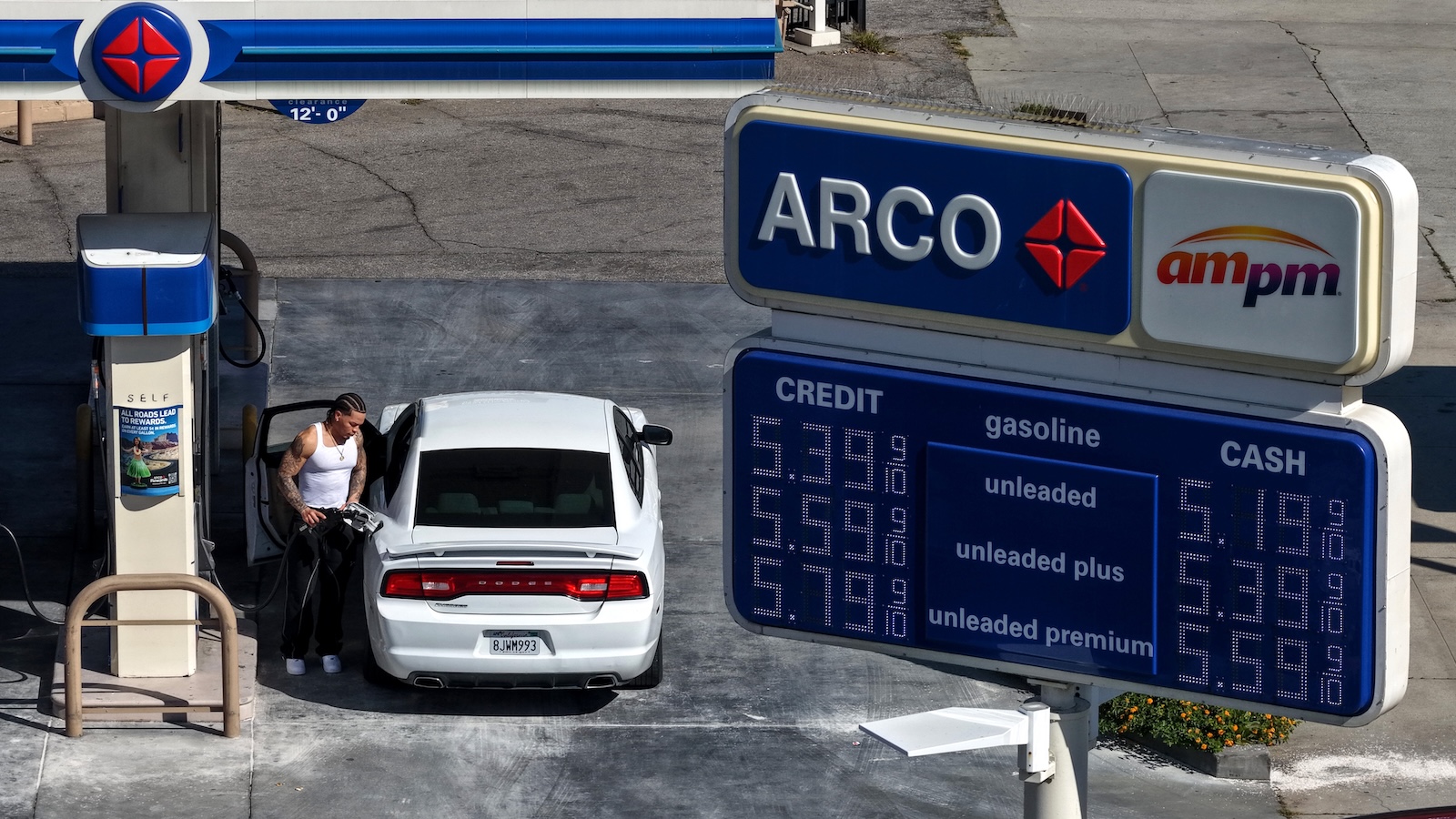
Why $4 gasoline is the tipping point for EVs
“The Lightning had more crash parts on the front of the vehicle,” said Mandell. He also noted that Ford requires removing the battery before doing any work, which increases labor costs. “It adds up.”
Repair costs, however, are not the only factor insurers consider. Insurify’s data showed insurance rates for the two trucks are roughly the same, which Taliesin said suggests driver demographics and behavior play a role, too. “One of the most significant is personal driving history and credit history,” she said. Given the Lightning’s much higher cost, the credit scores of owners could potentially be higher. And Insurify’s data shows that the ticket and accident rates for Lightning drivers are about half that of traditional F-150s.
“Factors like climate risk, vehicle theft rates, population density, insurance regulation, repair infrastructure, and EV adoption levels contribute to regional cost differences,” the Insurify report stated. In several states it cited climate-driven extreme weather, such as hurricanes and flooding, as drivers of high costs.
This EV insurance story isn’t unique to the United States. In 2024, BloombergNEF found about the same spread in the United Kingdom and Germany. France saw double the disparity. Overall, though, American EV owners still paid 87 percent more for insurance than Europeans.
“Several model-specific factors have driven the wider cost gaps in the large and SUV segments,” said Aleksandra O’Donovan, head of electrified transport at BloombergNEF, pointing to the Tesla Model Y as a particularly extreme example. “[The U.S. price] is nearly triple the insurance rate for the same vehicle in Germany.”
From 2023 to 2025, the EV insurance gap in the U.S. grew from 29 percent to 49 percent. But this year, it came down slightly, which Taliesin said is among a few good signs for EV drivers. Another is that the disparity among cars made in the last two years was only 18 percent — compared 42 percent across all years.
That drop is partly because auto insurance prices fell across the board in the last year. But Taliesin also said that ICE cars are catching up to EVs in terms of how complicated and expensive they are to fix. The cost of EV batteries is also trending downward, too. As EV sales have grown, there is more data for companies to base their prices on and more incentive for them to court EV owners.
”We’ve been seeing a ton of insurance-shopping behavior as insurers have been dropping their rates to compete for business,” said Taliesin, who is bullish for consumers. “That’s definitely a welcome reprieve.”
This story was originally published by Grist with the headline The hidden cost of owning an EV: Expensive insurance on Jun 2, 2026.
From Grist via This RSS Feed.
This looks like a US problem, no big differences where I live. Yet another petrol industry influence probably.
