

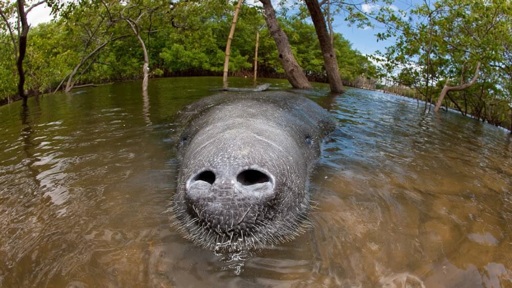
In October 2025, Brazilian state oil company Petrobras began drilling in the seabed where the Amazon River empties into the Atlantic Ocean, following a long, controversial environmental licensing process. At the center of the debate were concerns about the unique wildlife living here, on the shores of the states of Amapá and Pará, and about the company’s capacity to rescue these animals in the event of an oil spill. The potential victims range from marine birds and turtles to the recently discovered Amazon reef system. One endangered marine mammal, however, has prompted particular concern because of the extra challenges to rescuing it in the event of a disaster: the West Indian manatee (Trichechus manatus), a species that grows to a length of around 3.5 meters (11.5 feet) and weighs an average of 700 kilograms (more than 1,500 pounds); some individuals reach up to 1,600 kg (more than 3,500 lbs). “Handling and transporting animals of this size requires complex logistics and large-scale equipment,” said marine biologist Fábia de Oliveira Luna, coordinator at the National Center for Research and Conservation of Aquatic Mammals (CMA), which is part of Brazil’s environmental ministry. With a population estimated at only 1,047 individuals in Brazil and a reproduction rate of one calf every four years, “every individual removed undermines the survival of the population,” Luna told Mongabay. According to scientists, the oil project also jeopardizes a unique genetic code shared only by animals from this region, a result of the interbreeding between the marine manatee and…This article was originally published on Mongabay
From Conservation news via This RSS Feed.