

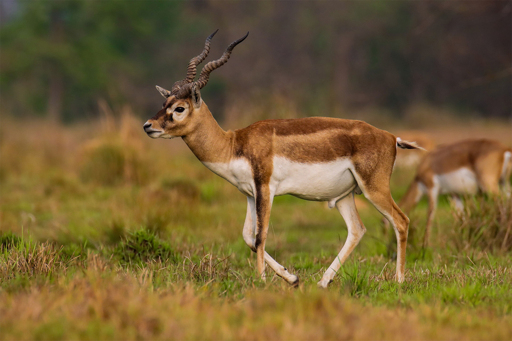
Nepal is preparing to relocate 18 blackbucks from the country’s west to its south central region, near the popular Chitwan National Park. Officials say the translocation will help establish a population of the antelope in a new habitat and safeguard the species against localized disasters or disease, but conservationists question the choice of habitat and considerations of predation risk, reports Mongabay contributor Bibek Bhandari. According to the translocation plan, six male and 12 female blackbucks (Antilope cervicapra) will be moved from Shuklaphanta National Park and Blackbuck Conservation Area in Bardiya to an enclosure in Tikauli, a corridor forest near Chitwan. While blackbucks are not listed as globally threatened on the IUCN Red List, they are considered to be critically endangered within Nepal. Conservation efforts have helped revive the blackbuck population in Nepal from just nine known individuals in 1975 in Bardiya to more than 500 today. At Tikauli, the blackbucks will be housed in a roughly 20-hectare (50-acre) enclosed area within a protected forest. However, ecologists are concerned about the suitability of Tikauli. Amar Kunwar, a community ecologist who has researched blackbuck conservation, told Mongabay that the mammals prefer hot, arid regions with short grasslands. Chitwan’s monsoonal climate is humid and prone to flooding, and its grasses can reach heights of 4.5 meters (15 feet), which limits food availability and hinders the animals’ ability to detect predators. Chitwan also supports high tiger and leopard densities. “As blackbucks roam the area once translocated, they are likely to attract leopards,” said Bishnu…This article was originally published on Mongabay
From Conservation news via This RSS Feed.