

Summary
- In early May, BC Parks announced Pipi7íyekw/Joffre Lakes Park will be restricted to members of the Líl̓wat and N’Quatqua nations from June 20-27 and Sept. 8-30.
- Líl̓wat Nation has since released its own statement with different closure dates, saying the trust with the province has been broken.
- Since 2018, the two First Nations have been working with BC Parks on visitor management and the temporary closures — called reconnection periods — have been implemented since 2023. However, negotiations broke down last year over a dispute over the 2025 closure length.
Once again, one of B.C.’s most popular parks is implementing temporary closures this summer — and no one is happy about it.
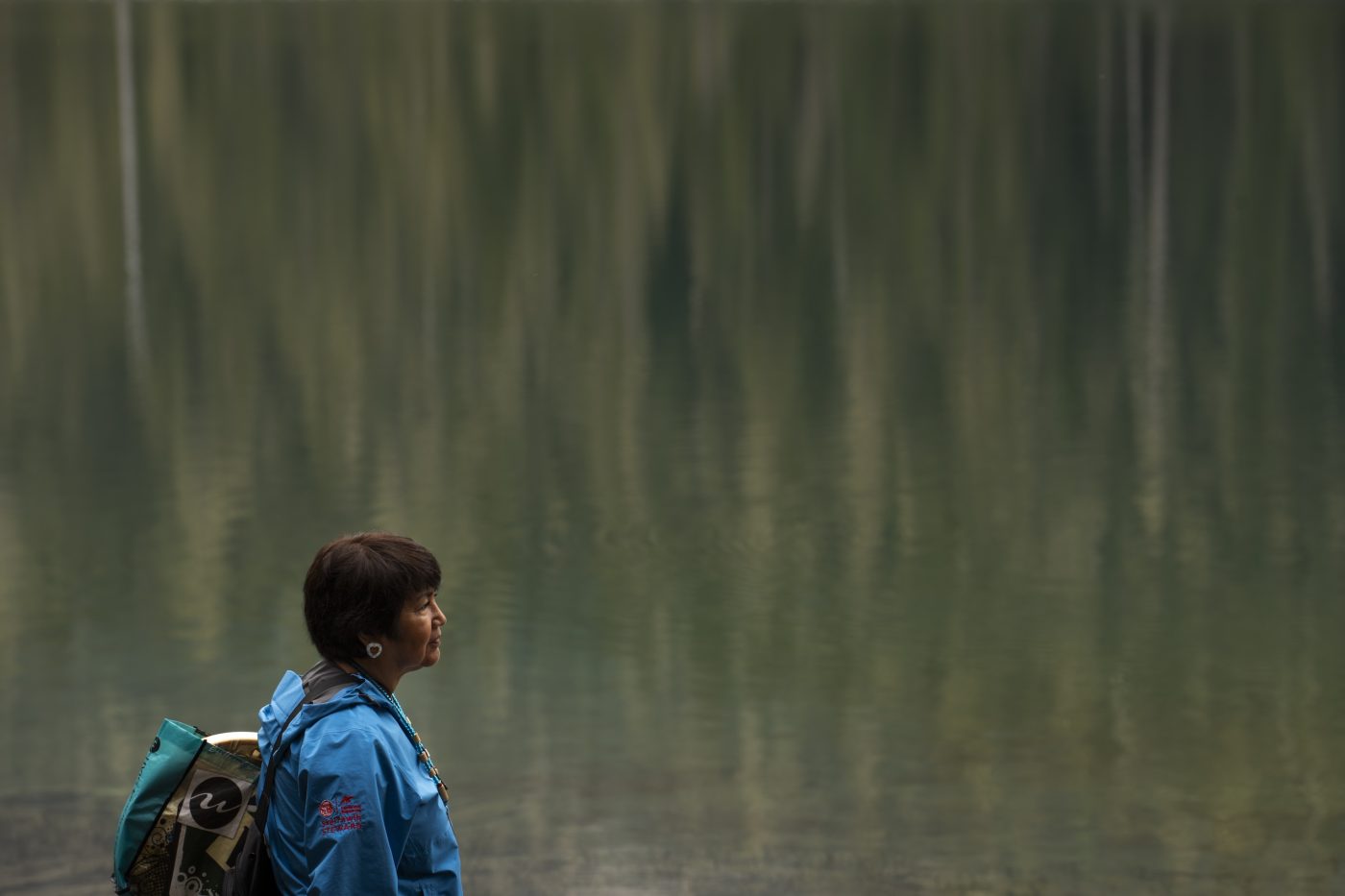
Since 2023, Pipi7íyekw/Joffre Lakes Park has closed for brief reconnection periods, when entry is restricted to members of Líl̓wat and N’Quatqua First Nations, whose unceded territories encompass the park. During these periods, members can harvest traditional medicines, participate in cultural events and ceremonies and enjoy a part of their territory that is often too crowded with visitors for them to access at all, trampled and strewn with trash by the end of peak season. Since 2018, the two nations have worked with BC Parks on a joint strategy for managing visitors.
Last year, things went off the rails. Backlash over the temporary closures spiked as politicians — including BC Conservative leadership candidate Caroline Elliott and OneBC leader Dallas Brodie — used the closures to argue Indigenous Rights had gone too far. On X, Brodie claimed that park access across the province may someday be “dependent upon your racial status.”
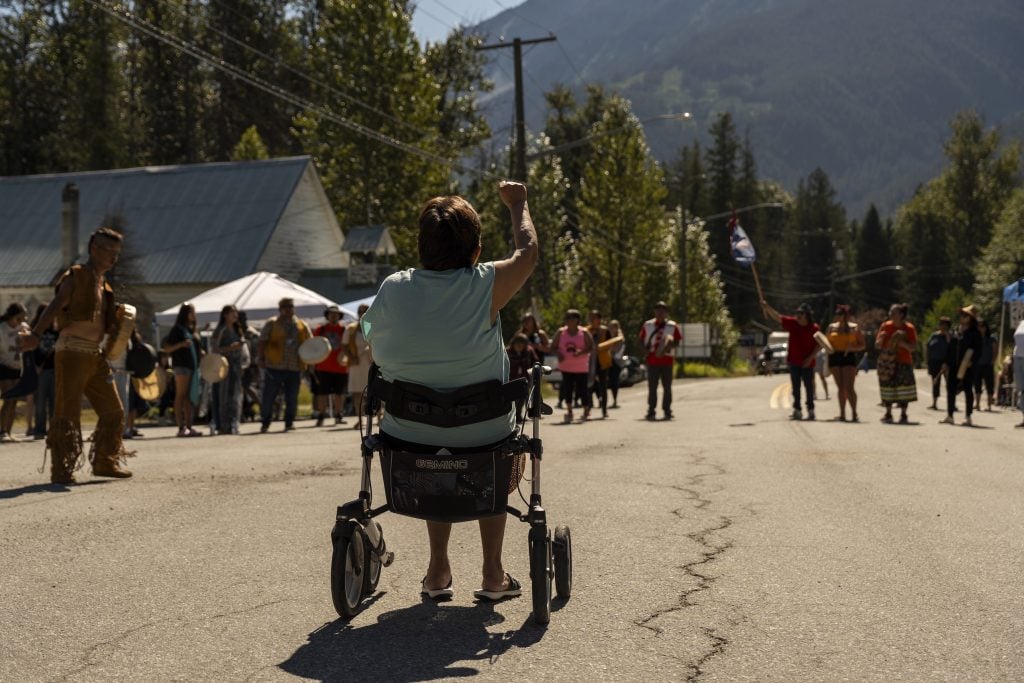
Members and supporters of Líl̓wat and N’Quatqua First Nations temporarily blocked Highway 99 in Mount Currie, B.C., in August 2025, after learning BC Parks planned to shorten the timeframe of the nations’ September reconnection period in Joffre Lakes Park.
Then came a dispute over the length of the final 2025 reconnection period. The nations planned for two months, from late August to the end of October, but BC Parks went with about half that time, between the Labour Day weekend and Oct. 3. The decision sparked protests from members and supporters of the two nations and allies.
Which brings us to May 7, when BC Parks announced the closure dates for this year: one week in June, which includes National Indigenous Peoples’ Day on June 21, and from Sept. 8 until the National Day for Truth and Reconciliation on Sept. 30. Neither nation was part of the announcement. They have not met with BC Parks as a working group since last fall’s dispute, according to the Ministry of Environment and Parks, which said it “has been working to try and re-engage” the nations ever since.
On May 27, almost three weeks after the BC Parks announcement, Líl̓wat Nation released a statement calling on the B.C. government to implement its desired reconnection period for the fall, spanning Aug. 23 to Oct. 5. That’s roughly three weeks longer than the province’s stated closure, and the nation made it clear the unilateral announcement by the province “has further undermined an already fractured relationship.”
In an emailed statement, Líl̓wat Nation said this year’s letter has also been signed by N’Quatqua First Nation, “reflecting continued alignment between the two nations on the importance of the closure periods and the broader management concerns at Pipi7íyekw/Joffre Lakes.”
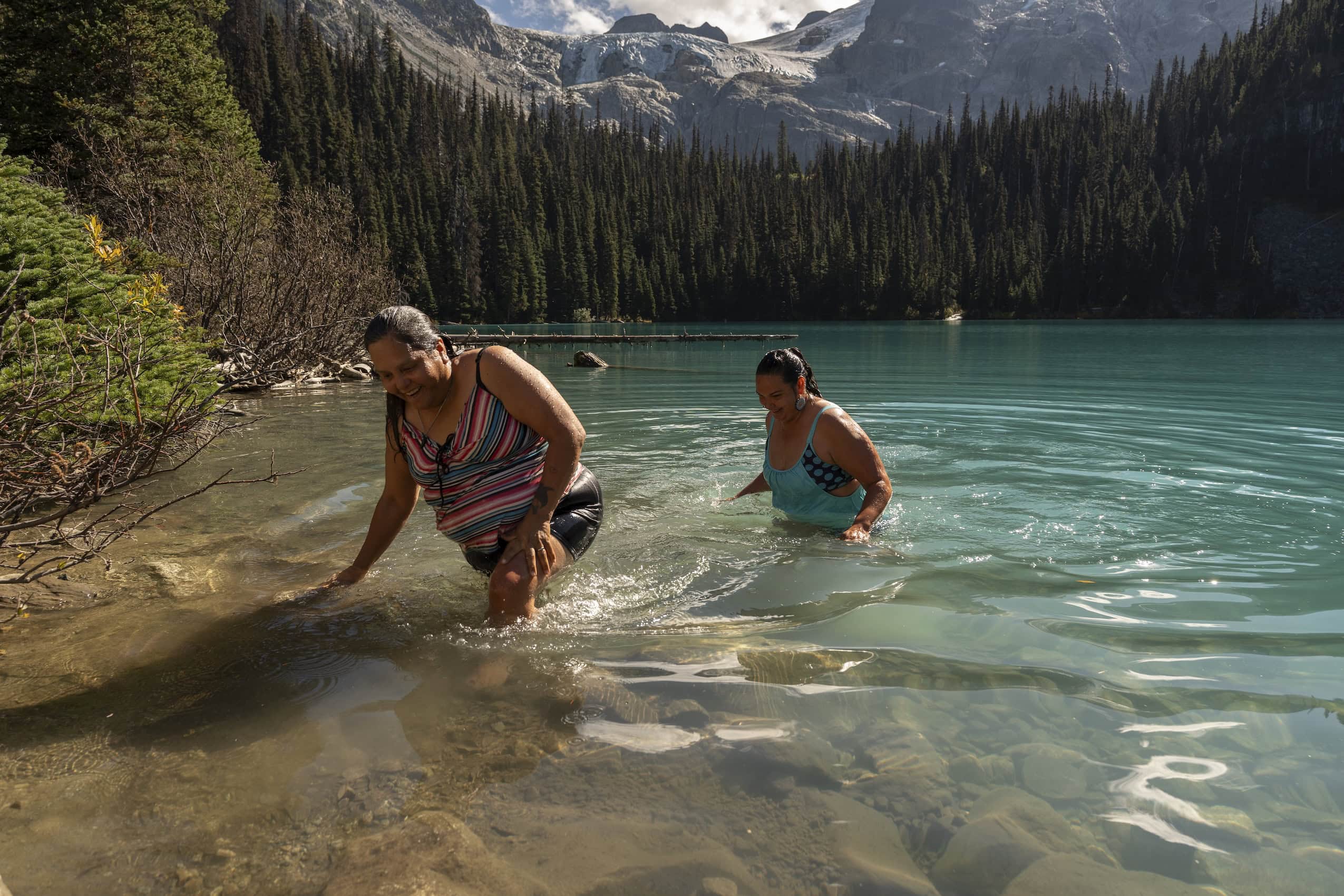
The occasional closure of Joffre Lakes Park to tourists gives local First Nations members a chance to reconnect with their traditional territory, harvest medicines and engage in land-based cultural practices. The closures also give the land itself a chance to rest.
The planned reconnection period has once again unleashed “an unspeakable amount of online racism,” Green MLA Jeremy Valeriote said in the legislature on May 19. Valeriote, whose West Vancouver-Sea to Sky riding includes Pipi7íyekw, added the ministry’s lack of consultation with the First Nations, as well as the public disagreement over closure dates, may fuel the growing misinformation and mistrust surrounding Indigenous Rights in B.C.
During question period, he asked Minister of Environment and Parks Tamara Davidson: “How is this collaboration? It seems that the government is either blaming the nations or waving the problem away instead of doing the actual work to alleviate the confusion in the minister’s estimation. Have the Líl̓wat and N’Quatqua Nations become collateral damage in the toxic reconciliation dialogue we’re experiencing?”
Major spike in visitors at Pipi7íyekw/Joffre Lakes
Just three provincial parks in B.C. require visitors to reserve a free day-use pass in advance during busy months — Pipi7íyekw/Joffre Lakes, Garibaldi Park and Golden Ears Park, all located within driving distance of Vancouver. Though there are more than a thousand parks in the province, these three and a handful of others become magnets for visitors.
According to BC Parks, provincial parks on the south coast have seen a 52 per cent increase in visitor traffic since 2010 — and in Pipi7íyekw/Joffre Lakes, visits increased by 222 per cent between 2010 and 2019.
“The overtourism leading up to the day-pass system was pretty significant. … I don’t think people fully appreciate what it’s like to have 200,000 people tramping through a relatively small park,” Valeriote told The Narwhal.
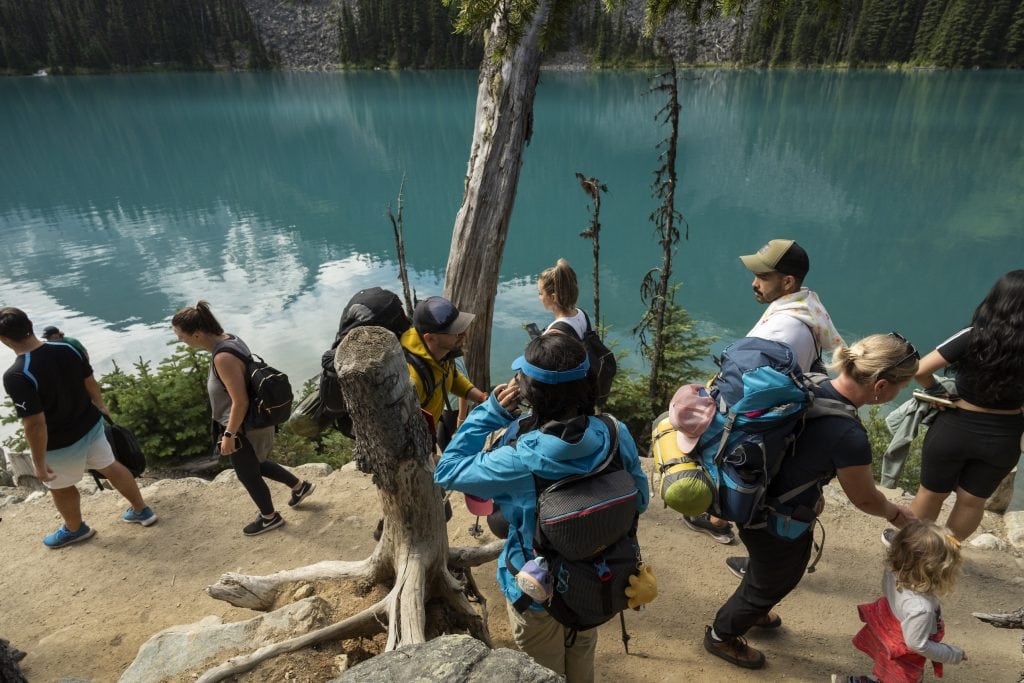
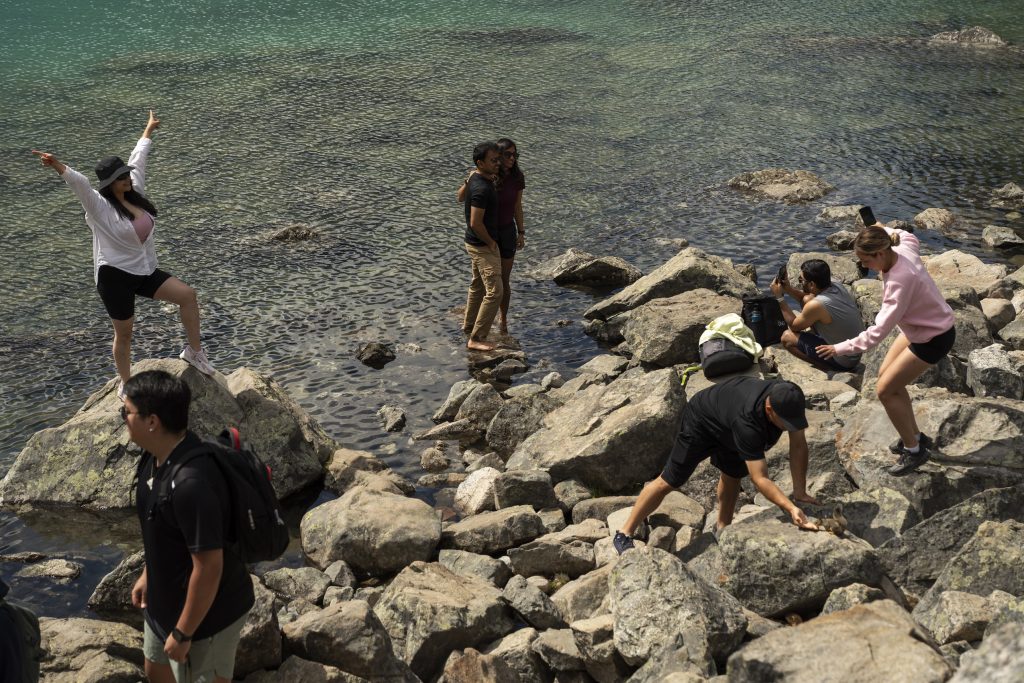
Visits to Joffre Lakes Park rose by 222 per cent between 2010 and 2019. The stampede of visitors has put a strain on the park.
The stampede put a strain on the park, which can be accessed only through a single out-and-back route: trails were packed, cars spilled out of the parking lot, trash cans overflowed. Temporary closures were implemented to ensure rights-holding First Nations could access their territory, as well as give the land itself an opportunity to rest.
The nations’ proposed 2025 closure dates reflected “the time required for our communities to reconnect with the land, conduct ceremonies, gather food and medicines, and allow Pipi7íyekw the rest it needs to heal,” according to an August statement. “The province’s refusal to honour these dates undermines both reconciliation and the health of the land and people.”
History is repeating itself in 2026, with another disagreement over dates.
In a statement sent to The Narwhal on May 27, the Ministry of Environment and Parks said its aware of the discrepancy between its 2026 dates and those given by Líl̓wat Nation. “The province reached out to the Líl̓wat Nation and N’Quatqua First Nations starting in February, reiterating a desire to identify long-term solutions that provide predictability and support the needs of all park users,” it said. According to the statement, the length of the 2026 closure dates align with “a commitment the province made in 2023 for 30 days of closures” — though in 2024 and 2025, the park was closed for nearly twice as many days.
Parks Minister Davidson declined an interview with The Narwhal, but said by email the government values its relationship with both nations and hopes “to return to the table to collaborate on long-term solutions that provide predictability and support the needs of all park users.”
When asked if the province has a plan in place for protests or blockades that might arise over the disputed closure dates — as they did in 2025 — Minister of Indigenous Relations and Reconciliation Spencer Chandra Herbert did not answer directly, but said the province supported peaceful protest but not blockades.
Green MLA concerned about the politicization of parks closures
Valeriote told The Narwhal he worries the ministry’s unilateral communications, contradicted by Líl̓wat, will exacerbate growing tensions in B.C. over Indigenous Rights and reconciliation.
The claim that the closures are race-based — rather than rights-based — has been deployed frequently.
“I won’t mince words: the Conservatives and OneBC are using this as a political wedge issue,” Valeriote said. “It’s fully opportunistic. They’re talking about … ‘We no longer have access to our public land.’ It’s pure fear mongering, and it’s irresponsible,” he said. “But in our political system, they’re taking advantage of an opportunity. That’s unfortunately how this political system works.”
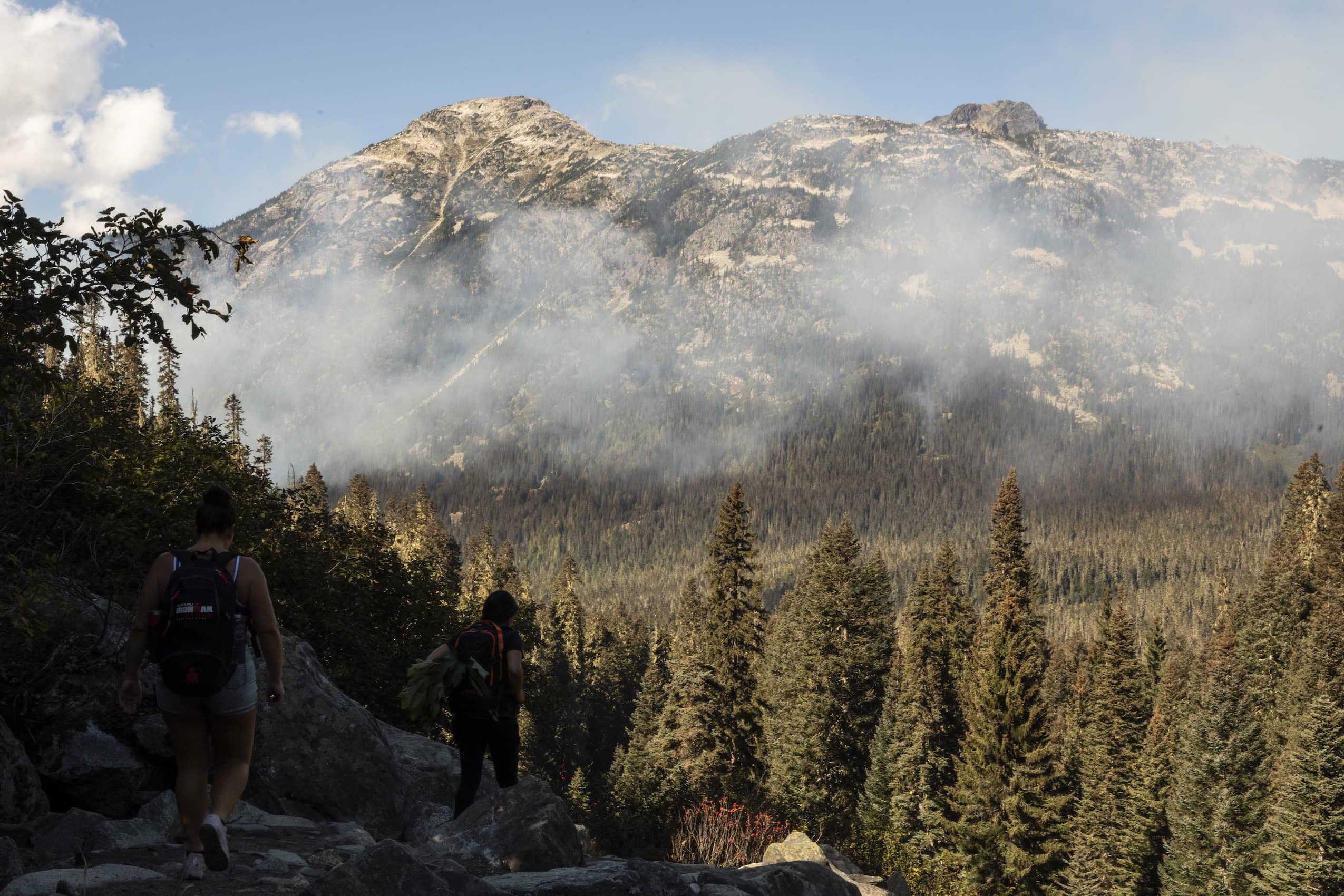
The introduction of reconnection periods at Joffre Lakes Park has triggered intense backlash, just as the B.C. public is also debating the merits of the province’s Declaration on the Rights of Indigenous Peoples.
Valeriote alluded to the recent tension over the Declaration on the Rights of Indigenous Peoples Act, or DRIPA, which spiked in the wake of a court decision affirming that Cowichan Nation holds Aboriginal Title over a former village site in Richmond, B.C., which is now privately owned land. Despite Cowichan asserting repeatedly that they do not intend to seek claim to private land, the ruling has sparked panic among some property owners, with politicians rushing to reassure them — or amplify their fears.
“They’re using [parks] to argue that Indigenous people are getting too good of a deal, and we should all be scared and, you know, private land ownership is playing into that.”
Misinformation is circulating, and not only about the closure dates, but who exactly is being kept out. B.C. politics reporter Rob Shaw, posted on X that the BC Parks closure is “to allow First Nations to practice cultural and conservation traditions.” In fact, while there are 203 First Nations in B.C. — and residents of the province who are members of other First Nations across the country — only Líl̓wat and N’Quatqua members can access the parks during those periods.
Do B.C. and the First Nations see the park the same way?
In her emailed statement, Davidson emphasized balancing “predictable access” and visitor experience with reconciliation. “As one of BC Parks’ busiest destinations, welcoming thousands of visitors each year, we have a responsibility to carefully manage visitation in [the] park so people can have the most enjoyable experience.” When asked in the legislature on May 28 if trust had been broken with the First Nations, Davidson said, “I think we’d have to go back to Líl̓wat and N’Quatqua to ask them. But for our part, we’re working together and we’re trying to build that relationship back up again.” (In their August 2025 statement, the nations wrote “We have lost trust in working with BC Parks.”)
But Líl̓wat’s statement makes it clear the First Nation sees the park differently, writing that reconnection periods are required “so our people can harvest, hold ceremony, teach our children on the land and carry out our stewardship responsibilities in Pipi7íyekw.”
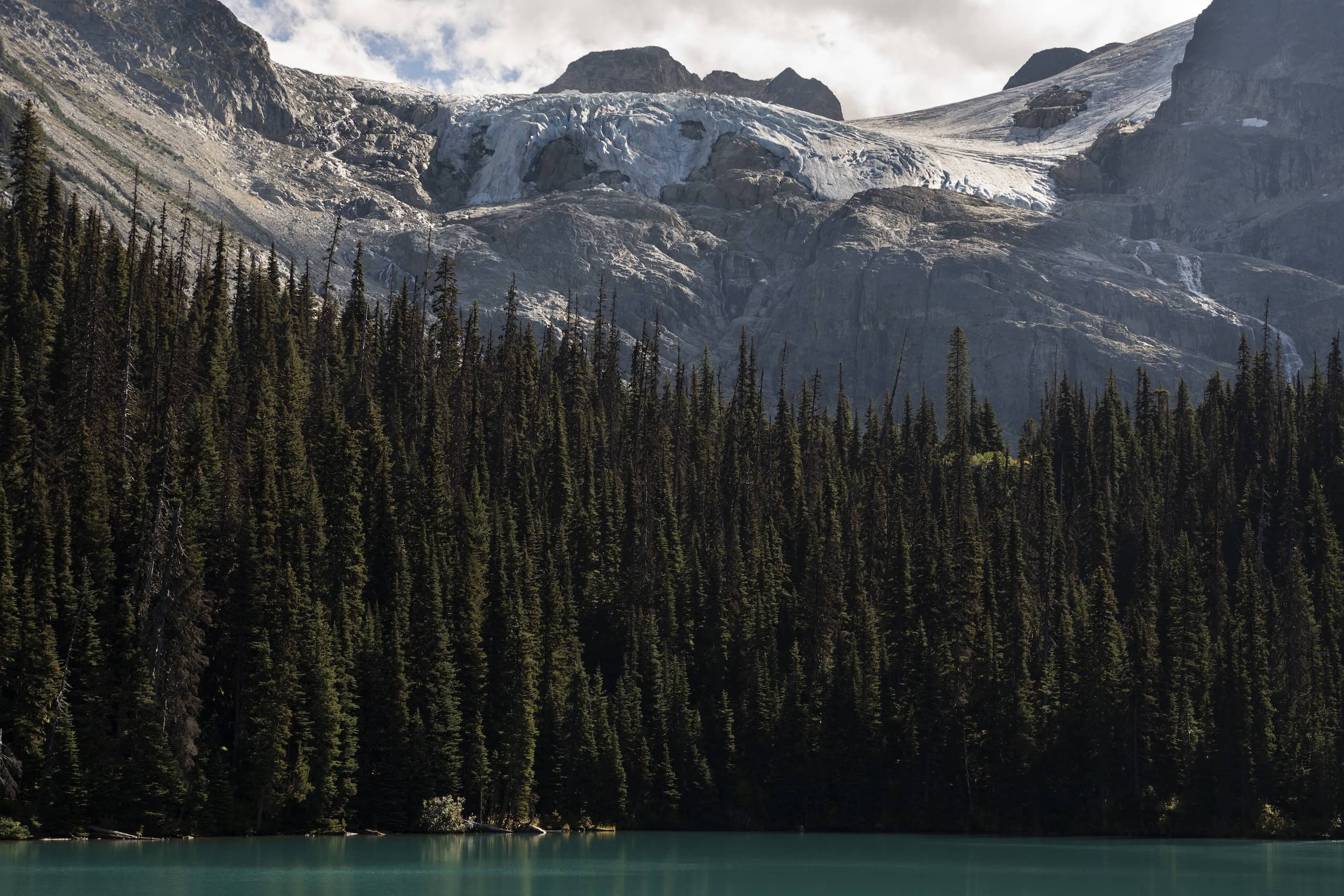
Unfettered recreational access to nature may be threatened by climate change, as parks and other wilderness areas become more strained by extreme weather.
In other words, a park is not just for enjoyment; it’s also a responsibility and a relationship. And that responsibility requires acknowledging that predictability is an increasingly unrealistic goal as climate change wreaks havoc on the planet, including Canadian parks. In recent years, parks across the country have closed after being damaged and destroyed by storms and floods. Many parks — including Jasper in Alberta, and Nopiming in Manitoba — have closed after being scorched by wildfire.
There is no certainty when it comes to our future access or enjoyment of nature. And the likelihood that parks will be around for anyone to enjoy is diminished when stewardship is treated as less important than on-demand access. The province knows this — despite the repeated emphasis on widespread access, only 500 daily passes are available, often booked up within moments of reservations opening.
“We see [a park] as a kind of a piece of infrastructure, like a building, that’s supposed to be able to handle constant traffic and constant stress,” Valeriote told The Narwhal. “And I appreciate the Indigenous way of looking at it; it’s cyclical, and it’s a cultural asset that isn’t just about monetizing or utilizing 365 days a year. Sometimes it does need time to rest and reset,” he said. “I think the small amount of solitude that the Líl̓wat and N’Quatqua Nations can get in that cultural place is worth inconveniencing locals or tourists for a relatively few days a year.”
Líl̓wat has asked the ministry to respond by Tuesday, June 2, and urged it to align the closure dates with those identified by the First Nation.
“Reconciliation must be matched by action,” Líl̓wat Nation’s Chief Dean Nelson said in the statement. “If the province is serious about building a relationship based on mutual respect, it must start by respecting our reconnection periods.”
The Narwhal’s reporters are telling environment stories you won’t read about anywhere else. Stay in the loop by signing up for our free weekly dose of independent journalism.
From The Narwhal | News on Climate Change, Environmental Issues in Canada via This RSS Feed.