

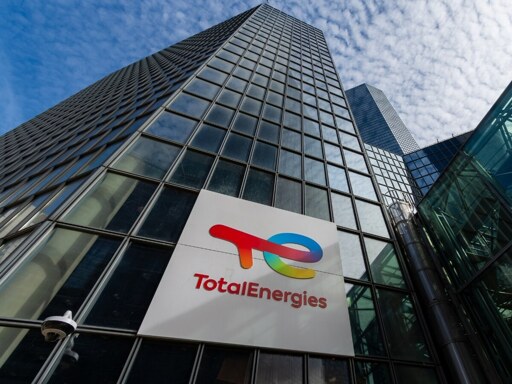

Communities, activists and civil society organisations from Africa, Europe and North America staged coordinated protests, community dialogues, cultural events and public forums this week to coincide with TotalEnergies’ Annual General Meeting.
Meanwhile, police arrested activists in New York during an action targeting JP Morgan Chase over its support for fossil fuel projects. This includes the controversial East African Crude Oil Pipeline (EACOP).
Spotlight on TotalEnergies
The protests coincided with the TotalEnergies AGM, where shareholders gathered. Organisers used the occasion to spotlight projects such as EACOP, Mozambique LNG and other fossil fuel developments associated with TotalEnergies.
Organisers in New York temporarily shut down the headquarters of JP Morgan Chase. They called on the bank to end support for TotalEnergies and EACOP, before police arrested several of the activists.
StopEACOP campaign coordinator Zaki Mamdoo said:
In a profound show of solidarity that embodies the spirit and meaning of internationalism, protesters in New York were arrested shutting down JPMorgan Chase HQ – the world’s biggest fossil fuel funder over the past five years – to call out its support for TotalEnergies and the destructive EACOP.
In South Africa, hundreds gathered to challenge the social, economic and environmental costs of fossil fuel extraction. Alongside demonstrations, participants hosted public education sessions exploring alternatives to fossil fuel-dependent energy systems, including community-owned renewable energy.
In Uganda, activists gathered outside TotalEnergies’ offices carrying placards opposing EACOP and expressing solidarity with communities facing displacement and land-related grievances.
Organisers dispersed after about 48 minutes when police vehicles arrived, citing concerns over recent arrests. There were no reports of arrests or injuries. Ugandan activist, Bob Barigye said:
Our intention was to remain outside TotalEnergies’ offices for 102 minutes to symbolise the 102 years of total mess but when the police showed up, and knowing the prolonged detention of environmental defenders in Uganda, we decided to disperse peacefully.
This action followed community-led activities elsewhere in Uganda, including a tribunal in Hoima where project-affected people shared testimony about the impacts they say the pipeline project has had on their lives and livelihoods.
In Kijumba, residents staged a peaceful road blockade highlighting concerns over infrastructure damage linked to heavy EACOP-project traffic.
Balach Bakundane, one of the EACOP project affected people, and coordinator of the EACOP-Host Communities (EACOP-HC) organisation, said:
Today the ongoing EACOP project has greatly contributed to human and environmental rights violations. The people of Kijumba Village continue to depend on dirty water after community water sources were destroyed during project development.
Communities cannot continue to suffer while corporations profit.
Public discussions and community projects
In Tanzania, communities in Tanga participated in public discussions. These examined the impacts of large-scale extraction projects and the promises made to affected communities.
Participants discussed land access, livelihoods and compensation. Meanwhile, community members in Muheza hosted a cultural dialogue featuring storytelling, poetry and discussions on land rights and environmental protection.
In Kenya, nearly 100 residents attended a community dialogue in Siaya County focussed on a proposed nuclear energy project. Members of the Social Justice Movement organised discussions. They centred on public participation, land rights, environmental concerns, safety and community involvement in development decisions.
In Nairobi, campaigners, students, artists and faith groups gathered at the Catholic University of Eastern Africa for a Climate Artbuild Concert as part of Afrika Vuka Week. The event explored energy affordability, access to electricity and alternatives to fossil fuel-dependent development through music, art and public discussion.
In Edinburgh, Scotland, activists targeting investors linked to TotalEnergies were prevented from carrying out a planned action inside a building and instead held their demonstration outside. No arrests were reported.
Additional actions took place in Colombia and other countries where campaigners highlighted concerns about oil, gas and mining companies that operate with impunity.
Ferron Pedro, senior campaigner with 350 South Africa, said:
People across the Global South are facing rising fuel prices, rising living costs and worsening climate impacts while major fossil fuel companies continue reporting record profits.
Communities are increasingly demanding energy systems that serve public needs rather than corporate interests.
Organisers estimate that more than 1,000 people participated in protests, community forums, cultural events, tribunals and educational activities throughout the week.
No violent incidents were reported during the Global Week of Action. Police made arrests in New York and their presence in other cities may have altered or restricted some planned activities in Uganda and Scotland. But organisers said actions remained peaceful throughout.
TotalEnergies has not issued a direct response to the Kick Polluters Out Global Week of Action.
Featured image via Getty Images
By The Canary
From Canary via This RSS Feed.