

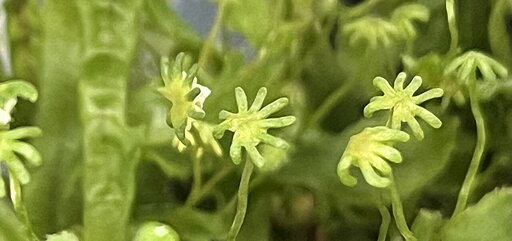
Sunlight provides the energy necessary for photosynthesis and growth, but it also exposes plants to harmful ultraviolet-B (UV-B) radiation. Plants must therefore strike a delicate balance between growth and protection. By studying Marchantia polymorpha, a plant similar to some of the earliest land plants, an international team led by scientists from the University of Geneva (UNIGE) sheds light on the evolution of fundamental UV-B perception mechanisms and plant adaptation strategies to light stress. In a context where climate change is altering light exposure conditions, these findings, published in Plant Physiology, could prove particularly valuable.
From Biology News - Evolution, Cell theory, Gene theory, Microbiology, Biotechnology via This RSS Feed.