

Summary
- The Squamish Nation has regained some its land back after a lengthy court case against the federal government. Sen̓áḵw is the ancestral village name, and name of the development.
- It’s the largest sustainable housing project in First Nations history, and among one of Canada’s largest developments that will operate at net-zero emissions.
- A blessing ceremony for Squamish members and invited guests was hosted at the first completed tower on May 8, the second ceremony of its kind held in the ancestral village in over 100 years.
On an overcast day in May, hundreds of people are gathered in Sen̓áḵw, an ancestral Squamish village, to celebrate the first completed tower among what will be one of the largest housing developments in Kitsilano’s history.
The first tower, called tl’eltl’élnup (real home) is ceremonially brushed with cedar as guests — many of them Squamish Nation members — look on with pride.
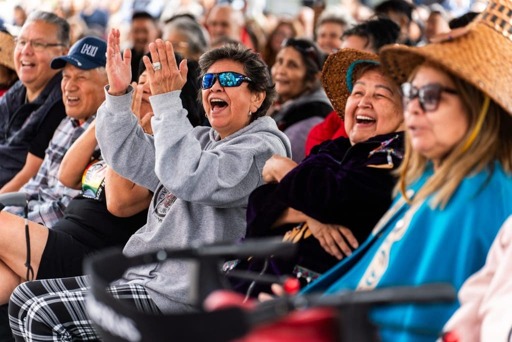
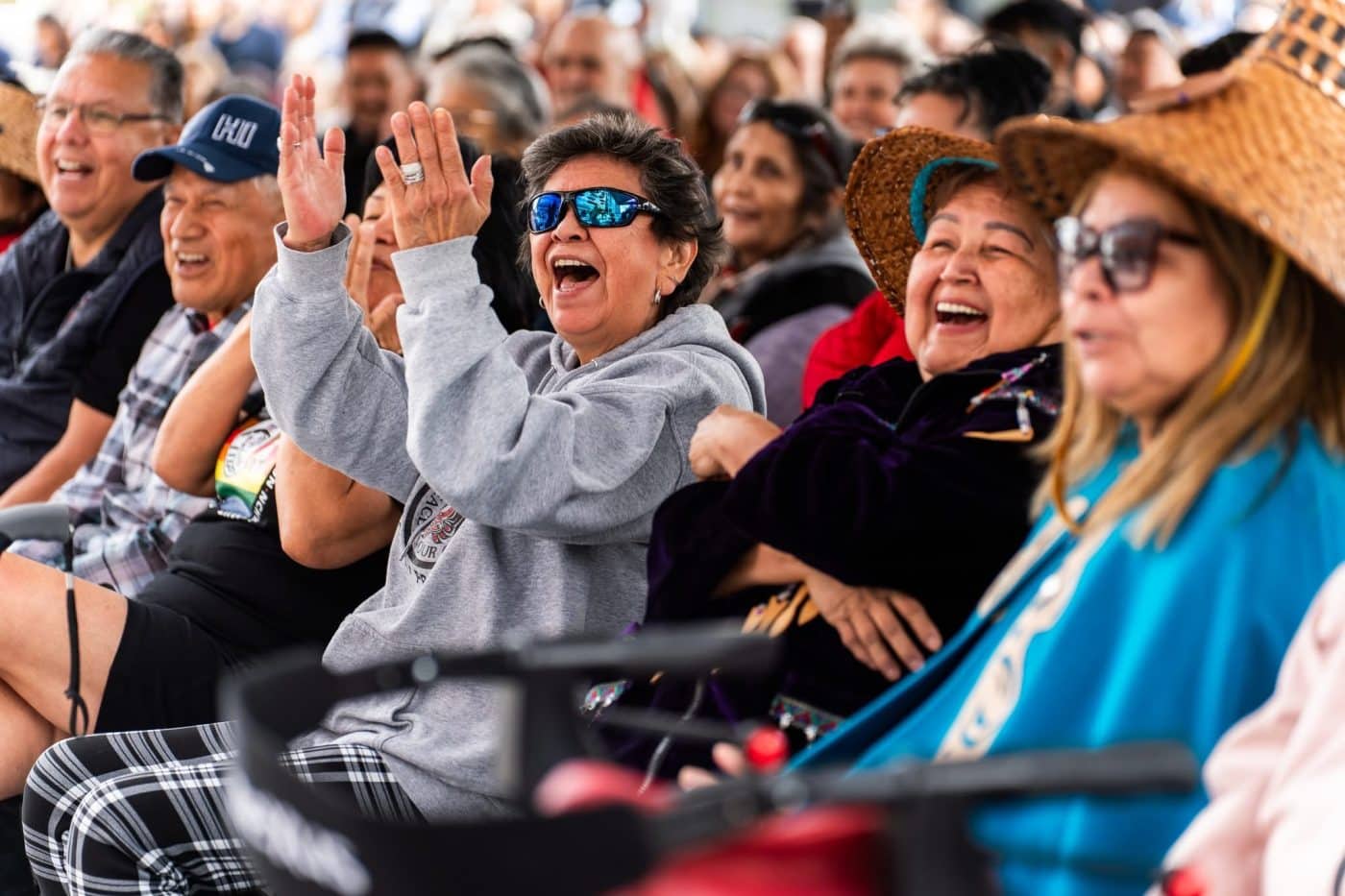
With Squamish songs and drummers, eagles flying overhead and people of all ages in attendance – the blessing ceremony carried laughter and emotion throughout.
“Very historic day for our Sḵwx̱wú7mesh Úxwumixw people, we’re breathing life back into our village here in Sen̓áḵw,” Wilson Williams said.
Williams is the Council Chairperson for the Squamish Nation, and said that after being removed from the ancestral village for more than 100 years, the blessing ceremonies are “the beginning of something beautiful.”
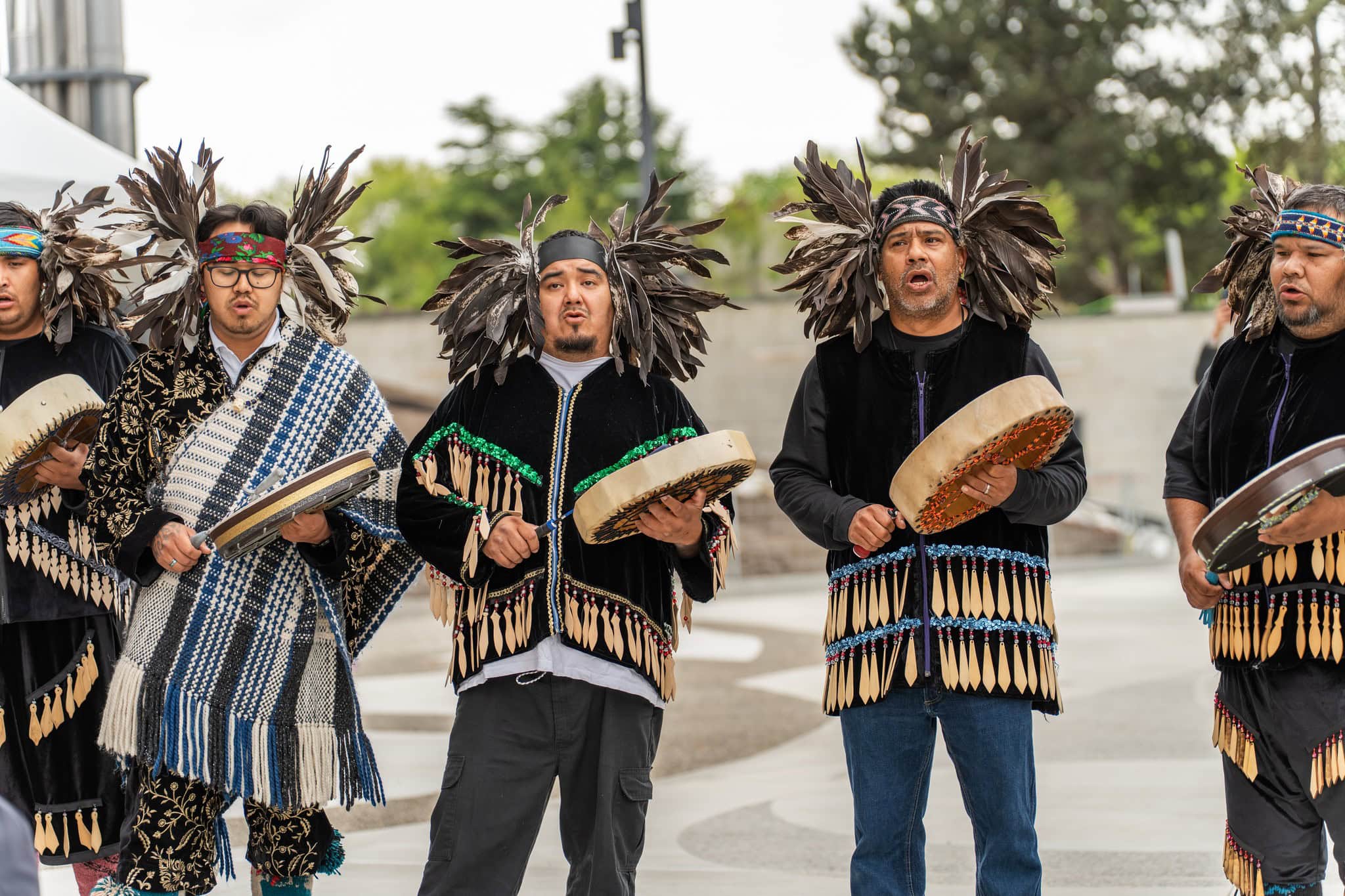
Squamish Nation drummers at the Sen̓áḵw blessing ceremony for the first tower on May 8. The drum group sang as Squamish youth brushed the tower with cedar boughs. Photo: Nch’ḵay̓ Development Corporation
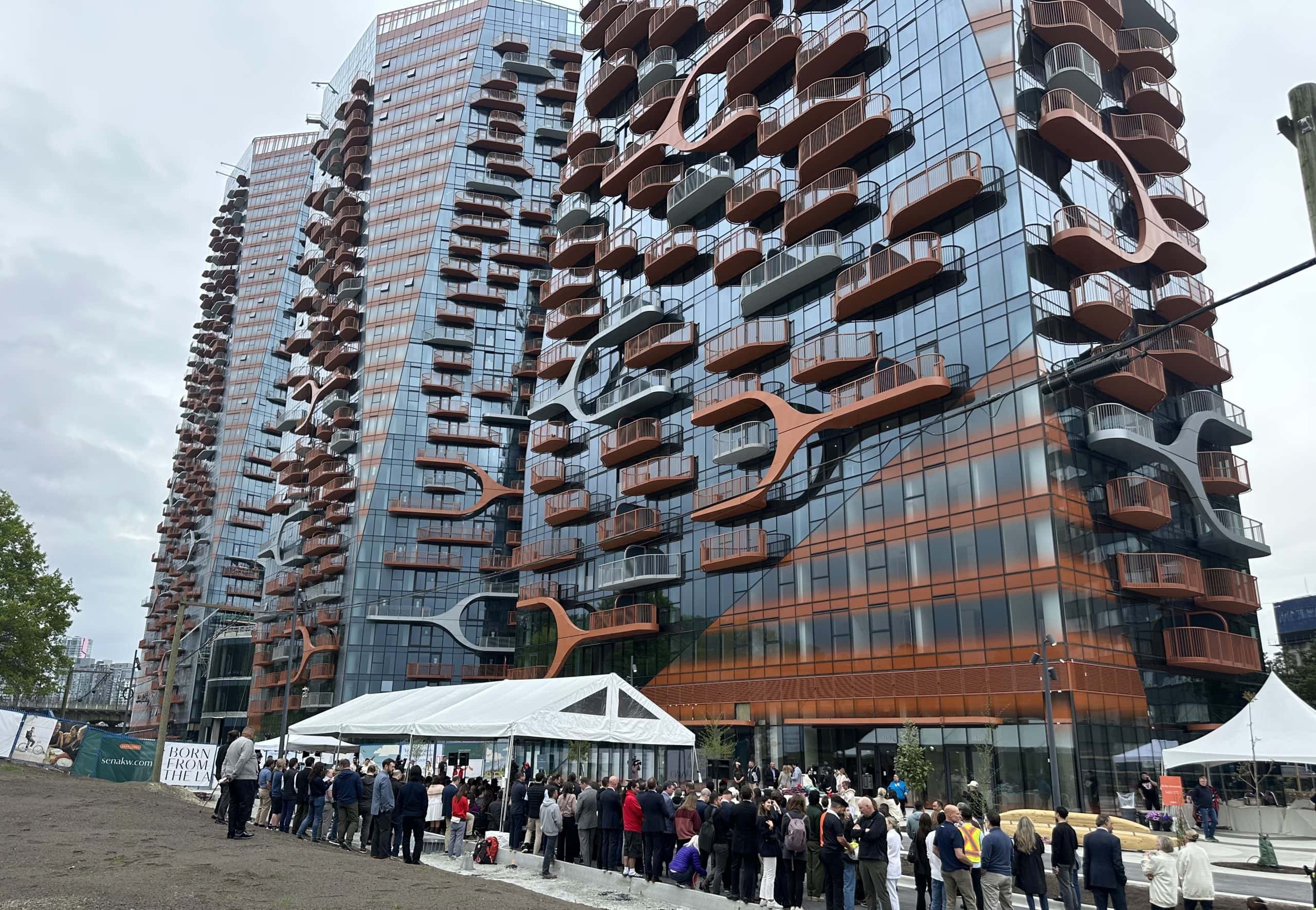
Squamish Nation members and invited guests gather for a blessing ceremony hosted on May 8, celebrating the opening of the first residential tower on June 1st. Photo: Santana Dreaver
Sen̓áḵw has made headlines across the country as one of the greenest urban developments in Canada, and receiving the largest investment from the Canada Mortgage and Housing Corporation in history.
In the midst of Canada’s housing crisis, Sen̓áḵw is set to provide 6,000 homes. And in one of the most desirable neighbourhoods in one of North America’s most expensive cities, 1,200 will be delivered under an affordable model.
None of it would have been possible without fighting in court for 25 years. The village site was won back in a 2003 court case — a victory won by Elders from the nation, and renowned leaders such as Chief Joe Mathias.
“In 1913 our people got put on a barge and pushed into the ocean, our homes were burned as they were going off into the ocean. So it’s been a long battle,” Jacob Lewis said, seated on a cedar bench in the shape of a canoe.
Lewis is Squamish and has been involved with the Sen̓áḵw development since its inception in 2019, when the nation voted in favour to build. He is currently the director of community development with Nch’ḵay̓ Development Corporation, a partner in the project.
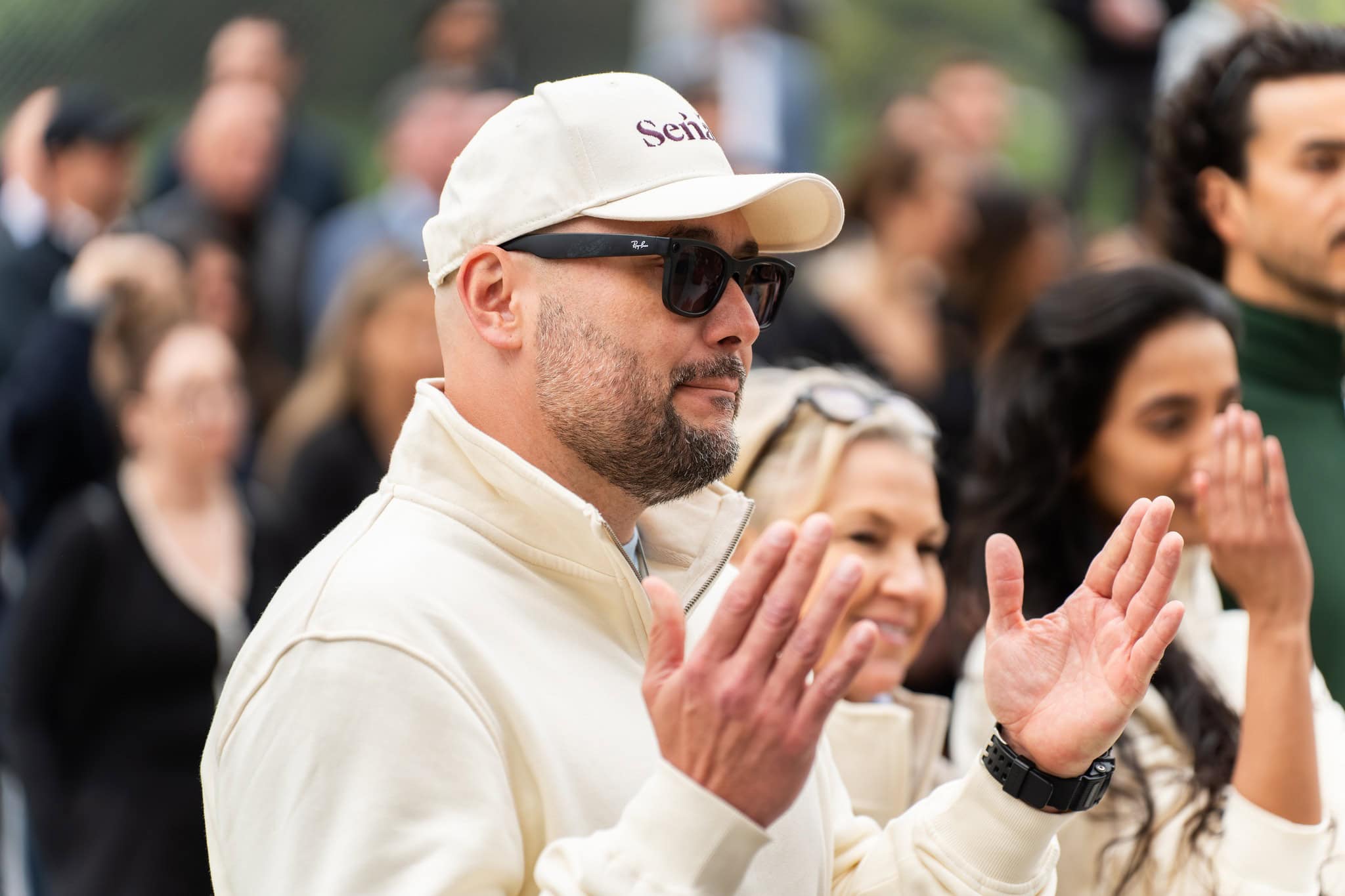
Jacob Lewis raises his hand to a guest speaker as part of Squamish custom. He was one of hundreds of people in attendance at the blessing ceremony located in Vancouver’s West End. Photo: Nch’ḵay̓ Development Corporation
“Super excited today, it’s been a long time coming,” he said. “There’s been so much pride, so much honour, so much appreciation and gratitude for our ancestors, for our past leadership and all those people that helped get us here today for the blessing ceremony.”
Beyond making history with the development size and investment, what makes the development special to many is the beauty of the architecture, emphasis on Squamish artwork and environmental considerations taken in the build.
Three towers come into view from the Burrard Street Bridge, trigon and crescent shapes decorating the buildings.
Coast Salish designs are visible in the concrete, with Sḵwx̱wú7mesh language set to be visible throughout the properties upon completion – there is no mistaking that this is a Squamish village.
The tower is the first of 11 residential towers, with rental priority going to Squamish people, and then Indigenous people, before rentals open to the general public – implemented through an Indigenous participation plan.
The development will be surrounded by a village with amenities including a pool, sauna, cold plunge and more.
Sen̓áḵw development centres environmental considerations
While the physical construction of Sen̓áḵw is releasing carbon into the environment, the operation of the buildings will emit almost no greenhouse gases from the day residents move in, Jennifer Podmore Russell told the Narwhal.
“It was really important that we bring every environmental standard that we could into this building, as quickly as we could,” she said. Russell is the Chief Development Officer with Nch’ḵay̓ Development Corporation.
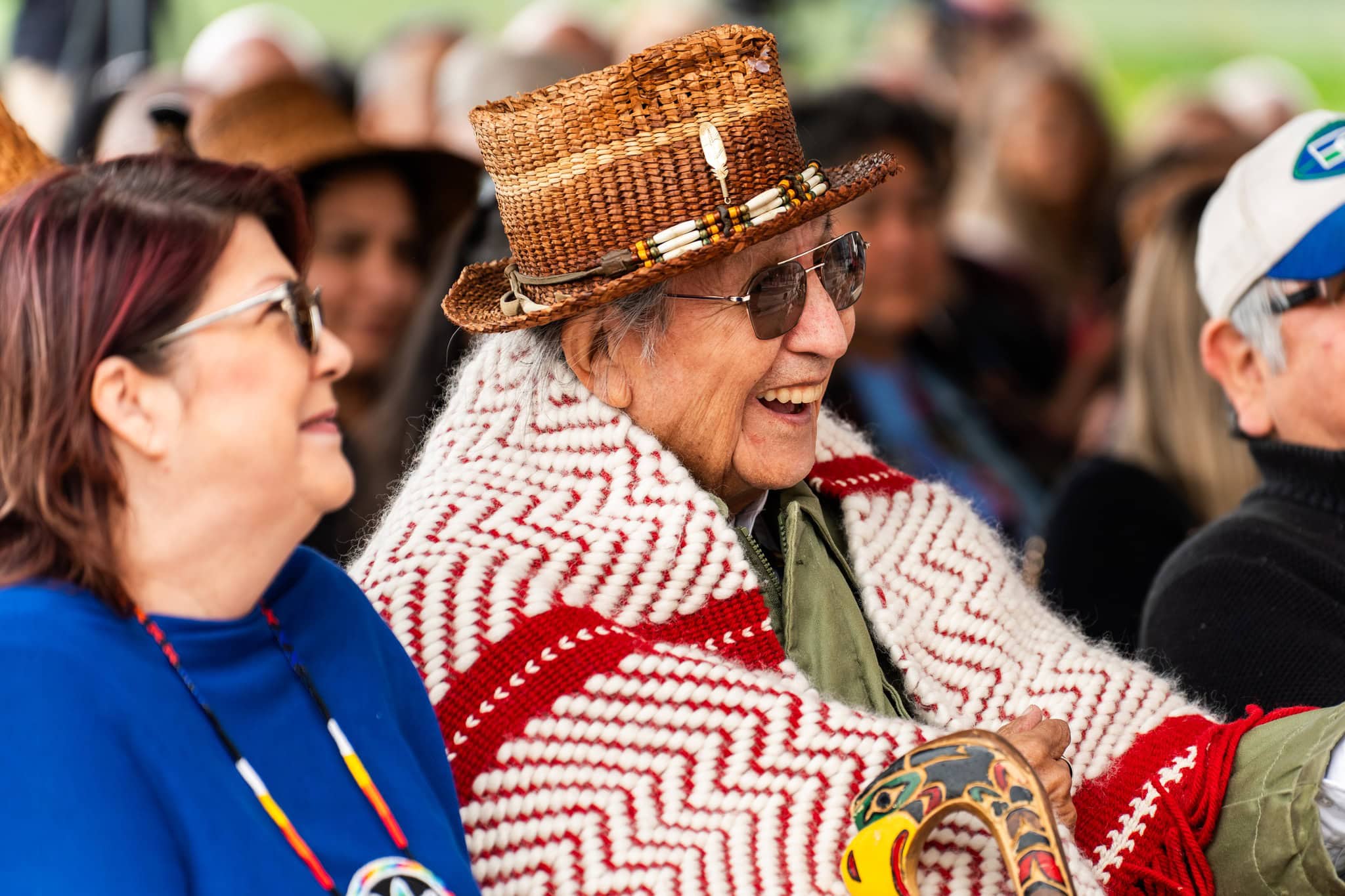
Elders from the Squamish Nation had reserved seating to witness the ceremony up close. Photo: Nch’ḵay̓ Development Corporation
Through an investment from Creative Energy, a Vancouver-based green energy supplier, Sen̓áḵw is one of the only housing developments of its size that will operate at net-zero emissions in the world.
Residential towers are designed to be heated and cooled by converted wasted thermal energy, captured from a Metro Vancouver waste line.
“With a capacity of approximately 4,000 tons, it’s one of the largest cooling towers in the Lower Mainland, efficiently serving the entire Sen̓áḵw development,” the Creative Energy website reads.
Just two levels of parking are being offered across each tower, reducing carbon emissions and encouraging less vehicle use.
A number of different partnerships with transportation providers in the area have been established, including Uber, Evo car share, Mobi rental bikes and False Creek Ferries, so that residents can “be able to navigate their life without the burden of a car,” Russell said.
‘I am excited to live in a brand-new building’
The first residents will move into Sen̓áḵw on June 1st, with the next tower set to open in September. It’s a move that some residents have long awaited, including Cody Bugler.
“I’m moving into a one-bedroom suite, 585 sq. feet, market rate. The size and price is comparable to what I’m paying now in a much older building in the West End, with much less exciting amenities.”
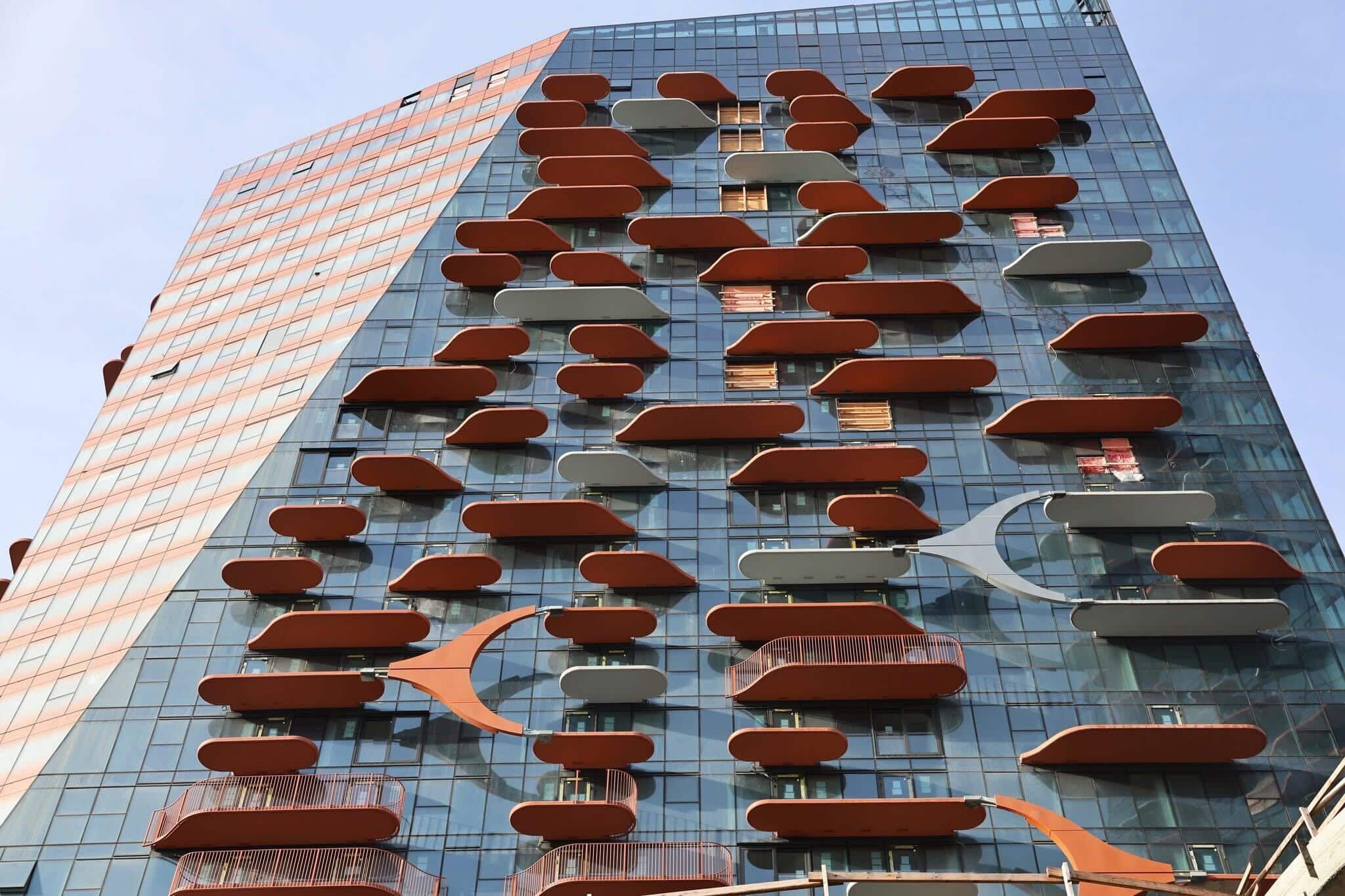
Jacob Lewis said that prominent Squamish artists took on a mentee during the Sen̓áḵw build and designing process, ensuring that up and coming artists had learning opportunities. Photo: Nch’ḵay̓ Development Corporation
Bugler is Plains Cree from Red Pheasant First Nation in Saskatchewan, and has lived in the area for years. He uses public transportation to access his job at the University of British Columbia as an Indigenous Engagement Leader.
“I’ve been putting off moving for some time, waiting for these buildings to be complete, so it’s exciting to finally see it all come to fruition,” he said.
Reflecting on the country’s housing shortage, Lewis said that “it feels amazing” being able to host Indigenous people who find themselves living in Vancouver.
As for building at this scale, Squamish cultural values helped guide the process. Providing high-density housing is solving one of the city’s largest problems, welcomes members of the nation back to the territory, while ensuring that environmental impact is as minimal as possible.
“People were saying ‘shouldn’t they be building something that’s more sustainable?’ Expecting us to build longhouses,” Lewis said, addressing negative feedback from the surrounding neighbourhood.
“We’re doing it the Sḵwx̱wú7mesh way, and that’s what we’re gonna focus on,” he said.
The Narwhal’s reporters are telling environment stories you won’t read about anywhere else. Stay in the loop by signing up for our free weekly dose of independent journalism.
From The Narwhal | News on Climate Change, Environmental Issues in Canada via This RSS Feed.