

By Marc Eliot Stein, World BEYOND War, May 31, 2026

The view south from Lookout Hill in Prospect Park, Brooklyn.
This month’s podcast episode is just a few personal thoughts inspired by where I live. It’s a pacifist meditation on battlefields, and it’s a walk through Prospect Park. It’s also a rambling monologue about life in Flatbush, Brooklyn. The following is a complete transcript of Episode 84 of the World BEYOND War podcast. Hope you enjoy!
NOTE: I don’t usually provide transcripts for podcast interviews because I’m not sure automatic transcription will accurately represent the words of my guests, but I’m happy to provide a transcript when I can. Transcripts of all podcast episodes are available in multiple languages from podcast apps like Apple Podcasts.
Where I Live, or Old Battlefields of Brooklyn
Welcome to episode 84 of the World Beyond War podcast. I’m Marc Eliot Stein, technology director of World Beyond War, and I feel like starting our show with something different today. I want to tell you about where I live. Sometimes you hear me say I live in Brooklyn, or I say New York City, or I say I live on the Lanape lands, referring to the indigenous people of this region who were tragically wiped out centuries ago. All these things are true, and now I want to talk more about the really strange history of the place where I live, and how this strangeness connects to the major crisis of global war and global trauma that we are all stuck in, everywhere in the world, today.
Brooklyn is a huge hulk of land on the southwestern side of Long Island, separated from Manhattan island by a tidal estuary, not actually a river, called the East River. Manhattan is where the skyscrapers are, but Brooklyn is just where people live. It’s bigger than Manhattan, and there are many parts of Brooklyn where you can just walk and walk for hours and never see anything but houses, apartments, schools, churches, temples, mosques, restaurants, shops. And that’s one thing I love to do here, just walk and walk.
I live on the northern edge of a town called Flatbush, in a tiny studio apartment half a block from an entrance to Prospect Park. People say it’s impossible to live in New York City unless you’re wealthy, but I’m not wealthy and I live on a pretty modest income. Rent is high here, though nowhere near as bad as in the wealthier neighborhoods of Brooklyn, and I’m okay with the tradeoffs that make it possible for me to live here, like having no car and taking trains everywhere, and not having a lot of extra money to spend on dumb stuff I don’t need. I’ve spoken about this a few times on this podcast, that for me it’s been part of my antiwar practice to be less consumerist, to try to earn less and spend less rather than do what I’ve done for most of my life as a software developer, which is to stress myself out trying to earn a lot and spend a lot. It takes some digging to find an affordable apartment, but it can be done. I was born in New York City, and the urban life feels right to me. My three adult kids all live in the city too, so this is where I belong. The plumbing is a mess, my kitchen is a throwback to the 1970s, the elevator is constantly breaking, and between my neighbors yelling or playing music and Flatbush Avenue outside the window it’s noisy here at all hours. But I can sleep through noise, and this is my home and I love to walk outside and be in the middle of everything.
This neighborhood is known as Little Caribbean, and further into Flatbush there’s more specifically Little Haiti. I only knew a little about the proud history of Haiti when I moved to Flatbush. I’ve learned a bunch since then about the harassment and deprivation and abuse that small country has endured from the United States and European powers, especially France, since its groundbreaking revolution over 200 years ago. The harassment and deprivation and abuse Haiti has suffered since then has also been shared by countries like Cuba and Venezuela that dare to challenge colonialist corruption. USA’s bullying of all these countries seems to be reaching a shocking crescendo right now under Marco Rubio and Donald Trump.
I’ve learned a lot about Caribbean culture by living in Little Caribbean, and also by reading books like “Black Jacobins” by C. L. R. James and “Open Veins of Latin America” by Eduardo Galeano, as well as fiction writers like Edwidge Dandicat, who tells stories about families that move between Haiti and Brooklyn, and Jamaica Kincaid, who left Antigua for New York and wrote a humorous account of the famous West Indian American Day parade that takes place a few blocks away at the end of every summer, along with the more crazed J’ouvert celebration that I enjoy getting glimpses of though I wish I knew how to party hard enough to join.
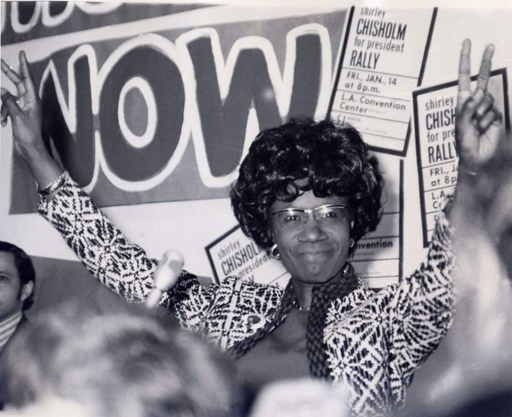
Shirley Chisholm, the first Black person to run for President of the United States and also the first woman to run for President in the Democratic party in 1972, was the congressperson from this neighborhood. When this great woman was in Congress, she represented my relatives, because my mother, aunt, grandmother, grandfather, great grandmother and great grandfather all grew up in an apartment very close to the apartment I’m sitting in right now. Flatbush was a heavily Jewish neighborhood then, and sadly the abrupt transition from a Jewish neighborhood to a mostly Black and Caribbean neighborhood during the 1950s, 1960s and 1970s is a classic case of white flight. It makes me sad to think about white flight, and about the long legacy of racial conflict in Brooklyn – but I am kind of proud that my own grandparents stayed until they retired in the 1970s. As far as I know my ancestors from Brooklyn were not racists and enjoyed integration at every level, and that’s who I think I took after, because to me that’s what city living is about.

Shirley Chisholm ran for President in 1972 with the slogan “Unbought and Unbossed” – a stark contrast to Washington DC’s bought and bossed legislators from Brooklyn today.
Isn’t it ironic that Brooklyn is starkly divided into ethnic neighborhoods even today? The wealthiest and whitest people live on the other side of Prospect Park, in Park Slope and Cobble Hill and Brooklyn Heights. There are now Yiddish-speaking Hasidic Jewish communities in Williamsburg, Crown Heights and Borough Park. I sing opera with a community theater company in Sunset Park, a heavily Asian neighborhood in southwest Brooklyn, where I can get great Chinese food but I’ll have to order by pointing at pictures on a menu that’s only in Chinese because that’s how they do it in Sunset Park. Next to Sunset Park are the Arab communities of Bay Ridge. If I take the Q train down to Coney Island and get off at Brighton Beach to stroll along the boardwalk, I will have the amazing experience of walking through at least three several distinctly ethnic sections of the beach: Russians and Ukranians who coexist around Brighton Beach, Asian and Muslim families wearing modest swimwear in a section between Brighton and Coney, and of course the tourists and fun-seekers of all ethnicities having fun around the roller coasters. I’m glad everyone is enjoying the ocean and the sunshine, but why can’t it just be one beach? At least on Coney Island itself you meet a lot of different kinds of people, and I think that’s what my ancestors who lived in Brooklyn a long time ago enjoyed doing too.
So here’s the crazy thing that made me want to talk about where I live on an antiwar podcast here today.
I want to talk about a history that really never gets talked about here – a complex history that New Yorkers tend to have only a vague awareness about, even though the significance is staring us all in the face. I live on a historical battlefield. I don’t mean I live near it – I mean I live on it. I’m talking about the Battle of Brooklyn, also sometimes known as the Battle of Long Island, which took place a month after the signing of USA’s Declaration of Independence on July 4 1776, on the morning of August 27, 1776.
The American revolutionary war had already been brewing in places like Boston and Concord and Fort Ticonderoga by the summer of 1776. After independence was declared, a large new naval force arrived on the shores of Staten Island to invade New York City, about 20,000 British soldiers supplemented by Hessian mercenaries. New York City would be defended by the army led by George Washington, and on August 27 1776 George Washington was about to have one of the worst days of his life.
There’s a long line of sharp hills that runs west to east across Brooklyn and Queens. This is the geographic feature known as the Terminal Moraine, a distinctive ridge of hills that was left behind as rubble from the edge of a gigantic melting glacier that once sat right here on top of what would become New York City.
South of this line of hills in Brooklyn it’s a wide flat land – suitably enough the neighborhoods here are called Flatbush and Flatlands – and British troops began their advance on the morning of this battle by walking north from Coney Island along what is today Flatbush Avenue, which meant that they were about to face the tightly held high ground of the hills that stand today in Prospect Park. Holding the high ground is crucial in a land battle, and the American army had a strong presence with muskets and field guns on this line of hills as they watched the British approach from the south.
The British knew that their best bet was not to fight it out on the hills but instead to force their way through at one of four passes through the terminal moraine: Martense Pass on the southwest hill, Flatbush Pass, which is literally the ground I’m on right now, Bedford Pass east of here, and then Jamaica Pass much further east. The night before the morning of the battle, the British commanders planned an audacious strategy: they would keep pressure on the three passes to the west while secretly and silently marching a large force along Kings Highway up to the Jamaica Pass, the furthest of the four passes, where they were able to get through and encircle the main American army at Flatbush Pass. Washington’s troops had a strong position on the hills that are now within Prospect Park today, but now they were trapped between two British armies, north and south, both converging on Flatbush Pass.

Historical map of the Battle of Brooklyn, showing British troops arriving on the south shore and moving north through the hills of the terminal moraine through Flatbush Pass and Jamaica Pass
The American guns were useless and they had to retreat to the west. Many were killed or captured on the spot. For the rest of this painful day, Washington’s troops would fight tough rear-guard actions to keep the retreat from turning into a total rout, and Washington was able to gather his army at the northern corner of Brooklyn Heights and eventually avoid capture by escaping to Manhattan.
This battle is historically significant because Washington’s retreat at the onset of this stage of war set the pattern for what would eventually be a seven year strategy of victory by retreat. The casualty numbers of the Battle of Brooklyn barely look shocking compared to today’s disasters in Ukraine and Gaza. Wikipedia says the invading army had less than 400 casualties, while the defending army had about 1100 killed and wounded and the same number taken prisoner. The fate of the 1100 American prisoners is especially terrible: many of them were kept in torturous conditions on prison ships in Wallabout Bay off Williamsburg for the duration of the seven year war, or until they died of neglect. When I try to imagine this kind of suffering today it feels like a sort of ironic echo of slave ships – ironic because, whether or not these soldiers knew it, they were fighting under slavemaster George Washington for a regime that was pledged to keep slavery alive.
I was saying before that few people in New York City ever talk about the Battle of Brooklyn. I have lots of friends who come visit me and I like taking them on a tour of two spots in Prospect Park where humble monuments can be found, and invariably my guests are seeing these monuments for the first time. I rarely speak to another New Yorker who knows any specific details about the history of the battle that took place here.
I think it’s because I’m a pacifist, and of course I’m a history freak, but I think it’s mainly because I’m a pacifist that I’m drawn to explore battlefields. I developed the habit when I lived in Virginia, where some of the most beautifully kept parks are massive Civil War battlefields like Manassas, Chancellorsville, Wilderness, Fredericksburg, Spotsylvania. Some of Virginia’s battlefields have a disturbingly pro-Confederate vibe, and honestly I always sensed a strange Confederate-sympahtizing vibe even when I visited Civil War battlefields in the north like Gettysburg and Antietam. Vibes aside, though, the main emotion I feel when I visit a battlefield is awareness of trauma. A battlefield is a monument to mankind’s stupidity and recklessness. We see the wreckage of human nature in vivid tableau, rolling fields of grassy hills where the ghosts of terrible decisions by terrible leaders still haunt the living – us.
The ghosts of bad decisions haunt Flatbush, Brooklyn too. I think it’s because the memory of what happened here was so painful that Brooklyn decided to never honor its historic battle. If George Washington’s army had won here, the entire area of Prospect Park and Greenwood Cemetery would have been turned into a recreational, celebratory battlefield park like Gettysburg or Manassas. But what happened here to the defending forces was failure, error, disaster, blame, regret, trauma. The most amazing thing about Prospect Park, a beautiful and much beloved park, is that it was built not to remember but to completely erase the memory of what happened at Flatbush Pass.
I’m going to walk us into Prospect Park for a very quick visit to the two areas where you can find some modest monuments to the Revolutionary War. Let’s enter at the Lincoln Road entrance half a block from the Prospect Park subway station where the Q and B trains go, walking west into the park to join the loop, the long walking trail and bike road that encircles the inner park. Head north on the loop. Watch out for speed bikers and highly focused power walkers, and wander your way up past thickly wooded high jagged hills on your left and right – the hills of the terminal moraine, and the high ground for the battle – until you spot on your right a little monument for the Dongan Oak. The Dongan Oak was famously a large oak tree beloved in the town of Flatbush before the war, which was sacrificed by the American forces in order to place a barrier across the pass. Not far from the Dongan Oak, a ghost tree, you see two more plaques mounted on big rocks on the east and west side of the path. If you read these plaques you realize that you are standing right in the middle of Flatbush Pass, right at the spot where American forces were overwhelmed.

Plaque “Site of the Dongan Oak” at Flatbush Battle Pass in Prospect Park.
You can stand and contemplate here for a moment or two, again please make sure you dodge those aggressive speed bikers who get very mad if some pedestrian harshes their mellow while they’re cruising downhill. You should definitely step away from the paved walkway and spend some time exploring all the hills and high grounds of this area, which is near a cool decaying sculpture garden and play area called the Vale of Cashmere that you also might like to explore. When you’re ready to move on to the second monument, we want to walk the whole length of the park on the Long Meadow, a long flat grassy expanse, until we reach Lookout Hill on the park’s south side, and then let’s climb the winding paths up this mutli-layered hill. Lookout Hill is the high point of Prospect Park, so this is where cannon would have been placed facing south. There’s a high tree line at the top of Lookout Hill so many people don’t notice it, but if you look south from Lookout Hill where the cannons would have faced the approaching British lines, you may be able to faintly see the tiny shape of the Parachute Jump at Coney Island.

On a clear day, you can see the Parachute Jump at Coney Island from the top of Lookout Hill in Prospect Park.
If you walk around Lookout Hill, you’ll eventually find a nice grassy slope with a pillar with words on two sides. It says “In Honor of Maryland’s Four Hundred Who On This Battle-field August 27th 1776 Saved the American Army”. It also says “Good God! What Brave Fellows I Must This Day Lose – George Washington”.

The Maryland Monument at the foot of Lookout Hill in Prospect Park. This upward view shows how the sharp hills of the terminal moraine were paved and sculpted by landscape engineers, creating artificial plateaus that obscured the hills.
In case anybody is going to use this podcast as a travel guide, and I hope you do, please realize that Prospect Park is one of the easiest places in New York City to get lost in, and I believe it was designed for this purpose in the 19th century by the great park builders Frederick Law Olmsted and Calvert Vaux. This is a park completely sculpted by humans, a triumph of effort over nature. It’s hard to say exactly how many waterfalls you can find in Prospect Park, but all the waterfalls are artificial, all following a single body of water that flows in a manmade curve from the highest waterfall, which you’ll find on a high walkway between the Long Meadow and the Nethermead, a lower ground. There’s a dog beach on the Meadow side of this high walkway, and a dog run on the Nethermead side, but people who walk between these two plateaus sometimes get out of breath fast, because all the gently sloping hills of Prospect Park were designed to obscure the actual geography of the terminal moraine. Prospect Park is full of illusions, and many people feel these illusions more than they understand them. If you’ve ever tried to find your way from one part of this park to another without a map, or even with a map, you know what I’m talking about. The Long Meadow itself feels like an optical illusion because it’s built on landfill on high ground – a long beautiful grassy flat land on a high plateau, descending into woody hills on the east and the aptly named neighborhood of Park Slope on the west.
It’s odd to realize that back in the middle of the 19th century when committees and commissioners in Brooklyn laid down the initial plans to turn the grounds around Flatbush Pass into Prospect Park, there was clearly a strong desire to obliterate the historical battlefield. Did anybody in any of these committees argue that the battlefield should be preserved? If so, this is lost to history today. The park builders flattened some of the hills to make the Nethermead and the ravine and the beautiful artificial pond, and they used the landfill from those lower hills to fill in and flatten the tops of some higher hills to create the gorgeous Long Meadow. I guess it may have even been some kind of pacifist instinct, back then in the middle of the 19th century, to replace this agonizing symbol of a lost battle with waterfalls and streams and trees and flowers. I’m glad they didn’t replace it with a parking lot, anyway, and I’m thankful for the beauty of Prospect Park today. But I think it tells us something about human nature that we sometimes have to strive so hard just to forget the wars we’ve lost, and the bad decisions we’ve made.

Map of Prospect Park showing many spots mentioned in this episode: the Lincoln Road entrance, Dongan Oak, Long Meadow, Nethermead, Maryland Monument and Lookout Hill
Pennsylvania and Maryland and Virginia seem to have taken the opposite approach, probably going too far in turning their historical battlefields into triumphal wonderlands to celebrate questionable historical propaganda. It seems to go one way or the other, because there are many other parts of America where wartime memories want to be forgotten and battlefields get obliterated. It’s either Disneyland or oblivion in America. Try going to Atlanta, Georgia to find any of the significant locations where the north pushed their advantage to the south’s breaking point in the last phase of the Civil War. Georgia doesn’t like to remember its battlefields where the Confederates lost. They built concrete highway cloverleafs over the Battle of Atlanta.
The obliteration of the human disaster that took place on August 27, 1776 can be seen in several other places in Brooklyn too. Probably the most well-known monument to the Battle of Brooklyn is the Old Stone House in Park Slope between 5th and 4th Avenue. It’s kind of ironic that the Old Stone House in Park Slope is the most well known monument to the Battle of Brooklyn, since the Old Stone House was actually moved several blocks from its historical location – in order to be preserved as a historical monument. Which is a bizarre concept, when you think about it, isn’t it? Wouldn’t it be best to leave a historical site exactly where it is? Not in Brooklyn, I guess. But at least it’s possible to create a heroic story at this location, since the Old Stone House is where a group of American forces managed to hold back the invasion long enough to help the rest of the army escape, many soldiers sacrificing their own lives for the effort. It’s all about what stories we can tell, I guess.
Virtually nobody ever visits the crooked turn of Clove Road on the north side of Empire Boulevard in Crown Heights, a truly downtrodden streetscape that was once Bedford Pass. Jamaica Pass can be found between the Broadway Junction train station and Evergreen Cemetery in East New York. I’ve never found the slightest trace of a historical marker at either Bedford Pass or Jamaica Pass. There is a nice tall memorial monument in Fort Greene Park for the tortured victims of the military prison ships, and I guess that’s something.
Speaking of ironies, ironies upon ironies – well, I’ve been talking about the selective obfuscation of American history here, and I haven’t even said much in this whole episode about the legacy of Native American genocide, and African slavery. Here I am going on and on about the ethnic breakdown of the beaches at Coney Island – the trauma of white on white history. Well, we do need to understand the trauma of white on white history in order to understand the atrocities of today. I don’t think George Washington was a good person in any sense. I think most of my fellow Americans will continue to blissfully shield themselves from the truth of how much American mythology is built upon shallow myth and sanitized nostalgia.
I’ve spoken on a previous episode of this podcast about the novel “The Buried Giant” by Kazuo Ishiguro. War is the Buried Giant – the subconscious generational trauma that war leaves behind in all our souls – the traumatic memory that gets exploited when it’s time to start a new war, but forgotten otherwise. Shovel those memories away, cover it up, bury the nightmares, because we have a new set of contradictions and lies to hide behind today.
How we delude ourselves, here in the United States of America, the so-called United States. I’ve said this before on this podcast, and I’ll say it again: there’s nothing united about it.
How we delude ourselves. I was listening to Marco Rubio on TV, today’s Energizer Bunny of American imperialism. The cruel policies and war crimes he has worked to put in place in Cuba and Venezuela are unthinkable. The country I’m stuck living in is swirling in a cultural death spiral as we attack Iran, continuing the disaster we began when we overthrew their democratically elected government in 1953. Over in Central Europe, a vicious war is grinding away on the same land where World War One and World War Two destroyed millions of innocent souls.
This is not the month of August 1776. I’m talking to you on May 30, 2026. USA is supposedly having a 250th birthday this summer, but I don’t know anybody who thinks there’s much to celebrate. Today, yeah, we’re watching Iran and Ukraine and Gaza and South Sudan, and many friends of World Beyond War were on the Global Sumud Flotilla to Gaza that was just brutally attacked by Israeli war criminals in the Mediterranean Sea. Also right here not far from New York City, brave protestors are fighting ICE and so-called Homeland Security gestapo at Delaney Hall in New Jersey, across New York Bay on the other side of Manhattan, so respect to New Jersey too. I’m going to end this episode with the joyful sounds of the drum circle that you can find on the Southeast corner of Prospect Park every weekend. This is where I live. Thanks for listening to me talk about my hometown today, and we’ll be back with more interviews next month.
The World BEYOND War Podcast page is here. All episodes are free and permanently available. Please subscribe and give us a good rating at any of the services below:
World BEYOND War Podcast on iTunes
World BEYOND War Podcast on Spotify
World BEYOND War Podcast RSS Feed
The post Podcast: Where I Live, or Old Battlefields of Brooklyn appeared first on World BEYOND War.
From World BEYOND War via This RSS Feed.