

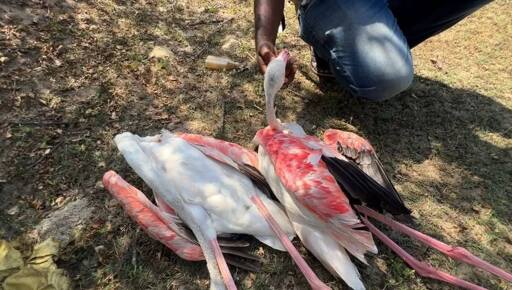
MANNAR, Sri Lanka — Each year, the arrival of greater flamingos transforms the lagoons of northern Sri Lanka into a mesmerizing spectacle of pale pink and white. Their synchronized movements across the shallow waters of Mannar attract birdwatchers, photographers, tourists and nature lovers from around the country and abroad. But behind this beauty lies a growing crisis. Recently, three flamingos were killed in Mannar after a collision with overhead power lines that crossed their flight path. Initial reports suggested electrocution, but according to Department of Wildlife Conservation (DWC) veterinary surgeon Balachandran Giritharan, who conducted the necropsies, the birds were not electrocuted. Instead, their long necks were slashed mid-flight when they struck the cables. The incident has renewed concerns among conservationists who have previously warned against energy infrastructure cutting across sensitive wetland habitats such as Vankalai Sanctuary, another Ramsar wetland in Mannar. Environmentalists had identified large waterbirds such as flamingos as being vulnerable to collisions. The latest flamingo deaths also add to the mounting environmental concerns surrounding development projects, particularly in Mannar, including proposed wind power projects. The issue drew international attention after the withdrawal of developer Adani Green Energy Limited (AGEL) from a disputed wind power project in Sri Lanka earlier this year. The Mannar region, with its strategic wind resources, has increasingly become a battleground between renewable energy expansion and biodiversity conservation. Flamingos are more vulnerable to collisions with power cables during dusk and early morning hours. Image courtesy of Indika Jayathissa. A global threat to flamingos Across the world,…This article was originally published on Mongabay
From Conservation news via This RSS Feed.