


Photo: L. Manuel Baechlin / The Narwhal
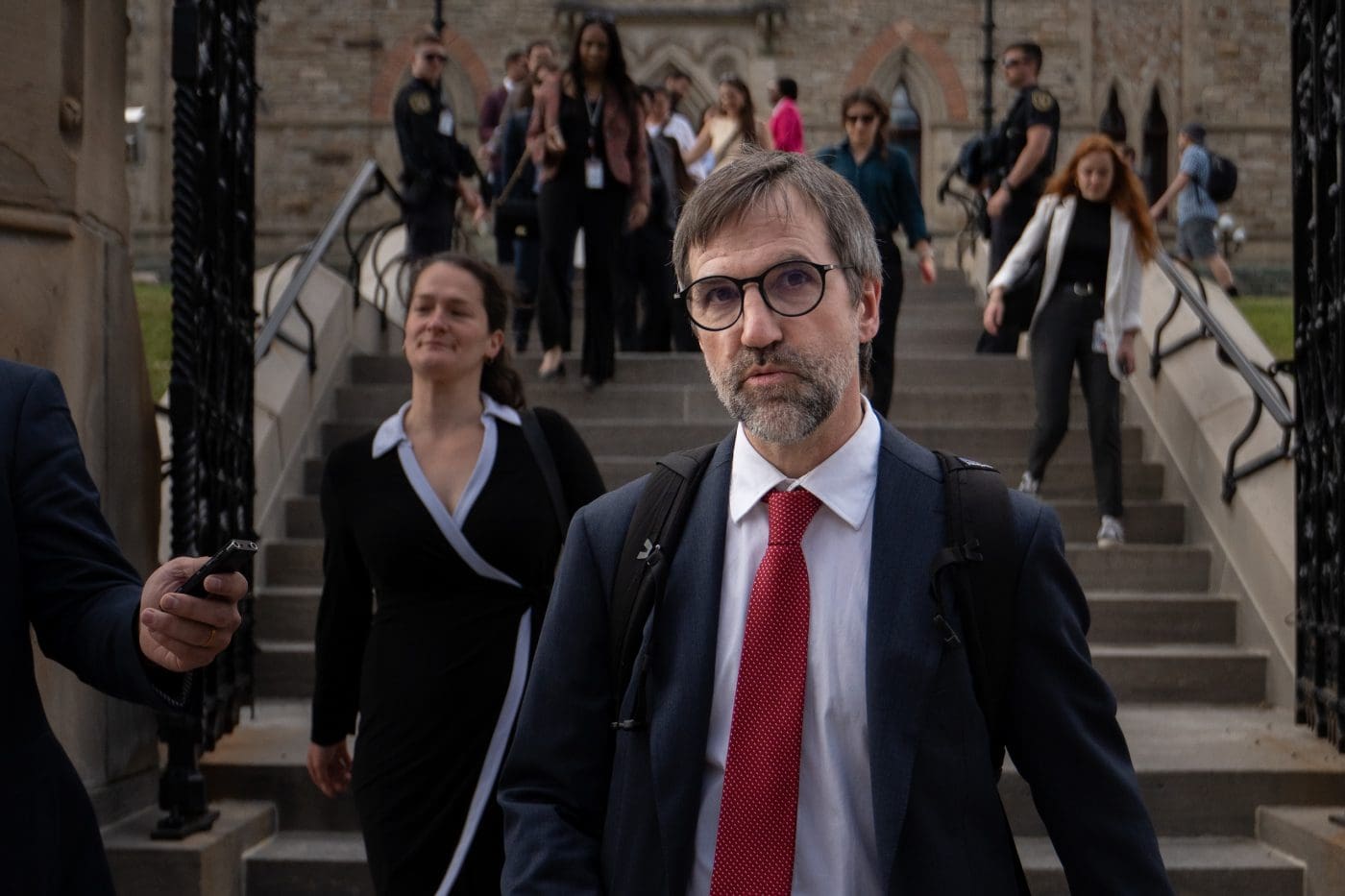
Steven Guilbeault has had enough.
Yesterday, the former Liberal environment minister announced his plan to resign his seat this summer after seven years in government.
It wasn’t a surprise. Rumours of Guilbeault’s resignation began almost as soon as Mark Carney won the Liberal leadership — and immediately killed the consumer carbon price. It’s seemed inevitable since November, when Carney and Alberta Premier Danielle Smith formally announced they were trying for a new pipeline and Guilbeault left cabinet. Now, some seven months later, Guilbeault is resigning altogether, with a letter including a long list of killed or threatened climate policies.
His exit marks the end of an era for Canadian environmental aspirations. It’s a sign that big government promises to protect the planet are no longer being made, let alone fulfilled — but not that the battle is over.
Turning Guilbeault from a grassroots activist into a politician was a Liberal score back in 2019. The Justin Trudeau government was taking heat for buying the Trans Mountain pipeline, and Guilbeault was a Quebecois environmental hero who had spent years at Greenpeace before co-founding Équiterre. As Guilbeault recalled during his House of Commons farewell, it was hard to believe such a fierce fossil fuel foe would be happy in the most mainstream of parties.
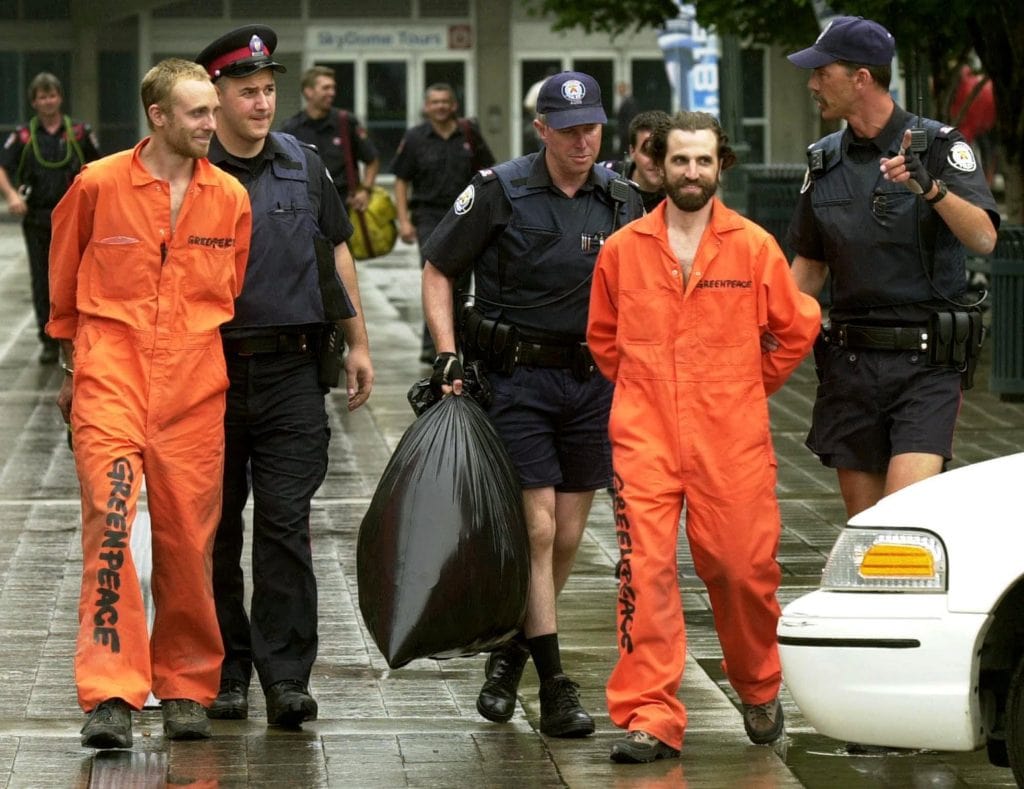
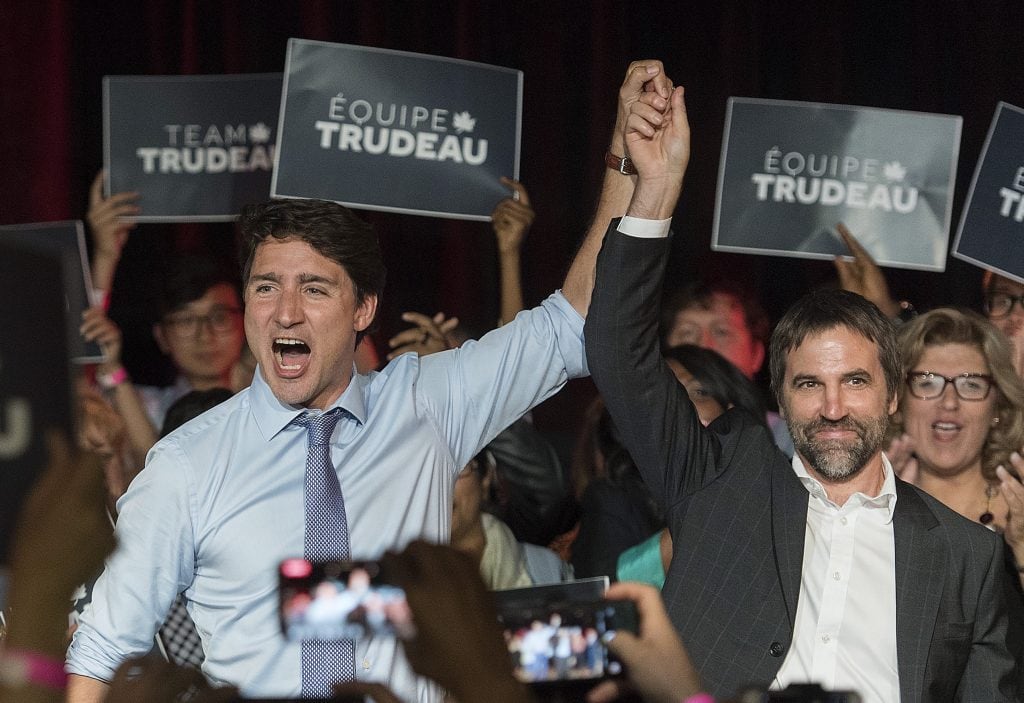
Steven Guilbeault, seen here in 2001 and 2019, went from grassroots activist to environment minister. Now, he’s leaving politics to once again pursue advocacy from outside government. Photos: Aaron Harris and Graham Hughes / The Canadian Press
Guilbeault and Trudeau agreed to disagree on Trans Mountain, and to work together on emissions reduction and environmental protections everywhere else. At the time, The Narwhal called him a “radical pragmatist” having a go at changing the system from the inside. He had some success and said, “I’m not angry,” as he walked down Parliament Hill yesterday. Still, it’s been clear for a while that he gave up more idealism than he intended.
Another Canadian voice for the environment also just decided that — to paraphrase feminist philosopher Audre Lorde — the master’s tools will never reduce the master’s emissions. On May 21, the activist group Investors for Paris Compliance announced it was winding down, after five years testing “whether investor pressure could meaningfully enforce corporate net-zero commitments” in Canada.
The group’s sincere, nerdy goal was to use financial levers to influence banks, insurers and fossil fuel companies to pursue emissions reduction. It argued companies were failing clients by not accurately disclosing the risks climate change posed to their investments. Using tactics like shareholder proposals, regulatory complaints and old-fashioned engagement, the group encouraged its targets to make those risks public, then work to minimize them.
The pitch was that reducing greenhouse gases in order to limit global warming and its exacerbation of extreme weather events would protect not just people and the planet, but profits.
The sad takeaway is, as Investors for Paris Compliance said this week, “This approach only works at the margins.” It also had wins, including a $20-billion commitment made by National Bank to finance renewables projects. The immensity of the climate crisis means such small victories aren’t enough.
“Investor accountability, in the absence of regulatory change or legal consequences, is not sufficient to deliver net-zero outcomes or to manage climate risk at the system level,” its final report concluded.
But Guilbeault’s departure shows tougher regulation or enforcement aren’t just unlikely in Canada right now — they’re off the table. Prime Minister Carney’s words might say he’s “moving forward on climate action,” but his actual actions include weakening environmental assessment laws to pave the way for souped-up resource extraction.
The landscape looks bleak for those dreaming of systemic emissions reductions efforts in Canada, but Guilbeault says he’s not done with his life’s environmental work. And whether he’s into it or not, Carney’s environmental efforts can’t be over, either.
Guilbeault wasn’t alone in criticism of Carney’s climate policy
Criticism of Carney’s approach to environmental policy is easy to find. Indigenous leaders were vocally opposed to fast-tracking legislation from the get-go. Last month, 14 Liberals sent a letter to the prime minister stating they were “deeply concerned” that pursuing a pipeline to appease Alberta means “the government’s credibility will be seriously compromised.”
Investors for Paris Compliance called Carney out, too. Its sunsetting report invoked his dramatic 2015 speech as Bank of England head, the one where he labelled markets’ short-term focus a “tragedy of the horizon” that failed to properly consider the long-term financial risks posed by climate-fuelled disasters.
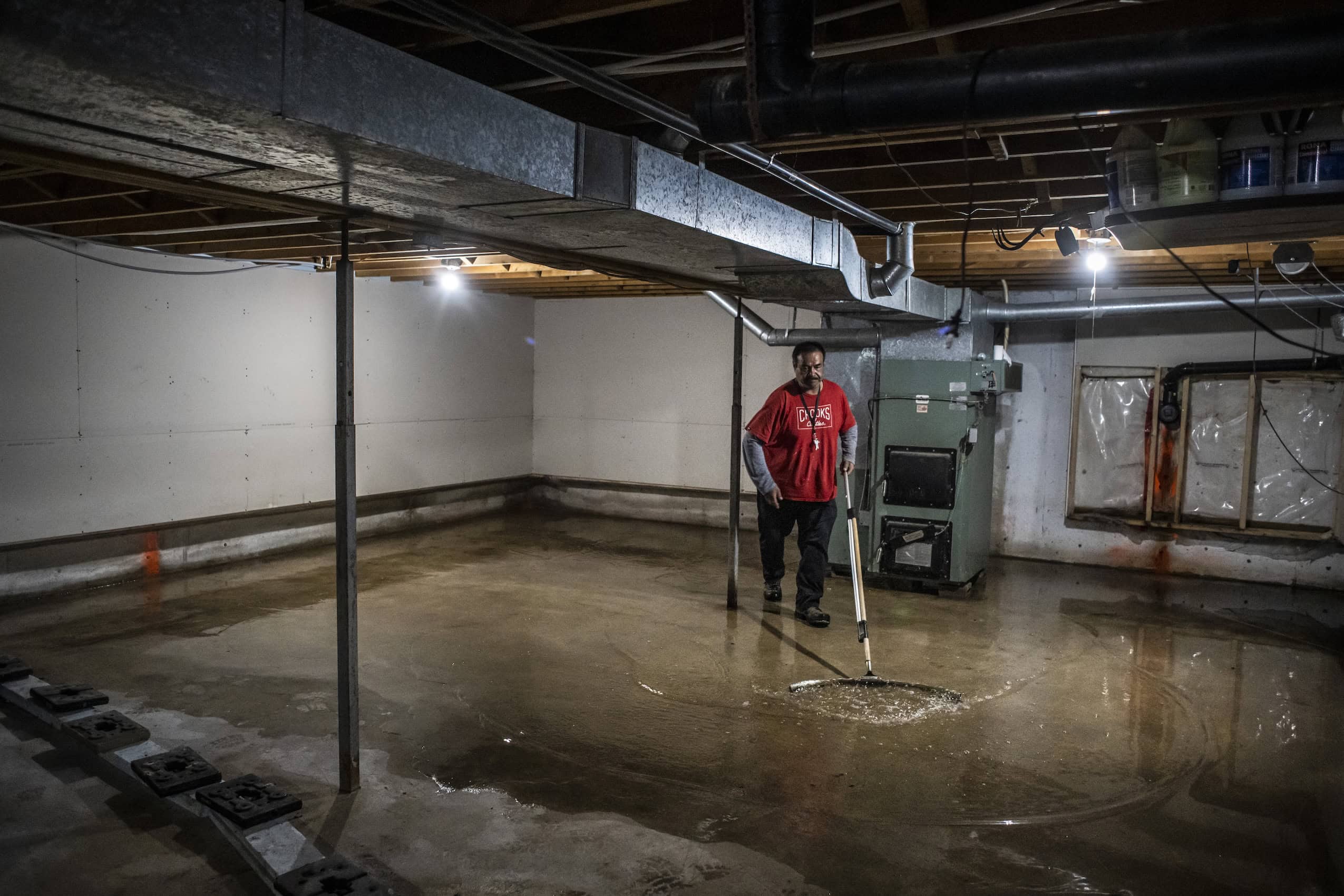
Disasters driven by climate change, such as floods and wildfires, cause significant economic damage. In 2015, Mark Carney called the failure of financial markets to properly account for these costs a “tragedy.” Photo: Aaron Vincent Elkaim / The Narwhal
For over a decade, this was hailed as a succinct and clear-eyed take, palatable to both people that love coldwater salmon and people that love cold, hard cash. It became a tent pole for the motley coalition that awarded Carney with Canada’s highest elected office after his very first political race. Now, many who put their faith in the money guy promising both climate action and profit are accusing him of dumping his Values the first time he hit a resource extraction road block.
A more generous reading is that Carney also attempted to save the planet from inside the system. When that didn’t go as planned, he found himself out of ideas. Before reading the Investors for Paris Compliance report I had already forgotten about Carney’s pre-politics pet project, the Glasgow Financial Alliance for Net Zero, a brief romance between the global banking system and efforts to slow global warming that kicked off in 2021.
At the time, Carney was UN Special Envoy for Climate, as well as head of “transition investing” at Brookfield. His star power helped grow the alliance to more than 120 banks. It was a hopeful time. It also met immediate, organized resistance. In the U.S., the activist investors recount, “Republican Attorneys General threatened members of the alliance with ‘collusion,’ complete with boycott lists for bidding on state business.”
Membership plummeted after the 2024 U.S. election, including the January 2025 exodus of Canada’s five biggest banks. Last August, the alliance “paused” its activities. Within months, Carney was a pipeline guy. Unlike, say, Audre Lorde, he hasn’t shown the grit for genuine struggle.
This bird’s eye perspective puts Canada’s environmental regression in context. Our fast-tracking, dealmaking and Treaty Rights-ignoring is part of a global backslide of climate policy and environmental action. And these violations of our right to clean air, water, land and food are part of a bigger wave of official and unofficial violations of human rights.
We are at the crest of a backlash, one crashing toward a literally scorched earth.
During Guilbeault’s goodbye, both supporters and detractors recalled his 30-year environmental career, including his youthful radicalism. A Bloc MP reminisced about his 2001 unfurling of the Greenpeace banner after a renegade CN Tower climb, before calling him the “best, most ambitious environment minister this country had ever known.” A Conservative MP invoked his 2002 arrest for scaling the Alberta premier’s house to install solar panels, before denouncing policies Guilbeault supported.
The CPC MP’s list included criticism for Carney for the policies still standing. At least one — the carbon price for industry — is already endangered by Carney and Smith’s dealmaking. The others, including the oil tanker ban in coastal B.C. waters and the limits on single-use plastics, are clearly in the crosshairs of the industries in question, as well as those who want their donations and votes.
For Carney, realizing the strength of the forces aligned against systemic change has led him to abandon efforts to bank environmental cred, lest someone lose actual money. But he’s not Canada’s CEO, he’s the prime minister and that’s a more complicated job — abdicating his climate responsibilities is not acceptable.
After a wave crashes, the ocean rises again. While the most pragmatic radicals are abandoning money guy visions for the environment, the soon-to-be-former Montreal MP and Investors for Paris Compliance also promised to keep swimming. After “a little break,” the investor activists aim to come back with “accountability mechanisms that match the scale of the challenge.” Reading between the syllables, that sounds a little spicy.
As for Guilbeault, “I will continue my battle for a greener, safer planet — outside of this House, but I will continue,” he said yesterday.
It’s one thing to put down the master’s tools and another to leave the master’s house. Neither is a promise to stop trying to dismantle it.
— With files from Carl Meyer
The Narwhal’s reporters are telling environment stories you won’t read about anywhere else. Stay in the loop by signing up for our free weekly dose of independent journalism.
From The Narwhal | News on Climate Change, Environmental Issues in Canada via This RSS Feed.