

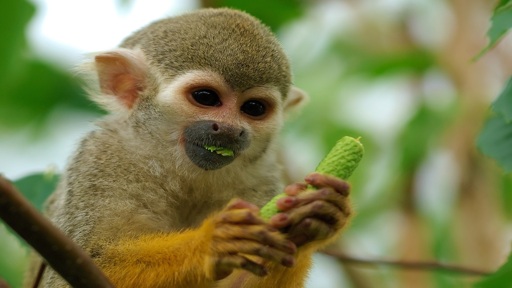
When it comes to decoding camera-trap images, artificial intelligence has become all the rage, especially for terrestrial animals, or those that dwell on the ground. But for more evasive species living high up in trees, the technology is still lacking. A newly developed AI model aims to fill that gap. TropiCam-AI was developed to detect and identify arboreal, or tree-dwelling, species in a part of the world where they abound: the tropical forests of the Americas. Scientists built the model to address the voids that exist in identifying arboreal mammals and birds. “We set up TropiCam-AI with the objective of developing a tool that is specifically meant for neotropical camera-trapping surveys targeting the canopy,” Andrea Zampetti, lead author of the study and Ph.D. candidate in animal biology at the Sapienza University of Rome, told Mongabay in a video interview. Zampetti’s work was done in collaboration with the TROPECOLNET project at the National Museum of Natural Sciences in Madrid. Arboreal species play a key role in ecosystems. They serve as important seed dispersers, with studies finding that primates, small mammals and birds consume up to 90% of plant species in tropical rainforests. However, these are tree-dependent species that, by their very nature, are especially threatened by deforestation, underscoring the need to study, track and monitor them for conservation purposes. A study published earlier this year by Zampetti and colleagues notes that “arboreal camera trapping remains severely underrepresented compared to AI trained on terrestrial images.” AI models for the detection of species…This article was originally published on Mongabay
From Conservation news via This RSS Feed.