

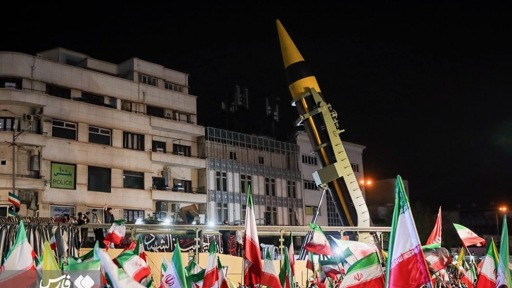
Since October 2023, Israel has waged a genocidal aggression on the Gaza Strip with unwavering support from the United States. The war soon expanded to include other parts of West Asia, including the West Bank, Lebanon, Iraq, Syria, Yemen, and ultimately Iran.
However, in the case of Iran, the United States has ostensibly been the driver and primary military force leading the unprovoked aggression, launched jointly with Israel twice in the span of eight months, between mid 2025 and early 2026.
Read more: US joins Israel’s war with airstrikes on Iranian nuclear sites
The all-out multi-front imperialist war has claimed over 90,000 lives, according to reports issued by official authorities and organizations in each of the targeted countries. However, the true death toll is likely much higher, especially given the decimation of the healthcare systems in countries targeted by Israel.
Peoples Dispatch spoke to Dr. Issam Khawaja, general secretary of the Jordanian Democratic Popular Unity Party (known in Jordan as the Wihda Party) to demystify the dynamics behind the regional war in West Asia, and to assess the Axis of Resistance in the aftermath of over two and a half years of Israeli aggression.
Iran neutralized US-Israeli military capabilities with varied tactics and strategies
Dr. Issam hailed Iran’s ability to determine the dynamics of the regional war in a way that prevented Washington and Tel Aviv from achieving their goals, despite an element of surprise by the imperialist duo in the initiation of the aggression.
“These dynamics took the form of expanding the confrontation to include US military installations and assets in Arab countries across West Asia,” Khawaja noted.
“Tehran had already threatened both the US and Israel following their first 12-day unprovoked aggression in June 2025 that the response to any new offensive on its territories, or other actors in the Axis of Resistance either collectively or separately, will not be limited to retaliatory attacks on Israel but will transform into a regional confrontation,” he clarified.
Dr. Issam explained that Iran followed through on its threats hours after the second US-Israeli aggression was launched.
“Iran showed a high level of military preparedness this time, while also linking it to political moves by maintaining negotiations with the United States,” he asserted.
Iran resorted to asymmetric warfare to overcome military and technological disparities
Dr. Issam pointed out that Iran took into account the disparities in military and technological capabilities with its enemies, therefore it has resorted to asymmetric warfare strategies and tactics.
This included developing its missile and drone capabilities at different ranges. The Islamic Republic of Iran also benefited from the improvements it made on these capabilities by effectively targeting US military bases in the region, which are near to Iran, and even those located at greater distances.
Although the United States has long boasted about the impregnability of these regional military installations, the Iranian retaliatory attacks proved that they are assailable.
Dr. Issam argued that Tehran has achieved a major military milestone by neutralizing US military installations in the region either completely or partially, especially those close to it geographically.
The Jordanian political leader indicated that Iran implemented another strategy by perpetuating the battle for the longest time possible, and as a result transformed the confrontation into a war of attrition.
“During wars of attrition, if the party subjected to aggression has the will, the political decision, astuteness and the vision to prepare itself for confrontation, it will prevail in the mid-term and long-term. As long as the aggressor is not the dominating force on the ground, it will not be able to win the battle through aerial attacks, not even by launching quick strikes,” Khawaja emphasized.
“Iran and its allies in the Axis of Resistance also demonstrated during the last two and a half years, their ability to re-build their capabilities and manufacture weaponry in a continuous manner. This helped the Iran-led resistance alliance compensate for the losses throughout the period of war,” he continued.
“Even though the US and Israel used the surprise element by initiating a straddling assault while negotiations between Tehran and Washington were underway, Iran employed another surprising tactic by utilizing deceptive military equipment such as inflatable or painted mock-ups of tanks and fighter jets,” Dr. Issam suggested.
“This was an effective tactic that both confused the enemy’s surveillance and AI-guided reconnaissance, and resulted in inflicting losses of costly ammunition,” he affirmed.
Hormuz as an effective pressure tool
The leader of the Wihda Party underlined that the blockade imposed by Iran on the Strait of Hormuz has been the most significant leverage and pressure tool, and has considerably changed the equation.
“The US and Israel do not seem to have predicted Iran’s blockade of the critical waterway. This move has had great geopolitical and economic repercussions not only on the region but also on the entire world,” Dr. Issam maintained.
The hybrid tactic that combines military firmness with unyielding negotiations
Dr. Issam highlighted Iran’s hybrid tactic in managing the battle, during which it relied on firm military rhetoric, while also leaving room for negotiations.
“Iran has engaged in talks with the United States with an attitude of equivalence by not offering concessions in principle-related matters, while demonstrating some flexibility in nominal matters,” he said.
Khawaja says that negotiations also allowed Iran to gain more time, which in turn has given it an opportunity to rebuild and develop its capabilities.
The defiance and steadfastness of the Axis of Resistance is a victory on its own
Dr. Issam believes that the Iran-led Axis of Resistance proved to be a regional power that contributes in reshaping regional and global geopolitical transformations, by preventing the US from being proactive in the confrontation.
“Victory or defeat are not measured by the number of casualties. However, they are measured by Iran’s refusal to offer concessions, its steadfastness and defiance, and ability to maintain its independence, sovereignty and national wealth,” Khawaja stated.
“Iran, hand in hand with Axis of Resistance groups, have been able to confront this imperialist campaign with firmness and efficiency,” he proclaimed.
High-level coordination and the “unity of fields” principle
Moreover, Dr. Issam stressed that, like Iran, all the actors in the Axis of Resistance have been able to build their capabilities despite the longstanding raging war, most importantly Hezbollah in Lebanon.
“Hezbollah has not only rebuilt its capabilities, but also recalibrated it to align with the new phase of confrontation with the Zionist entity. The Lebanese resistance movement shifted to a defensive resistance tactic, which rely on guerrilla warfare, and the utilization of Kimikaze First-Person View (FPV) drones,” he declared.
Read more: Hezbollah deals heavy blows to the IOF with Kamikaze drones
“By doing so, Hezbollah has lured the Israeli Occupation Forces into more expansive areas, disabling them from establishing themselves in the depth of the Lebanese territories, because the guerrilla warfare has exhausted them,” Khawaja added.
Dr. Issam made clear that this was the same scenario that the IOF faced in Gaza in its clashes with the Palestinian resistance, which also resorted to guerrilla warfare. A tactic which Israel’s military proves to be unable to deal with because it depends on perpetuating the confrontation.
Read more: Dozens killed in Israeli strikes on Lebanon amid intense ground clashes between IOF and Hezbollah
Regarding Ansar Allah in Yemen, Dr. Issam thinks that they have not been involved in the regional war during the recent phase, not because they do not have the capability to do so, but because their engagement is not seen as necessary or strategic at this point.
“This in turn reflects the high level of coordination among different components of the Axis of Resistance, and guarantees further efficiency in the prospective long-term confrontation with the enemy,” he said.
“Furthermore, this war showcased that the Axis of Resistance upheld the unity of fields principle. This became evident when a ceasefire in Lebanon was set by Iran as a primary condition in its negotiations with the US,” the left political leader confirmed.
Who will emerge victorious from the war?
Dr. Issam voiced his optimism that the Axis of Resistance would triumph at the end of the confrontation for many reasons.
“Till the moment the imperialist coalition has not been able to achieve any of its geopolitical goals, and has not been able to defeat the Axis of Resistance yet. This has consequently created an equivalence in power,” he noted.
Dr. Issam suggests that this equivalence in power would ultimately end either with the victory of one of the sides, which would impose its conditions on the defeated side, or through reaching an agreement that would guarantee the minimal conditions set by the Iran-led Axis of Resistance.
“Facts on the ground indicate that the equivalence in power between both sides may continue for months, leading at the end to the failure of the imperialist campaign against the Axis of Resistance,” he continued.
Dr. Issam also mentioned other factors that may increase the pressure on the Trump administration inside the United States to end the war, including the midterm elections, and the decline of Trump’s and the Republican Party’s popularity even among their supporters.
“The result of the war will not only determine the balance of power in the West region but also globally. The phase during which the US and Israel were able to dictate their conditions by threats or merely giving orders to other states is over. A new world is in the making now, where the US hegemony has been undermined,” the prominent Jordanian leader affirmed.
He explained that the current war heralds the fall of the so-called “New Middle East” project, which the US and Israel will not be able to impose on the region anymore.
He added that the war would also potentially lead to a transformation in the policies of key Gulf states, particularly Saudi Arabia, which recognized during the recent regional war that their relations with the United States and Israel, and hosting US military bases will never provide them with protection or security.
“These states should have acknowledged that there is a new horizon for building strategic relationships and partnerships with other coalitions, including countries of the Global South, BRICS, and the Shanghai Cooperation Organisation (SCO),” Dr. Issam concluded.
The post Reflections on the US-Israeli multi-front war in West Asia: How the Axis of Resistance remains resilient appeared first on Peoples Dispatch.
From Peoples Dispatch via This RSS Feed.