

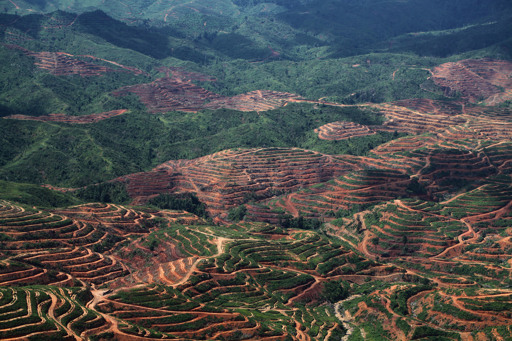
JAKARTA — More than a decade after the palm oil industry embraced a pledge to not deforest, clear tropical peatlands, or use exploitative practices, policies to that end now cover most of the global palm oil trade, as major traders, refiners and consumer brands have pledged to keep deforestation-linked palm oil out of their supply chains. However, deforestation linked to palm oil continues, particularly in Indonesia, the world’s largest producer of the commodity. Satellite analysis by forest-mapping initiative TheTreeMap shows 31,073 hectares (76,783 acres) of forest were cleared for palm oil in Indonesia in 2025, slightly higher than the 30,956 hectares (76,494 acres) recorded in 2024 — highlighting persistent gaps in how the industry enforces its zero-deforestation pledges. In some cases, palm oil from newly cleared land still enters supply chains that companies describe as deforestation-free. “No Deforestation, No Peat, No Exploitation” (NDPE) policies aim to eliminate three major sources of harm in palm oil production: clearing natural forests, developing plantations on carbon-rich peatlands, and exploiting workers or local communities. By 2020, these commitments covered roughly 83% of palm oil refinery capacity in Indonesia and Malaysia, the world’s main producing region. In recent years, companies have also built systems to enforce these pledges. Many now publish grievance mechanisms where violations can be reported, while third-party monitoring groups use satellite imagery to track forest loss and flag suspicious activity. Large-scale corporate deforestation in Indonesia has fallen compared to the mid-2010s, when some plantation companies were clearing vast areas of rainforest. Deforestation for…This article was originally published on Mongabay
From Conservation news via This RSS Feed.