

On May 25, progressive movements, socialist organizations, cooperatives, students, artists and Pan-Africanist formations across Africa commemorated Africa Liberation Day 2026 with renewed calls for sovereignty, continental unity, and resistance against imperialism. The commemorations took place in various countries, including Kenya and Tanzania, while in Ghana, the Socialist Movement of Ghana released a statement marking the occasion. At the same time, Pan Africanism Today issued a broader political intervention focused on sovereignty, imperialism, and the unfinished project of African liberation.
The Pan Africanism Today statement contextualized Africa Liberation Day not as a symbolic remembrance, but as a living political moment rooted in the continuing struggle for African emancipation amid deepening global crisis. The statement declared:
“Today, 25 May 2026 on Africa Liberation Day, we honor the true origins of Africa Liberation Day as one of the most historic reference points in our shared struggle. Since that first meeting on 25 May 1963 in Addis Ababa, this day has represented more than commemoration. It embodies the aspirations of 1.5 billion African people on the continent and in the diaspora – the Sixth Region of Africa – to claim full emancipation from all forms of oppression and exploitation.”
The statement argued that the historical significance of Africa Liberation Day now converges around one decisive political question facing the continent:
“The question of sovereignty.”
It called for the building of a broad united front against imperialism alongside the development of a disciplined revolutionary vanguard capable of leading socialist transformation across Africa.
This year marked the 63rd commemoration of Africa Liberation Day, a day rooted in anti-colonial struggle and the fight for continental unity. In 1958, Kwame Nkrumah convened the First Conference of Independent African States in Accra, where Africa Freedom Day was declared as a symbol of African peoples’ determination to end colonial domination and exploitation. Later, on May 25, 1963, African heads of state established the Organization of African Unity in Addis Ababa and officially renamed the commemoration Africa Liberation Day.
The 2026 commemorations unfolded amidst a deepening global crisis marked by militarism, debt dependency, austerity, and widening inequality, but also by growing resistance movements across Africa and the Global South. Across the forums, statements and political discussions, one message emerged clearly: Africa’s liberation remains incomplete without economic sovereignty, political self-determination and people-centered power rooted in the struggles of workers, peasants, youth and oppressed communities.
Kenya: Towards sovereignty – Africa’s struggle against imperialism
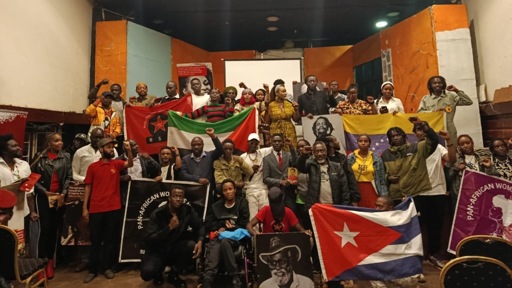
In Kenya, this year’s Africa Liberation Day forum brought together organizations from social justice movements, socialist organizations, and left movements under the theme: “Towards Sovereignty: Africa’s Struggle Against Imperialism.” The gathering reflected a continued commitment to linking African liberation with everyday struggles against inequality, exploitation, and neo-colonial domination.
Among those present was the ambassador of Cuba to Kenya, Inés Fors Fernández, alongside speakers including Lewis Maghanga, Sungu Oyoo, Soreti Kadir, Sefu Sani, and keynote speaker Mosaab Baba.
A statement released during the commemorations placed sovereignty at the center of Africa’s contemporary struggles, linking imperialism to austerity, economic exploitation, displacement, and the denial of basic human needs.
The statement declared:
“This year’s theme, ‘Towards Sovereignty: Africa’s Struggle Against Imperialism’, resounds deeply as we persist in organising and rallying our people towards continental unity and the pursuit of total liberation from the shackles of Imperialism, Neo-colonialism, and Capitalist exploitation.”
Participants also expressed solidarity with peoples resisting imperialist aggression in Sudan, Congo, Palestine, Cuba, Venezuela, and the Sahel region. The war in Sudan was discussed extensively during the forum, particularly by keynote speaker Mosaab Baba, who linked the conflict to wider geopolitical struggles and imperial intervention on the continent.
Another important theme of the Kenyan statement was the relationship between sovereignty and social rights. Organizations argued that liberation must include access to food, housing, healthcare, education and dignified livelihoods.
The statement noted:
“We reaffirm the right of all people in Africa and the rest of the world to dignified livelihoods and access to food, housing, healthcare, education and other basic necessities.”
The Socialist Movement of Ghana: economic sovereignty and Pan-African unity
The statement from the Socialist Movement of Ghana focused on the unfinished character of African emancipation and the continued domination of African economies by imperial powers and multinational corporations.
The organization argued that the anti-colonial movements understood clearly that political independence without economic sovereignty would leave Africa vulnerable to continued exploitation.
The statement declared:
“The founding vision of continental unity was born from anti-colonial struggle. Leaders and movements across Africa understood that political independence without economic sovereignty would leave Africa vulnerable to exploitation by imperial powers, multinational corporations, and local elites aligned with foreign interests.”
The statement further described how African workers continue to face unemployment, privatization, low wages and attacks on public services while foreign corporations continue extracting wealth from the continent.
It stated:
“Our minerals enrich foreign corporations while millions remain without quality healthcare, housing, education, electricity, and clean water.”
A major focus of the SMG statement was its rejection of xenophobia and anti-migrant violence in South Africa. The organization condemned attempts to blame African migrants for unemployment and economic crisis.
The statement emphasized:
“Pan-Africanism cannot coexist with xenophobia. An injury to one African is an injury to all Africans.”
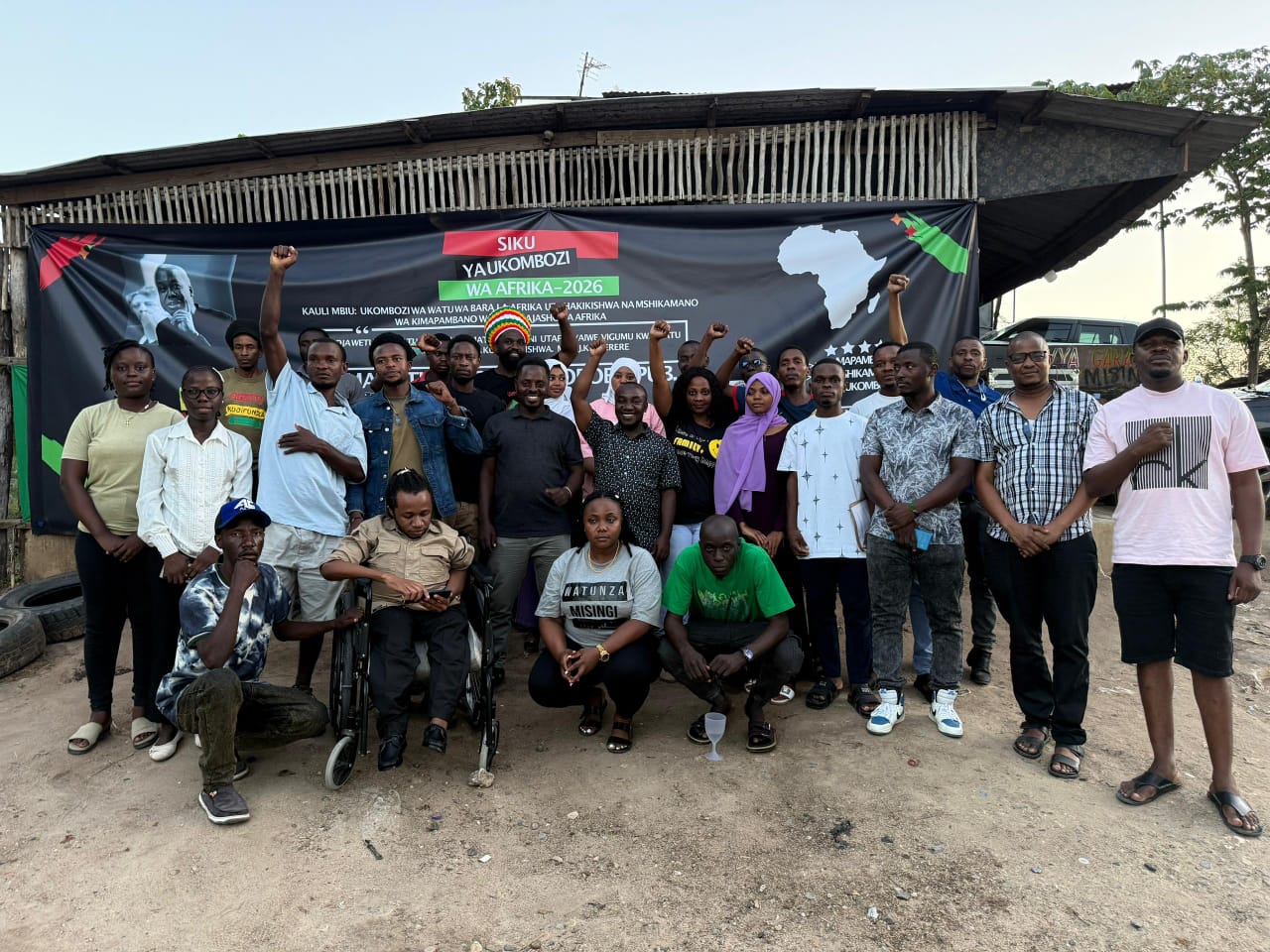
Africa Liberation Day commemoration in Tanzania
Tanzania: revolutionary Pan-Africanism and working-class solidarity
In Dar es Salaam, members of progressive organizations, Pan-Africanist formations and unorganized labor gathered in working-class neighborhoods to reflect on the state of African liberation and the responsibilities of revolutionary movements in the current moment.
Participants stressed that Africa Liberation Day must not become detached from the lived realities of ordinary people.
The statement declared:
“This is a day of recommitment, an unwavering pledge to advance the cause of complete liberation, against all odds, in defiance of a mainstream discourse that remains steadfastly hostile to ‘our truth’ and experiences.”
Discussions focused on dispossession, economic exclusion and exploitation affecting African people across both rural and urban spaces. Participants noted the similarities between the experiences of communities in Congo and Tanzania, particularly around land grabbing, extraction and economic marginalisation.
The statement observed:
“The shared nature of our afflictions confirms that their causes, and therefore their remedies, are fundamentally transnational.”
Participants repeatedly emphasized the importance of collective struggle and international solidarity.
As the statement declared:
“Solidarity is not optional.”
A particularly important part of the discussions centered on culture, intellectual work, and the role of artists within liberation struggles. Participants challenged intellectuals and cultural workers to align themselves with the struggles of ordinary people rather than elite aspirations.
The statement asked:
“If mainstream intellectualism has abandoned the masses, must not the masses cultivate their own organic intellectuals, thinkers and researchers committed to serving the best interests of the people in this class society?”
The Tanzanian gathering also reaffirmed solidarity with Palestine, Cuba, Venezuela, Sudan, Congo, and Haiti, describing international solidarity not as charity, but as a strategic necessity within a global struggle against a common enemy.
The post Africa Liberation Day 2026: The renewed struggle for sovereignty and liberation appeared first on Peoples Dispatch.
From Peoples Dispatch via This RSS Feed.