


This article by Clara Zepeda originally appeared in the May 27, 2026 edition of La Jornada, Mexico’s premier left wing daily newspaper.
In the first quarter of 2026, the “job insecurity” of the employed population in Mexico increased compared to the same period last year, due to the increase in informal employment, a greater number of positions without access to health institutions and whose personnel were employed mainly in micro-businesses without establishments and in medium-sized establishments, revealed data from the National Institute of Statistics and Geography (INEGI).
When presenting the National Survey of Occupation and Employment (ENOE) for the first quarter, INEGI specified that the rate of critical employment conditions – which measures the percentage of the employed population that works in precarious labor conditions, such as involuntary reduced working hours, income below the minimum threshold or excessive working hours with low pay – rose from 37.6 percent in January-March 2025 to 38.8 percent in the same period of 2026.
The employed population in the country increased by 551,651 people year-on-year in the first quarter of the year, the lowest creation since 2011, but it was entirely informal, with 583,153 jobs, which completely absorbed the loss in formal employment of 31,502 people, compared to the first quarter of 2025.
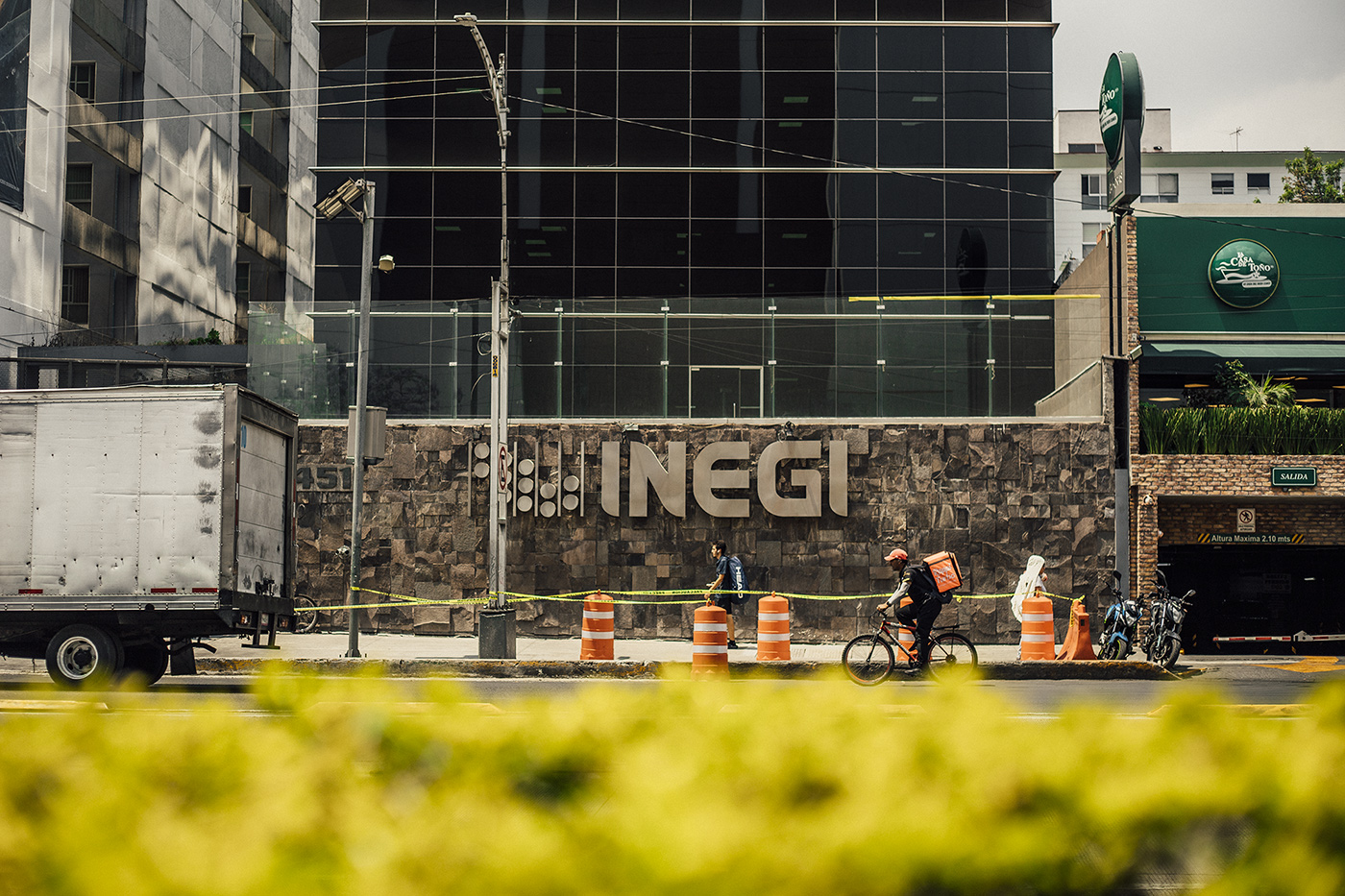
National Institute of Statistics and Geography (INEGI) Photo: Jay Watts
As a result, the informality rate reached 54.78 percent, with 32.63 million people, the highest level for a first quarter since 2023. During the January-March period of this year, self-employed workers increased by 494,370, while salaried workers decreased by 330,312.
The ENOE data detailed that 1,105,483 jobs were created in the non-agricultural sector. The most significant increase was in micro-businesses, with 559,000 new jobs in one year. Micro-businesses without a physical establishment employed 531,632 people, while those with a physical establishment employed 27,384. Meanwhile, employment in medium-sized establishments increased by 463,794 jobs.
Nearly 27.9 million people earn the minimum wage or less, representing 45.7 percent of the employed population, an annual increase of 4.3 million. Meanwhile, 35.9 million people lack access to health services (six out of every ten employed individuals), an increase of 800,733 compared to the first quarter of last year.
Meanwhile, as of the end of the first quarter, the ENOE identified 1.8 million employed people who do not receive a salary and 12.3 million who do not have benefits.
INEGI specified that the employed population, both formal and informal, amounted to 59.5 million people in the first quarter, which represented a quarterly loss of 233,194 jobs.
In the January-March quarter of 2026, the unemployed population totaled 1.6 million, an amount that represented an unemployment rate of 2.6 percent of the economically active population, a higher percentage than in the same quarter of 2025.
-

200,000 Mexican “Dreamers” at Risk of Deportation
May 27, 2026May 27, 2026
Changes and delays in procedures implemented by the Trump administration put them at risk, according to Mexico’s External Relations Secretariat.
-

INEGI: Mexican Job Insecurity Increased in First Quarter 2026, Informal Employment Rate 54.78%
May 27, 2026May 27, 2026
Mexico’s employed population increased by 551,651 in Q1, the lowest creation since 2011, but it was entirely informal.
-

People’s Mañanera May 26
May 26, 2026May 26, 2026
President Sheinbaum’s daily press conference, with comments on healthcare, TV Azteca, electoral reform, the international right wing, and foreign direct investment.
The post INEGI: Mexican Job Insecurity Increased in First Quarter 2026, Informal Employment Rate 54.78% appeared first on Mexico Solidarity Media.
From Mexico Solidarity Media via This RSS Feed.