

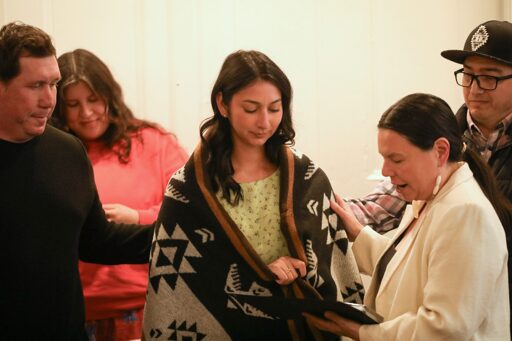
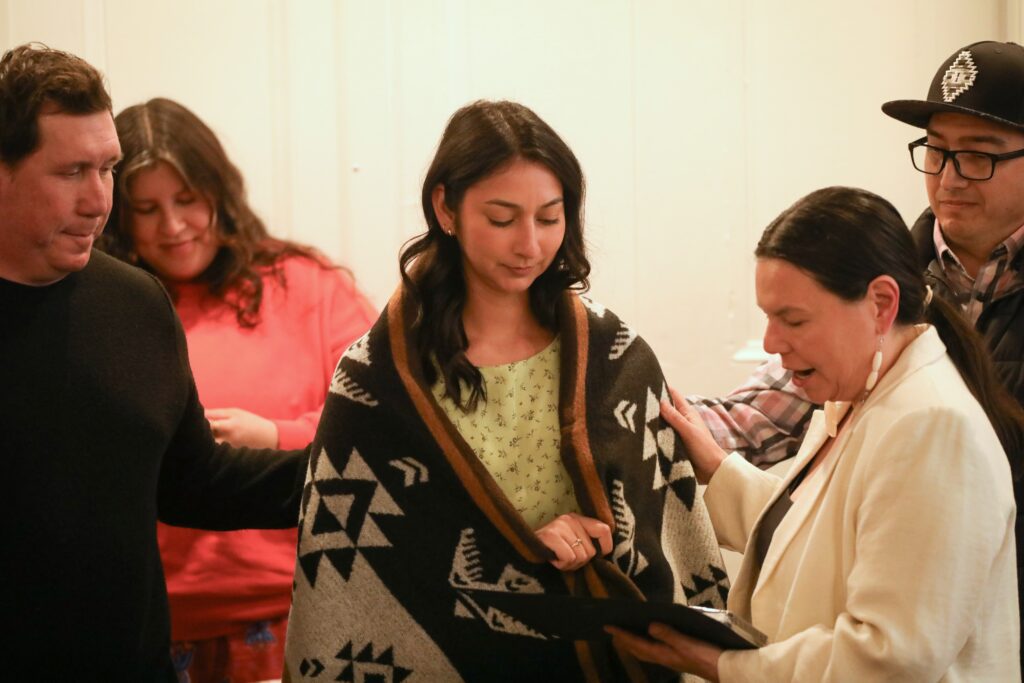
Susy Denny, from Eskasoni First Nation receives a blanket and certificate at the end of a week-long program at King’s College on May 22. Photo by Aaron Hemens
Author’s note: Most of the IndigiNews team, including myself, were in Kjipuktuk (Halifax) last week for our first annual ReFocus photojournalism fellowship.
There were tears, hugs and laughter as a group of Indigenous emerging photographers presented their work to their peers in Kjipuktuk (Halifax) last week.
On Friday, IndigiNews wrapped up our inaugural ReFocus Photojournalism Fellowship at the University of King’s College in Mi’kma’ki (Nova Scotia), which ran from May 18 to 22.
At the end of the weeklong program, the cohort of eight fellows showcased their photographs from the week to a group of instructors, IndigiNews staff, and invited guests.
Our publisher and ReFocus co-founder Eden Fineday told guests her mission for the week — beyond boosting participants’ photojournalism skills — was “to shower the fellows with love and acceptance and support.”
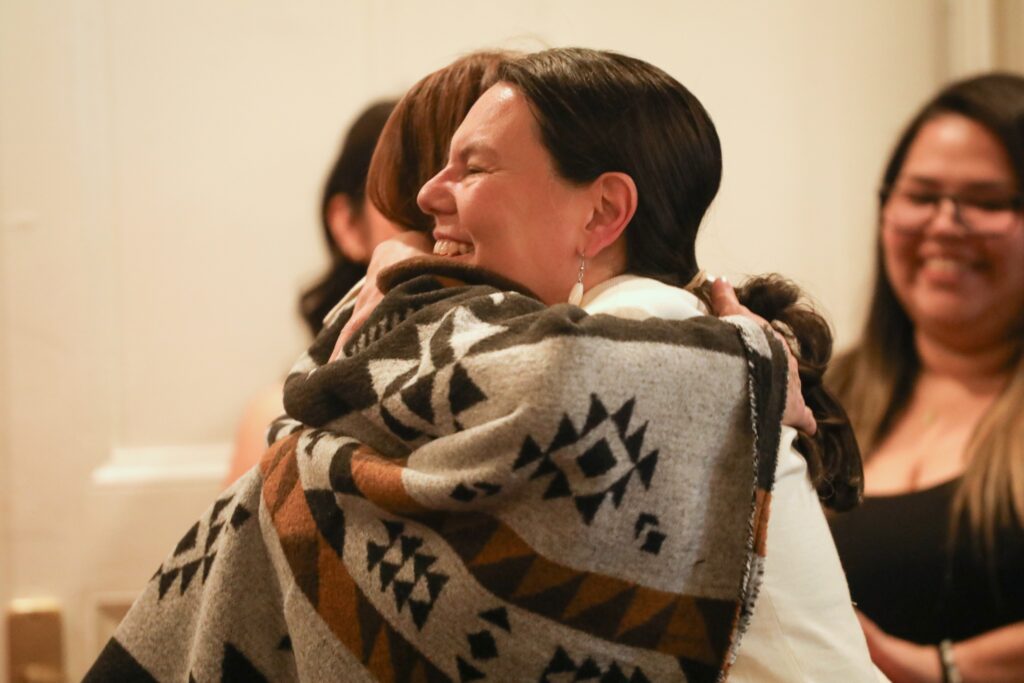
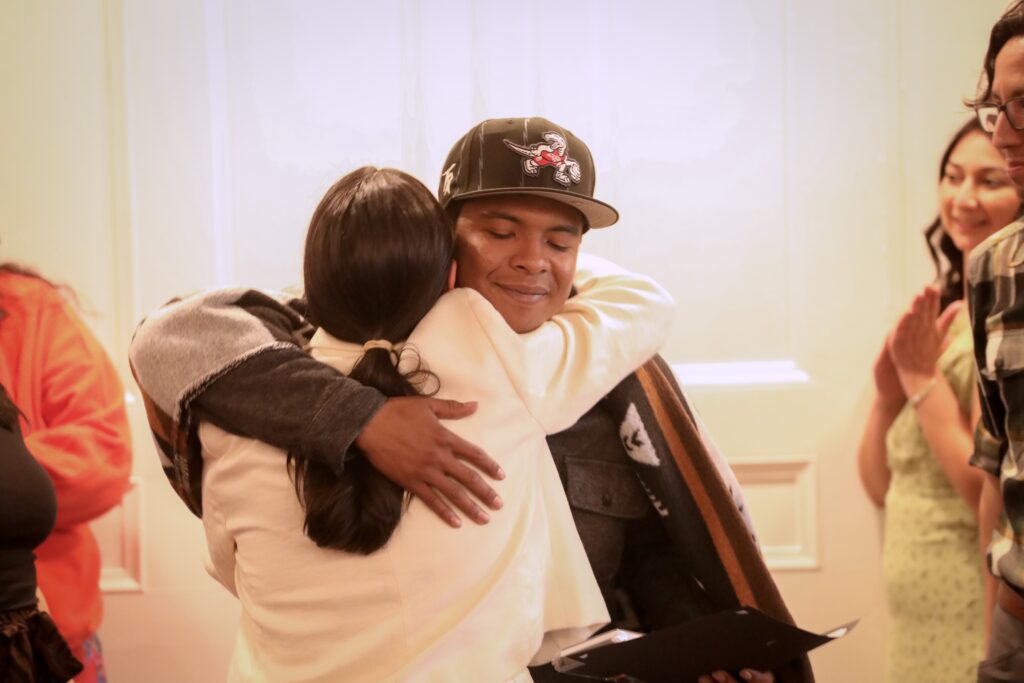
IndigiNews publisher and ReFocus co-founder Eden Fineday hugs fellow Tamara Joseph during a closing blanketing ceremony. Photo by Aaron Hemens
“This is the very first time we’ve ever held a photojournalism fellowship like this,” she said.
“And I’m so grateful that you all came to support our fellows and see the amazing work that they’ve created.”
Over five days, the cohort — which included five applicants and three IndigiNews reporters — learned about the craft of photojournalism from five Indigenous professionals and IndigiNews staff.
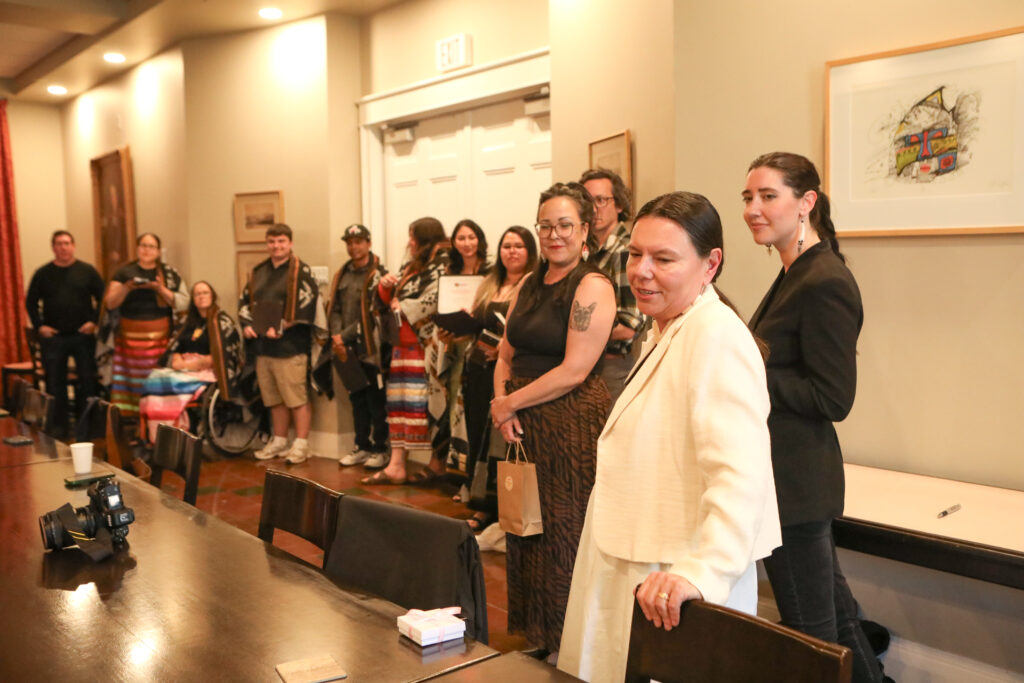
IndigiNews ReFocus fellows, instructors and staff at a closing event for the program on May 22. Photo by Aaron Hemens
They created portraits and profiles of each other, some of which we’ll share on IndigiNews in the coming weeks.
For one of the fellows, Daniel Opasinis, a highlight was being in a space with a cohort of all Indigenous instructors and students.
Born and raised in the Tkaronto (Toronto) area, Opasinis descends from Ugpi’ganjig (Eel River Bar First Nation), and said joining the cohort “was really cool and it kind of made me feel less alone,” he reflected.
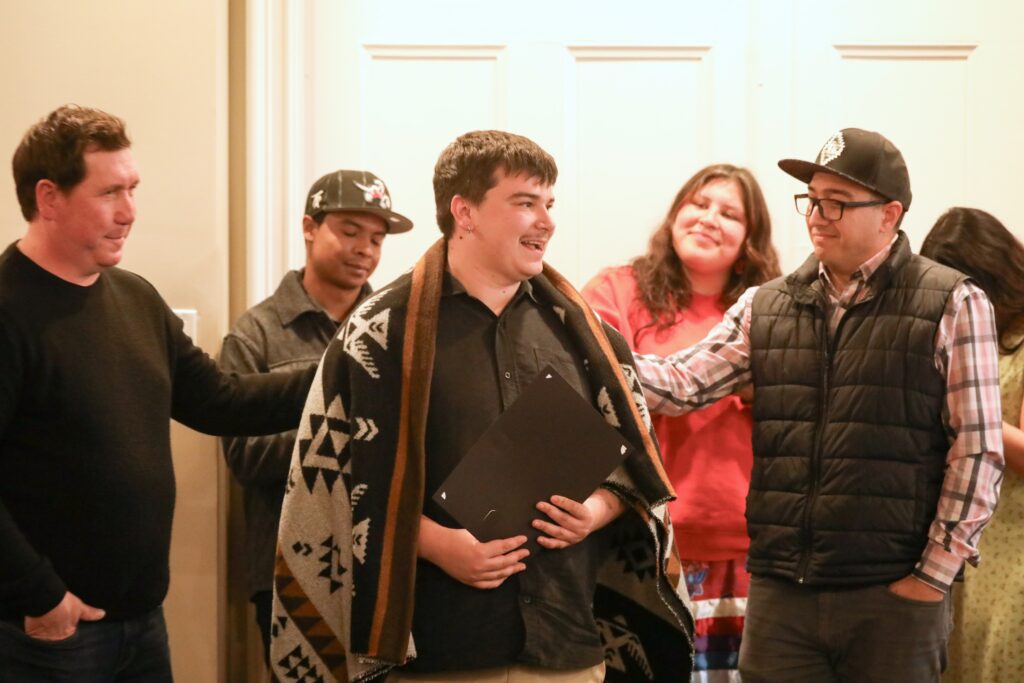
Daniel Opasinis, of Ugpi’ganjig (Eel River Bar First Nation), receives his ReFocus fellowship certificate. Photo by Aaron Hemens
He said he’s taking home with him “so many new skills in photography and I think a really good kicking-off point to start working immediately.”
Another fellow was Susy Denny, from Eskasoni First Nation.
She lives in Unama’ki, where she works as the Mi’kmaw language strategy co-ordinator for Mi’kmaw Kina’matnewey, a language and cultural protection organization.
She said she applied to join the fellowship because she wanted to learn more about photojournalism and apply that knowledge in her life.
“I’ve gained so much knowledge,” she said, including “writing, how to use a camera, and also that it’s possible to do something like this in my home community, and especially in my work,” she said, “and hearing that it’s a need to tell stories in our own home communities.”
The ReFocus fellowship was made possible thanks to co-founder Karen Pinchin, a “Nova Scotia” journalist who noticed a need for more Indigenous photojournalists in her area, and wanted to set up a training program funded by her family.
READ MORE: Introducing our 2026 ReFocus photojournalism fellows
She knew any training would need to be Indigenous-led. And as a non-Indigenous reporter, she reached out to Indigenous media leaders including Fineday.
The ReFocus program was made possible through a gift from the Pinchin family, in memory of Pinchin’s late father, Don.
“I want to say, on behalf of my family, how extraordinary it is to be here,” Pinchin told participants at the end of the week.
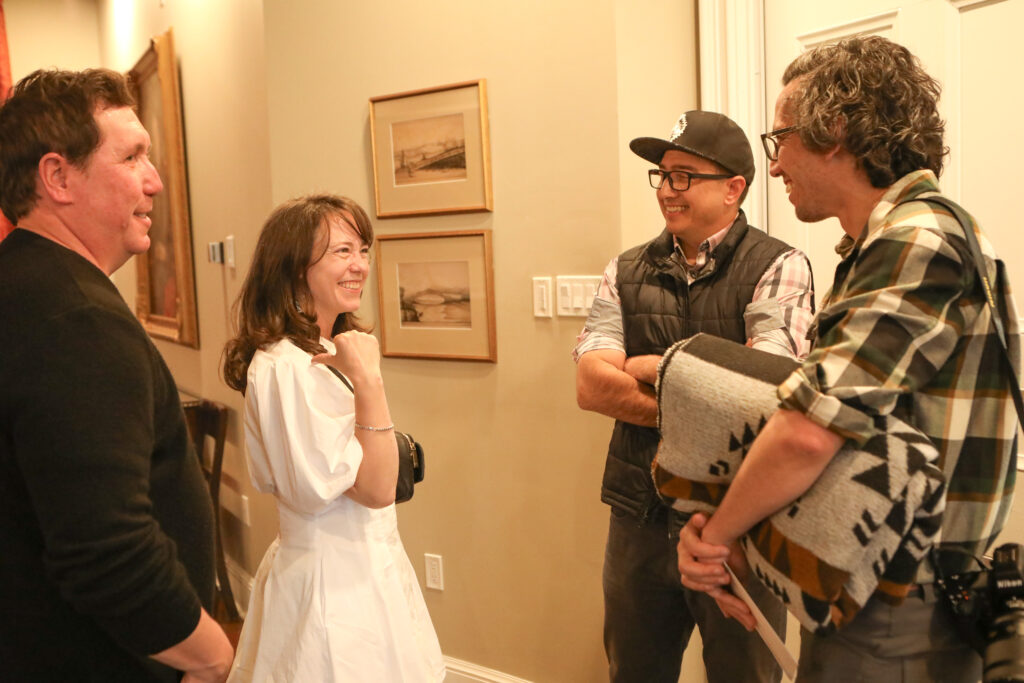
‘Nova Scotia’ journalist and ReFocus fellowship co-founder Karen Pinchin, center left, speaks with some of the program’s instructors. Photo by Aaron Hemens
“I just got full-body goosebumps.”
“Eden is a remarkable leader and human being,” she added.
“And she took this concept and support and ran with it — making it something wholly Indigenous-built and -led.”
As the fellowship wrapped up, Pinchin told the cohort to “please remember that you are part of a community.”
“We need your eyes, your unique point of view, and unique experience for the climb that lies ahead,” she said.
“Congratulations to all of you — and I can’t wait to see what you accomplish together.”
Jaiden Stevens, from Sapotaweyak Cree Nation, is a photographer based in the Northwest Territories. Photo by Aaron Hemens
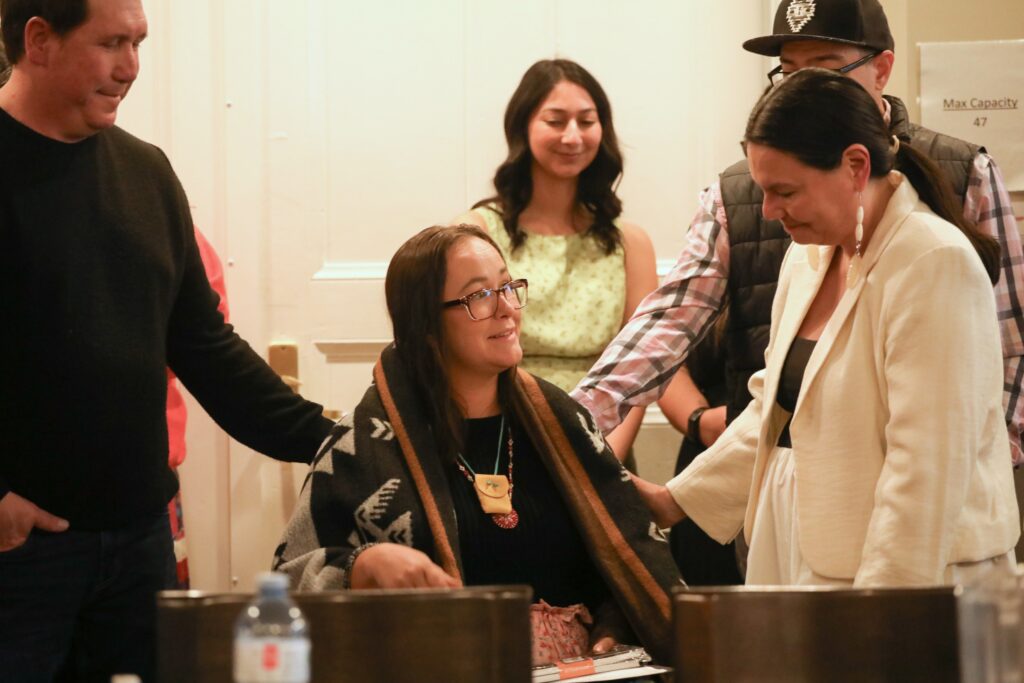
ReFocus photojournalism fellow Kayla Lambert-Macdonald receives a blanket and certificate. Photo by Aaron Hemens
During their presentations, fellows read aloud the profiles they wrote about each other, as they projected their photographic portraits behind them.
The stories they gleaned during the week ranged from heartfelt to humorous, inspiring to emotional — bringing out a range of feelings from the participants and audience of about two dozen.
Each fellow was presented with a certificate, and wrapped in a blanket to represent love and support from the community around them.
And to support their photography, fellows all received a $2,500 gift certificate to a camera store.
After the blanket ceremony, the cohort and guests sat down to a dinner of salmon with blueberries, wild rice and bannock — as Dalhousie University’s Elder in Residence Ann LaBillois offered grounding words to the fellows.
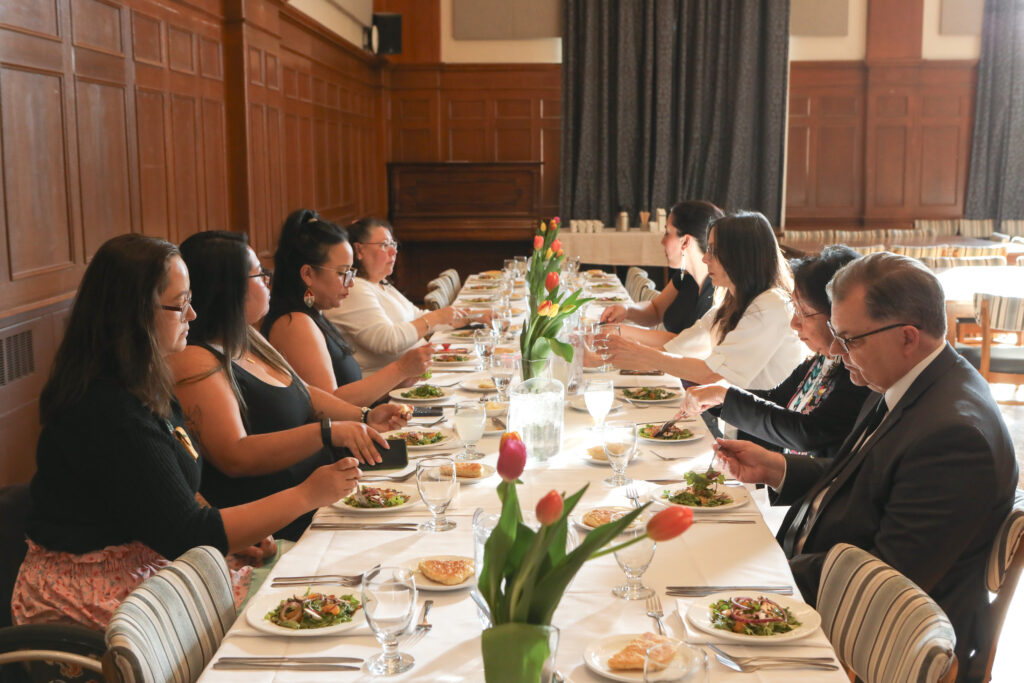
Fellowship participants and guests share a meal together. Photo by Aaron Hemens
One of the instructors — Globe and Mail journalist Willow Fiddler, from Sandy Lake First Nation — said she felt emotional as she reflected on the program.
“I’m blown away by what I’ve seen from this group and just so inspired and I’m so hopeful,” Fiddler said.
“This has meant so much to me.”
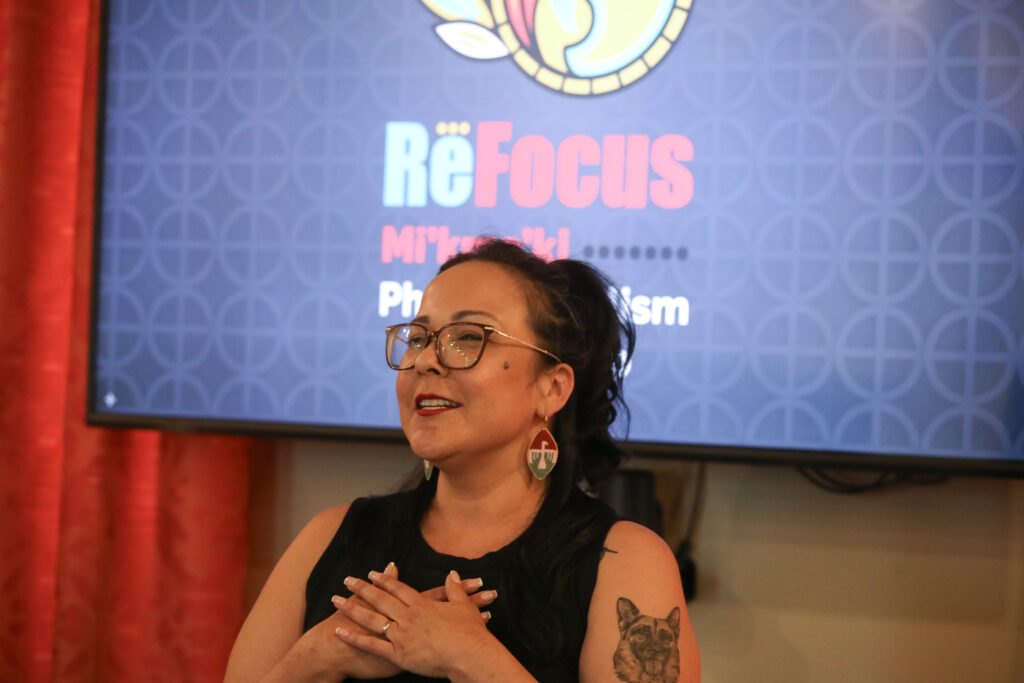
Globe and Mail journalist Willow Fiddler addresses participants in the ReFocus photojournalism fellowship. Photo by Aaron Hemens
Other instructors for the program were Mi’kmaw journalism professor Trina Roache; Métis photojournalist Gavin John; Timiskaming First Nation reporter Pat Kane; and Ryan Comfort, from Keweenaw Bay Band of Lake Superior Ojibwe, who teaches journalism at Indiana University Bloomington.
READ MORE: We’re launching an Indigenous photojournalism fellowship in Mi’kma’ki
Comfort told fellows they taught him a lot, too — and shared his gratitude for the collective wisdom gleaned during the daily sessions, which included craft-based lessons, journalism philosophies, and field work with the instructors.
“We started with self-reflection — going through this scary process of finding new knowledge and practicing skills and bringing them out to the world and then giving back,” he recalled.
“And hopefully part of this workshop has been recognizing that we’re all on a learning journey.”
John, who lives on Treaty 7 lands in southern “Alberta,” expressed how proud he was to be with so many Indigenous photojournalists in one room.
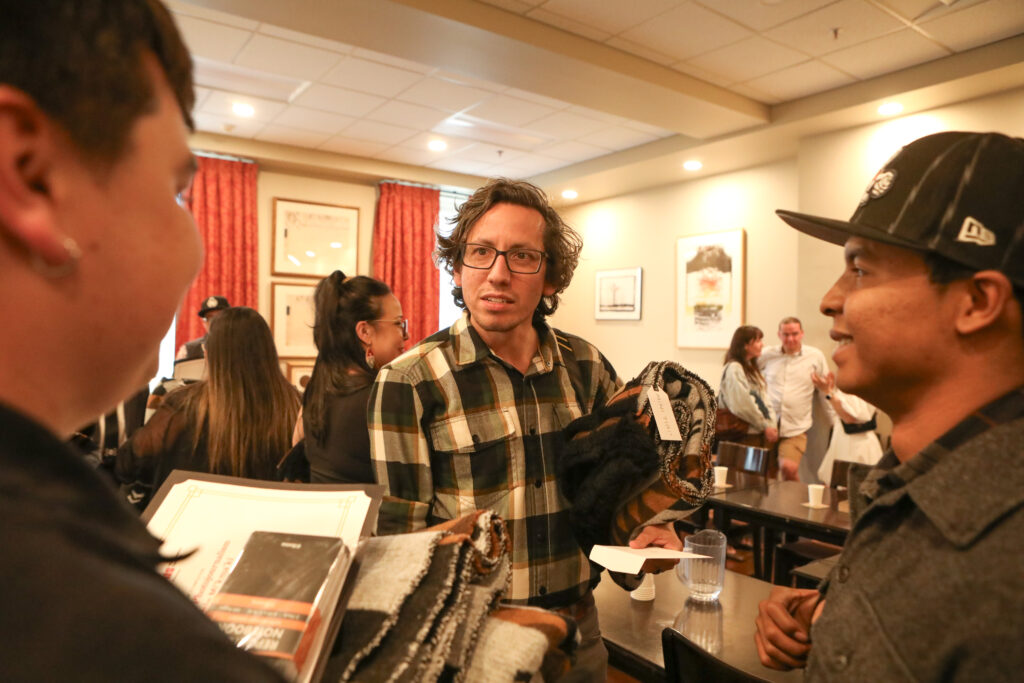
Photojournalist Gavin John, centre, speaks with ReFocus participants Daniel Opasinis and Jaiden Stevens. Photo by Aaron Hemens
“For me to stand up here and say I’m so proud of you is one of my career highlights,” he said.
“Whatever you guys decide to do in your career — you belong.”
Learn more about our ReFocus photojournalism fellowship here.
The post In Kjipuktuk, Indigenous photojournalism fellows end week with emotion-filled ceremony appeared first on Indiginews.
From Indiginews via This RSS Feed.