

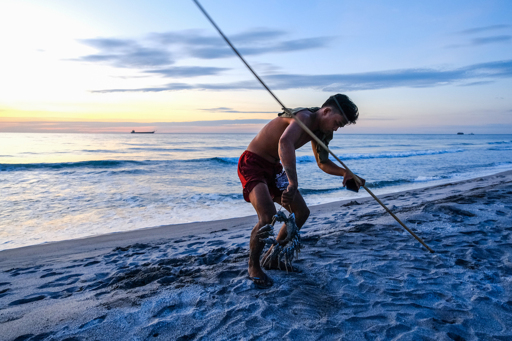
MANILA — Fisherfolk groups warned that renewed no-sail zones for upcoming Philippines-United States maritime exercises in Zambales will once again displace small fishers and deepen economic hardship in coastal communities.
Progressive fisherfolk group Pambansang Lakas ng Kilusang Mamamalakaya ng Pilipinas (Pamalakaya) criticized the planned two-day no-sail zone covering parts of Zambales from May 28 to 30 for the upcoming Bilateral Maritime Cooperative Activity between the Philippines and the United States.
The group said the restrictions would once again prevent fisherfolk from accessing their livelihoods in several coastal towns in the province.
“US military exercises only bring harm to livelihoods and offer no real benefit to Filipinos,” Pamalakaya National Chairperson Fernando Hicap said in a statement.
Hicap warned that the military activities would further heighten tensions in Philippine waters while placing fisherfolk at greater risk.
“This will create more tension in our territorial fishing grounds, where fisherfolk themselves will end up caught in the middle,” he said.
Waters off limits
The upcoming maritime exercises will cover the coastal towns of Sta. Cruz, Palauig, Candelaria, Masinloc, Iba, San Antonio, Botolan, Cabangan, San Felipe, San Narciso, and Subic in Zambales.
For fisherfolk in the province, the new restrictions came barely weeks after an earlier no-sail zone imposed during the Balikatan military exercises from April 20 to May 8.
Pamalakaya earlier estimated that at least 4,840 registered fisherfolk in Subic, Zambales were affected by the 11-day restriction.
Fishing activities in parts of Subic Bay were temporarily prohibited to give way to maritime, air, and live-fire military drills involving Filipino and US troops.
The group said the repeated restrictions disrupted income opportunities for small fishers already struggling with soaring fuel prices and declining earnings.
“How can the Marcos administration sacrifice the fishing rights of Filipinos at the altar of US geopolitical agenda?” Hicap said.
He added that military interoperability exercises have little connection to the immediate concerns of ordinary fisherfolk.
“In these trying times, the last thing Filipino fishers need is foreign troops conducting amphibious landing exercises in our fishing waters and coastal communities,” he said.
Delayed aid, mounting debt
Weeks before the latest no-sail zone announcement, Pamalakaya also raised alarm over delays in compensation for fisherfolk affected by the Balikatan exercises.
The group said many coastal residents in Zambales had yet to receive financial assistance despite losing days of income due to fishing restrictions.
According to Pamalakaya, small fisherfolk continue to absorb the combined effects of rising oil prices, mounting debt, and declining catch.
“Ever since the oil price shock, our fuel cost has increased by up to 120 percent per fishing trip, and we are already deep in debt because our income cannot recover the rising production cost,” Hicap said.
The group described the military drills as “costly and inappropriate,” especially as many fisherfolk struggle to recover from worsening economic conditions.
“Balikatan is a double insult to fisherfolk because aside from being costly, it also disrupts livelihoods,” Hicap said.
He added that the funds allocated for military exercises could have instead supported subsidies for fuel, fishing equipment, and food production.
“If the funds intended for Balikatan were allocated instead to fuel and gasoline for fishing boats, tractors, and other agricultural machinery, it could have helped strengthen local food production,” he said.
Fishers bear the burden
Pamalakaya said the repeated restrictions reflected how military activities continue to take priority over the welfare of coastal communities.
The group also criticized the broader impact of heightened military presence in fishing waters amid ongoing geopolitical tensions in the region.
Pamalakaya Zambales coordinator Joey Marabe said fisherfolk should not bear the burden of conflicts and military posturing between foreign powers.
“In the midst of the economic crisis brought about by geopolitical tensions, Filipino fishers do not deserve to be restricted from their livelihood,” Marabe said.
The April-to-May Balikatan exercises were held across several provinces, including Zambales, Palawan, Cagayan, Tacloban, and Quezon.
As another no-sail zone takes effect in Zambales, fisherfolk groups said coastal communities continue to lose fishing days, income, and access to waters that sustain their livelihoods. (AMU, RVO)
The post No-sail zones for Balikatan exercises disrupt livelihoods, fishers say appeared first on Bulatlat.
From Bulatlat via This RSS Feed.