

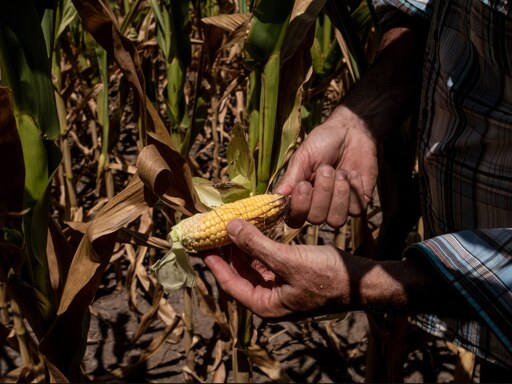

The government has been accused of seeming to “cover up” its “embarrassment” by trying to hide an explosive report, which revealed the dire state of the climate and biodiversity emergencies.
The comments were made after the Cabinet Office rejected a Freedom of Information (FOI) Act request from the Canary, which asked the Prime Minister’s Office to release documents showing discussions between officials about the timing of the publication of the Nature security assessment on global biodiversity loss, ecosystem collapse and national security.
The assessment was published in January 2026 following an FOI request from the Green Alliance think tank. It was originally scheduled for publication in Autumn 2025. The Times reported that publication of the report was stalled by 10 Downing Street because of fears that it was too negative.
The government was shamed in the House of Lords on 23 February 2026 for its lack of transparency around the report. It was accused of only releasing it following the Green Alliance FOI request, and was urged by peers to release the unabridged version.
Canary attempt to bring more transparency to report publication rejected
On 10 February, the Canary wrote to the Prime Minister’s Office, requesting that it make public any correspondence between officials about the timing of the publication of the assessment. On 11 February, the Cabinet Office responded on behalf of the Prime Minister’s Office, saying a response would be sent by 10 March.
On 10 March, the Cabinet Office extended its own deadline to respond to the FOI request to 10 April. No formal response to the request was received by that date, so on 18 April, the Canary requested that the Cabinet Office conduct an internal review into its handling of the request – a standard procedure according to the FOI Act.
The Cabinet Office did not respond to the request for an internal review, so on 22 April, the Canary requested that the Information Commissioner’s Office (ICO) intervene to get a response. On 14 May, the ICO informed the Canary that the ICO had asked the Cabinet Office to respond.
Finally, on 18 May, the Cabinet Office sent its response to the original FOI request. In its response, which ignored the request for an internal review, it said:
We are writing to advise you that following a search of our paper and electronic records, we have established that the information you requested is held by the Cabinet Office.
However, we have determined that this information is exempt from disclosure under Section 24(1) FOIA. Section 24 exempts information from disclosure if its exemption is required for the purpose of safeguarding national security.
According to the ICO, in terms of Section 24 of the FOI Act, “there is no definitive definition of national security”, and this gives public authorities broad authority within which to reject FOI requests.
FOI rejection ‘has the feel of the government covering up their cover-up’ – peer
Green Party peer Jenny Jones spoke in the 23 February debate in the House of Lords about the assessment, and reviewed the FOI rejection sent to the Canary.
She said:
This has the feel of the government covering up their cover-up by claiming national security when it is really just their embarrassment at trying to hide the report in the first place.
I’m worried that this government is trying to downplay the national security issues relating to climate change because it lacks the will to take action and deal with them.
The impacts of the climate crisis are huge and they will grow every year and every decade. If we don’t prepare now then our economy and society could collapse under the strain.
Government’s ‘caginess’ over assessment publication raises transparency concerns
Analysis from the Bulletin of the Atomic Scientists – the organisation which publishes the high-profile Doomsday Clock – published an article on 23 February 2026. It was written by the US National Security Archive’s Climate Change Transparency Project director Rachel Santarsiero, where she quoted former US intelligence official at the State Department’s Bureau of Intelligence and Research, Rod Schoonover.
Schoonover said:
The rigour of the Defra assessment doesn’t negate its bungled rollout, nor the public backlash that ensued. Any pull back from transparency is a mistake from any government.
He added:
I suspect that the intelligence community did not make the determination that this [report] should not go forward. It feels like [it came from] someone higher up.
Santarsiero reacted to the FOI rejection sent to the Canary and said:
There are many legitimate reasons for keeping classified intelligence classified (like protecting genuine national security concerns or not wanting to identify specific sources and methods used in intelligence gathering).
For example, in the United States, the Office of the Director of National Intelligence creates both a classified and unclassified version of its Annual Threat Assessment, and it’s upfront with the public about this.
Once every two years, the UK government publishes a National Risk Register, which it says “is the external version of the National Security Risk Assessment (NSRA)”. The register “outlines the most serious risks facing the United Kingdom”.
Santarsiero continued:
But the UK government’s bungled rollout of the biodiversity report – and ensuing caginess in its back and forth since – certainly does not inspire confidence in the government’s commitment to transparency.
Even if the PM’s office is shielding citizens from very real national security threats, how it’s gone about it has eroded public trust and credibility – which can be more damaging in the long-run in protecting against global risks.
The distraction provided by the Labour leadership psychodrama is unlikely to inspire the government to engage in greater transparency over issues like the nature security assessment, which would potentially open it up to more criticism of its lack of action on the climate and biodiversity emergencies.
Featured image via Anita Pouchard Serra/Bloomberg/Getty Images
By Tom Pashby
From Canary via This RSS Feed.