

In a move which could endanger the ongoing peace talks with Iran, now at a critical juncture, the US Central Command (CENTCOM) said on Monday, May 25, that it launched attacks on Southern Iranian territory, targeting “missile launch systems and Iranian boats”.
It tried to justify the attacks as an attempt to neutralize alleged threats to its forces in the region from Iranian military positions.
Explosions were reported from areas near the southern port city of Bandar Abbas, without any official confirmation about any loss of life or property.
In response, the Islamic Revolutionary Guards Corp (IRGC) claimed it retaliated by launching an attack on one of the US vessels in the region and shooting down a US Reaper drone. The Iranian military also claimed it forced an intruding F-35 and another hostile drone to retreat.
In an official statement issued on Tuesday, the Iranian Ministry of Foreign Affairs called the attacks a violation of the ceasefire in place since April 8. It also accused the US of acting with “malice and hypocrisy” towards Iran and warned of retaliation.
Talks in Qatar
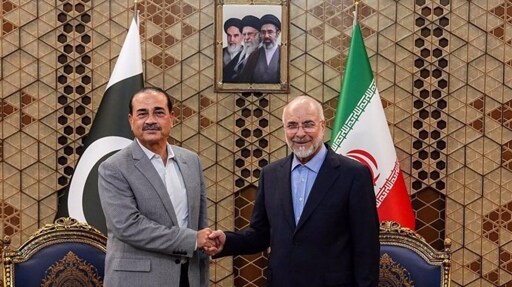
The timing of the US attacks raises fresh concerns about the fate of the Pakistan-mediated peace talks with Iran, which have now shifted to Qatar and are reportedly at a critical juncture.
The Iranian delegation, led by speaker of the country’s parliament, Mohammad Bagher Ghalibaf, traveled to Qatar on Monday as its foreign ministry acknowledged significant progress in the talks.
Iranian Foreign Minister Abbas Araghchi and the head of its central bank are also part of the delegation.
Despite claiming progress on its 14-point proposal submitted last week, Iran, however, denied a deal with the US is “imminent”, given the trust deficit towards the Donald Trump administration.
Head of the Iranian Parliamentary Commission on National Security and Foreign Policy Ebrahim Azizi reiterated on Tuesday that the US needs to take confidence-building measures on five core issues before any deal is finalized.
He identified a ceasefire on all fronts with a guarantee of no future attacks, lifting the naval blockade, acceptance of Iranian control over the Strait of Hormuz, the suspension of sanctions, and the release of Iran’s blocked assets as five core confidence-building measures for any possible deal.
Read more: “Dialogue does not mean surrender”: Iran submits fresh peace plan as Trump escalates threats
“If these five confidence building measures are carried out, we will enter a 30 day and 60 day timeframe, followed by discussions on the details of the sanctions and the remaining issues; otherwise, this agreement will not happen,” Press TV reported Azizi saying.
Trump pushes Abraham Accords
In a social media post on Monday, Trump also acknowledged the possibility of a deal with Iran, claiming the talks are “proceeding nicely”.
He also appealed to countries in the region and beyond to join the Abraham Accords as part of the deal with Iran.
This may be an attempt to pacify Israeli objections to the US-Iran deal, as its Prime Minister Benjamin Netanyahu reportedly tried to persuade Trump not to proceed with any understanding with Iran.
“I stated that, after all the work done by the US to try and pull this very complex puzzle together, it should be mandatory that all these countries, at a minimum, simultaneously, sign onto the Abraham Accords,” Trump said.
Trump identified Saudi Arabia and Qatar as priority states to sign the accord devised during his first tenure as president as an instrument to make countries in the region normalize relations with Israel.
He also named countries such as Egypt, Jordan, and Turkey, which already have formal diplomatic relations with Israel dating decades prior to the conceptualization of the Accords.
Despite successive US administrations pushing for it, only four countries, the UAE, Bahrain, Sudan, and Morocco have signed the deal so far.
Most of the other countries in the region, including Saudi Arabia, have resisted US pressures to join the Accords or normalize relations with Israel, declaring they won’t until there is an independent Palestinian state in the occupied territories.
The post With peace deal nearly final, US launches fresh attacks on Iran appeared first on Peoples Dispatch.
From Peoples Dispatch via This RSS Feed.