

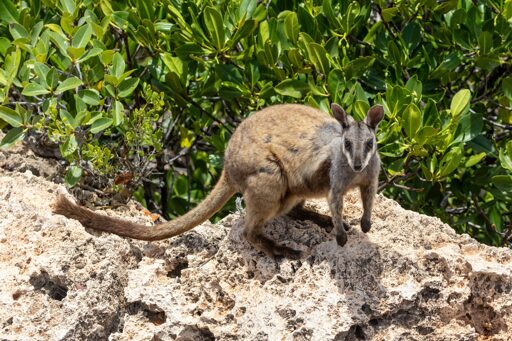
Australia is one of 17 “megadiverse” countries that account for 70% of Earth’s biodiversity. However, Australia is unique in having the highest mammalian extinction rate in the world. That makes conservation on the island continent, where most of the wildlife is found nowhere else on Earth, all the more urgent. Conservation and environmental scientists have come out against the Australian federal government’s claim that it’s “on track” to meet most of its targets under the Kunming-Montreal Global Biodiversity Framework agreed upon at the U.N. biodiversity summit in 2022. This week on the Mongabay Newscast, Euan Ritchie, a professor of wildlife ecology and conservation at Australia’s Deakin University, and a councilor with the Biodiversity Council, an academic alliance in the country, argues why conservationists say the Australian government is failing its commitments. “The short answer, unfortunately, is that Australia is doing terribly in terms of honoring its international obligations to meet those targets in the agreement. If we look at the number of threatened species in Australia, it’s more than 2,200 now, and that list continues to increase,” Ritchie says. Despite being a relatively wealthy nation by gross domestic product per capita, Australia funds conservation at a diminutive scale compared to other industrialized countries. The latest annual budget allocates 0.06% of federal spending to nature. Ritchie and some 60 fellow experts suggest that it would only take about 1% of the federal budget to save most threatened species and restore soils and rivers. In 2024, the Wentworth Group of Concerned Scientists…This article was originally published on Mongabay
From Conservation news via This RSS Feed.