

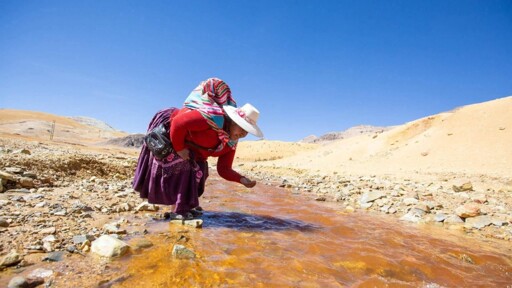
A copper mine in southern Peru that took decades to complete environmental assessments has been contaminating local watersheds with harmful metals, critics say. In its first few years of operation, the mine has allegedly endangered wildlife, threatened the local economy, and created health concerns in communities. Developers of the Quellaveco mine in Peru’s Moquegua department spent more than 20 years conducting and revising environmental assessments to responsibly extract copper and molybdenum, a metal used in industrial alloys. But after the mine started operating in 2022, the impacts from pollution, erosion and other issues became difficult to ignore, residents say. “[The project] has exhibited the tensions that are typical of large-scale mining in the Andean south: disputes over water in fragile basins, distrust in environmental evaluation and enforcement procedures, promises of employment and local development that are difficult to verify,” said a recent investigation by several advocacy groups, including Red Muqui, a collective of 32 NGOs in Peru. The mine is operated by Anglo American Quellaveco S.A., a subsidiary of British mining company Anglo American. The company received its first environmental impact assessment approval for the project in 2000, but then spent another two decades revising it and finishing technical permitting and negotiations with local communities. The Quellaveco mine. Image courtesy of Red Muqui. More than half of Moquegua department is covered by mining concessions, some of them causing contamination and water scarcity. Residents around the Quellaveco mine said they wanted to avoid the problems that had emerged from earlier large-scale…This article was originally published on Mongabay
From Conservation news via This RSS Feed.