

On May 21, at least 20 people were massacred in the community of Rigores, in the Colón Department of Honduras. The victims were killed on an African palm plantation where they worked.
According to the media, the killings occurred as the workers were preparing to begin their workday and were praying. At that time, several heavily armed men wearing Honduran police uniforms opened fire on the workers.
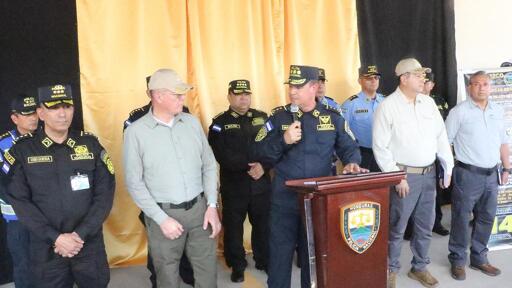
President Nasry Asfura said in a message: “Tonight I speak to you with sorrow. And before saying anything else, I want to address the families of the victims from the village of Rigores in Colón. There are no words, neither mine nor anyone else’s … This will not be forgotten, and it will not go unpunished.”
The crime, which Asfura described as “yet another wound that Honduras does not deserve,” will be investigated, according to the president, by “the Ministry of Security, the National Police, the Armed Forces, the Police Investigation Directorate (DPI), and the Public Prosecutor’s Office, all of which are working together at every stage of the investigation.”
Who is to blame?
It is still unknown who is behind the massacre. On one hand, the area is located in a region disputed by two rival gangs fighting for control of drug trafficking routes, although many doubt that the massacre was the result of a gang dispute.
The peasants’ struggle to secure a plot of land to farm in that area has been met with a violent response from armed groups. In a statement, the social organization La Vía Campesina, “strongly condemns this brutal act that has shaken the entire country and demonstrates the vulnerability and lack of security in which our peasant communities live.”
According to some reports, nearly 200 people have died in the context of the agrarian conflict in the area.
In the statement, La Vía Campesina also stated: “The lives of young people, children of members of the peasant enterprises of the Rigores Peasant Movement, have been taken. To date, 17 men and 3 women (5 of whom were minors) have been cowardly murdered. The violence cannot continue. Impunity in this country cannot continue.”
Furthermore, it demanded that the state:
- conduct a thorough independent investigation,
- immediately apprehend the perpetrators and masterminds,
- provide security guarantees for the victims’ families and the Rigores community,
- ensure a state presence in the area affected by state-sponsored conflicts,
- suspend legislation that criminalizes defenders of peasant and indigenous territories
- public recognition of the link between land concentration by agribusiness and the violence suffered by rural Honduran populations.
La Vía Campesina’s statement concludes by affirming: “The struggle for land is legitimate. Defending life is not a crime. As long as agribusiness continues to be valued more than the peasantry, we will remain standing, organized. Justice for the victims of Rigores! The land belongs to those who work it! The peasant struggle does not stop!”
Unstoppable violence
Hours after the massacre of farmers, five police officers were killed in Corinto, in the Department of Cortés, near the border with Guatemala. Two suspected criminals were killed in the clash, according to Edgardo Barahona, spokesperson for the Honduran Ministry of National Security.
The incident occurred during a raid carried out by the Anti-Maras, Gangs, and Organized Crime Police Directorate (DIPAMPCO) in the community of Corinto, which was seeking to locate the leader of a criminal gang involved in drug trafficking in the area. When the police entered, they found themselves outnumbered, so they were captured and then executed. The bodies were found on a nearby road.
The raid was widely criticized due to the lack of intelligence prior to the operation, which forced the ministry to suspend the Director, Deputy Director, and Chief of Operations of DIPAMCO to investigate them regarding the events.
Honduras is a country with a high rate of violence. The recently inaugurated president based a significant portion of his campaign platform on his pledge to drastically reduce violence in the country, which currently stands at a rate of 23 homicides per 100,000 inhabitants; however, for now it appears that violence continues to prevail in the Central American nation.
The post At least 20 farmers massacred in Honduras appeared first on Peoples Dispatch.
From Peoples Dispatch via This RSS Feed.