

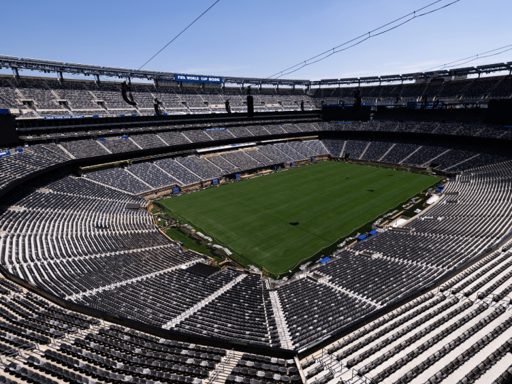

With just weeks to go before the start of the 2026 World Cup, security and logistical concerns are mounting regarding the tournament, which will be held for the first time with 48 teams taking part across three countries – the United States, Canada and Mexico – in what is described as the largest and most complex World Cup in history.
As the tournament expands and the number of spectators and travel arrangements increases, concerns are no longer limited to organisational issues alone, but have extended to security threats and the possibility of disturbances that could affect the movement of spectators and the smooth running of the entire global event.
An unprecedented security test
The Guardian, however, went a step further, suggesting that the 2026 World Cup could turn into a “global security test” given the current political and international tensions, particularly the US-Iran conflict.
The report highlighted concerns about lone-wolf attacks and the targeting of so-called ‘soft targets’, such as hotels, transport hubs and areas where fans gather, as well as the potential for cyberattacks and the use of drones.
The report also noted that the tournament will take place at a time of growing political polarisation and protests linked to issues such as migration, war and human rights, which could prompt various groups to exploit the world’s biggest sporting event to convey political messages or stage large-scale protests.
Of course, 104 matches spread across three countries and 16 cities will place enormous pressure on security services, transport networks and infrastructure, in what may be the most complex challenge in the tournament’s history.
A representative from Human Rights Watch said:
This was supposed to be the first ever World Cup with a human rights framework: key protections for workers, fans, players and communities.
Instead the US administration’s brutal immigration crackdown, discriminatory policies and threats to press freedom mean the tournament risks being defined by exclusion and fear. I think we are here to say that the problem of sportswashing is alive and well and this World Cup will be a bonanza for sportswashing.
A sporting event or a global security challenge?
Although FIFA is promoting the 2026 tournament as a historic footballing celebration, a growing number of Western reports reflect genuine concern about the scale of the challenges that may accompany the tournament, whether in terms of security, transport or crowd management.
With stadiums spread across an entire continent and millions of fans expected to travel between cities, the upcoming World Cup faces a challenge that goes beyond football, amounting to an organisational and security challenge unprecedented in the history of the tournament.
Featured image via Getty/Dustin Satloff
By Alaa Shamali
From Canary via This RSS Feed.