

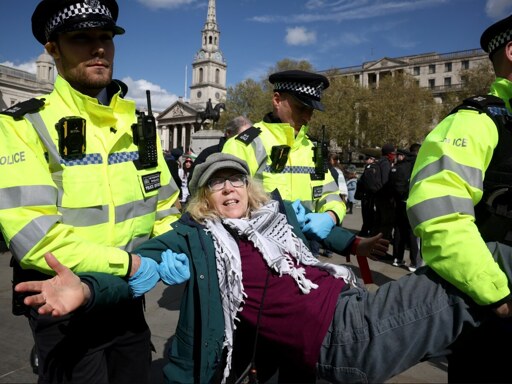

Repression of peaceful protest – whether through policing, new laws, trends in the courts, or the use of imprisonment – has become “routine” in the UK.
A new report examines this escalation and the forces behind it.
Excessive punishments for peaceful protest
Climate and Palestine solidarity protestors in the UK have between them spent 136 years in prison since 2019, according to a new report by researchers at Queen Mary University and the campaign group Defend Our Juries. Britain’s Political Prisoners documents nearly 300 cases and looks at how recent anti-protest laws and restrictions imposed by courts have contributed to them.
This report focuses on multiple responses to protest it describes as “grossly disproportionate”. This includes harsh sentences and “indiscriminate” use of remand – sending protestors to prison for many months before their cases are heard in court.
The longest prison sentences – up to five years – for nonviolent protest in the UK have been handed down to climate activists. To put these stretches in context, government statistics show that prison sentences imposed for common assault rarely exceed a few months, and for causing grievous bodily harm are usually less than three years.
Meanwhile, terrorism powers are increasingly being used against those attempting to intervene in a genocide. The direct action group Palestine Action, whose tactics have focussed on disrupting the flow of weapons from the UK to Israel, was proscribed as a terrorist organisation last year. Activists who took part in protests before the group was banned have been held in high-security prisons before trial, and are expected to serve dramatically increased sentences because of their alleged ‘terror connection’.
The normal time limit for prisoners to be held on remand is six months. However, this has regularly been exceeded in recent protest cases, with one activist currently approaching two years on remand. At trial, defendants are often acquitted or receive sentences shorter than the time they have already spent in custody. According to Tim Crosland of Defend Our Juries:
It would be dishonest to present this as anything other than punishment without trial.
Defendants gagged by the courts
Anti-protest laws and increasingly aggressive policing have made it more likely that a peaceful protest action will end up in court. But rather than safeguarding against it, courts are further contributing significantly to the repression of protest.
The report details how protestors’ access to legal defences has been progressively removed. This means that many defendants are no longer allowed to argue that their actions were justifiable in the circumstances. If they choose to defy judges orders not to speak about their motivations, they risk being in ‘contempt of court’, which can be punished by yet more time in prison.
Perversely, this has seen climate activists arrested at their own trials for presenting evidence about climate breakdown. Restrictions imposed by judges in Palestine Action cases have been even more extreme. Reflecting on a recent trial where four activists were convicted for smashing equipment at an arms factory, Professor David Whyte, who co-authored the report, summarised:
Justice Jeremy Johnson ordered that a very long list of basic facts about the case had to be kept secret from the jury. He held a barrister in contempt of court and then ignored the prosecution by denying bail to the defendants in the case. On top of all of this, the judge issued a gagging order that prevented anybody reporting his gagging orders!
Vested and misguided interests at play
Attempting to explain the lurch towards protecting “public order” at the expense of human rights, the report names corporate and political interests.
It details evidence that the UK ministers have been under pressure from both the Israeli government and arms company Elbit to treat Palestine-related protests harshly. It also points to the influence of fossil fuel industry funded think tanks in the crackdown on climate protests.
Corporations and agencies wealthy enough to afford the legal costs have been granted private injunctions to further “protect” themselves against protests. This has meant that activists would have risked imprisonment, large fines and seizure of assets even for non-disruptive, otherwise-legal demos at sites including Shell offices, Drax power station, or military supplier Moog’s factories.
Locking up protesters may seem convenient in the short term, but it might not even work to reduce disruption. In fact, it may ultimately force movements to avoid accountability by using more covert tactics. When it has never been more urgent to act against climate breakdown and genocide in Gaza, it is vital we build – rather than extinguish – momentum that protects lives now and in the future. From where I’m standing, that future looks much less frightening if we know our rights, defend them, and put them to good use.
Featured image via Dan Kitwood/Getty Images
By Abi Perrin
From Canary via This RSS Feed.