

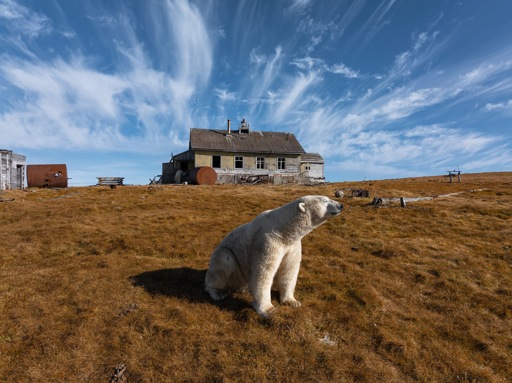
A polar bear, captured above, sits on a grassy expanse on Kolyuchin Island in the Chukotka district of far-eastern Russia. Several bears made themselves at home in the empty buildings of a Soviet-era research station, abandoned by humans in 1992. Photographer Vadim Makhorov took photos using a drone operated from an expedition vessel about 1 kilometer (0.6 miles) away from the bears in September 2025. “At first, [the bears] showed a lot of curiosity and even tried to catch [the drone],” Makhorov told Mongabay by email. “Eventually, though, they lost interest and simply went back to their daily routines: resting on porches and inside the abandoned houses, basking in the sun, while some wandered around exploring the surrounding area.” Polar bears (Ursus maritimus) are listed as vulnerable on Red List maintained by the IUCN, the global wildlife conservation authority. Current estimates place the worldwide population between 22,000 and 31,000 individuals, split into 20 subpopulations. According to the most recent report by the IUCN’s Polar Bear Specialist Group, the loss of Arctic sea ice due to human-driven climate change is the most serious threat to polar bears throughout their range in the Arctic. Since 1979, the extent of Arctic sea ice has shrunk by 12.2% each decade, according to NASA. Polar bears typically depend on ice shelves for hunting. When that ice thins out in late summer and early autumn, the bears search for alternative places to survive, Makhorov said. He said he presumes that by late autumn, the bears leave…This article was originally published on Mongabay
From Conservation news via This RSS Feed.